
A2 Aluminum Composite Panel: Benefits, Uses, and Standards
October 8, 2026
The choice of panel system is no joke when specifying interior wall materials for high-stakes applications. A2 aluminum composite panel is a non-combustible cladding solution that provides Class A2 fire safety certifications per EN 13501-1 and is the preferred material for architects, procurement managers, and facility operators who cannot afford to compromise on safety. In this article, I discuss the composition, performance benefits, practical applications, and procurement issues that are most important to construction professionals and foreign distributors assessing fire-rated wall panels today.
What Is an A2 Aluminum Composite Panel?
Core Composition and Structure
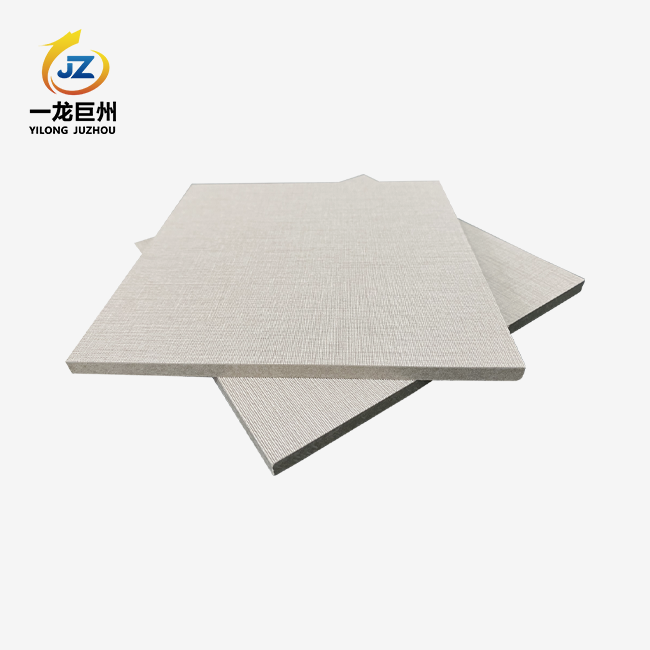
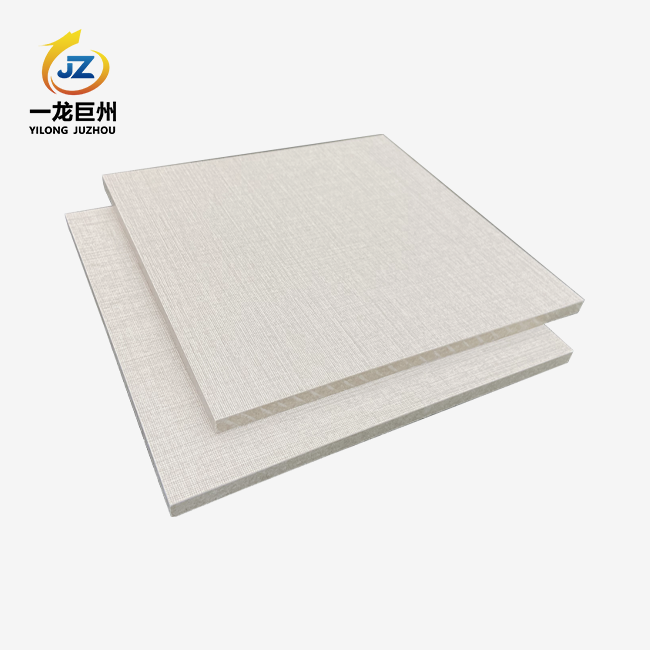
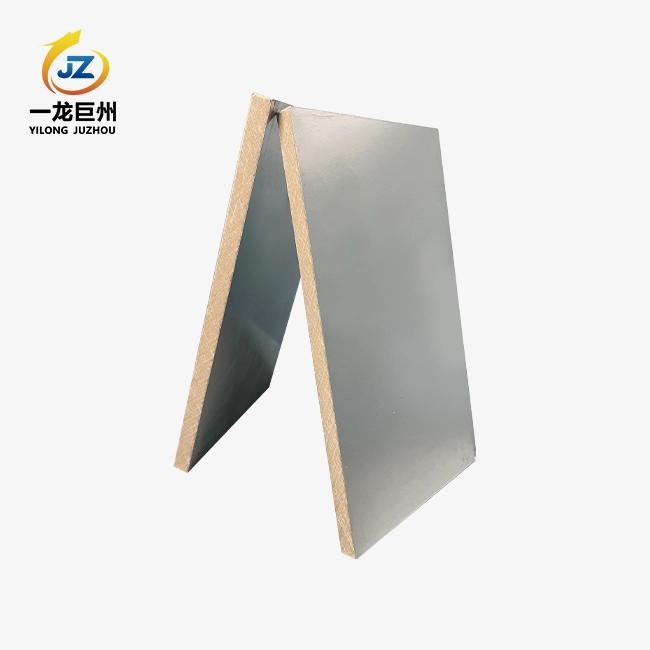
An A2 aluminum composite panel consists of two aluminium skin sheets glued to a mineral-filled core derived from a largely inorganic substance, such as magnesium hydroxide or aluminium hydroxide. This construction is quite different from normal polyethylene core panels. Organic fuel load in conventional polyethylene core panels increases the likelihood of vertical fire propagation in high-rise walls. The inorganic mineral core keeps the Gross Calorific Potential below 3 MJ/kg, in compliance with ISO 1716 criteria for combustion and providing the non-combustible designation to the panel.

Specifications Worth Knowing
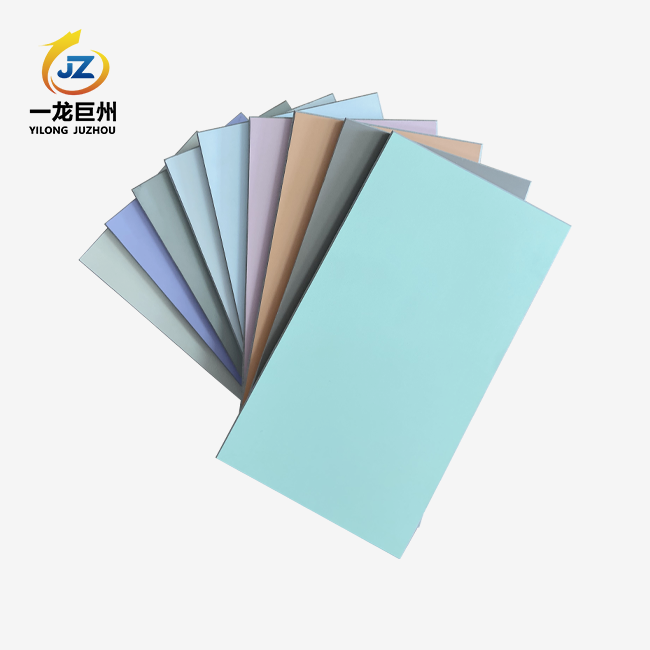
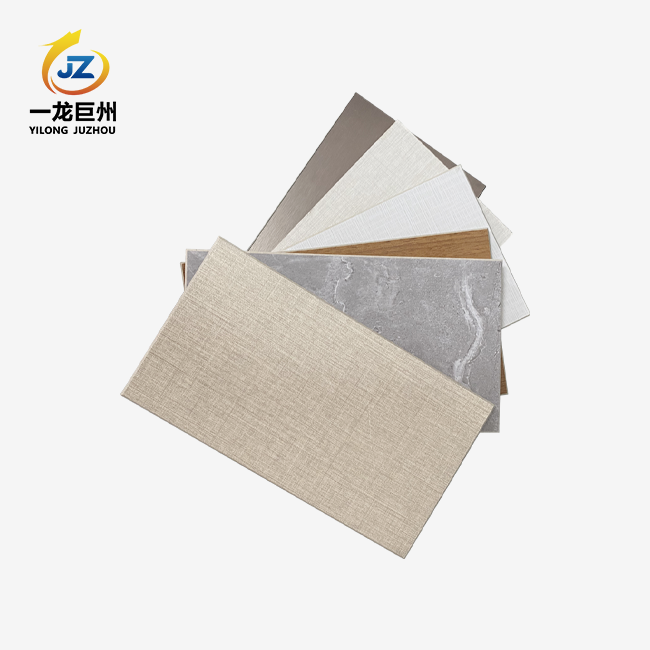
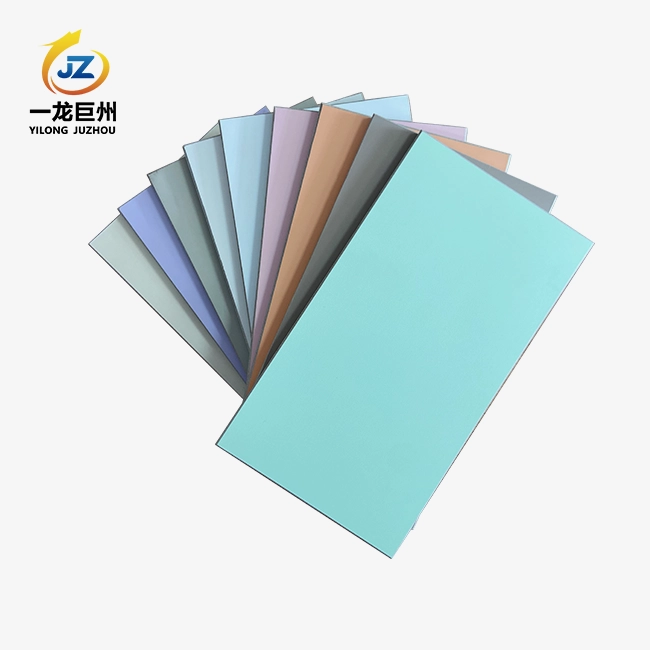
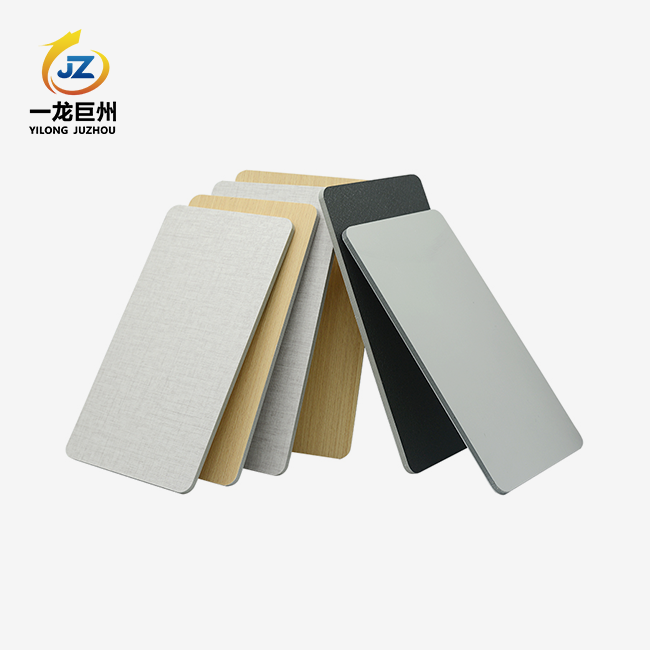
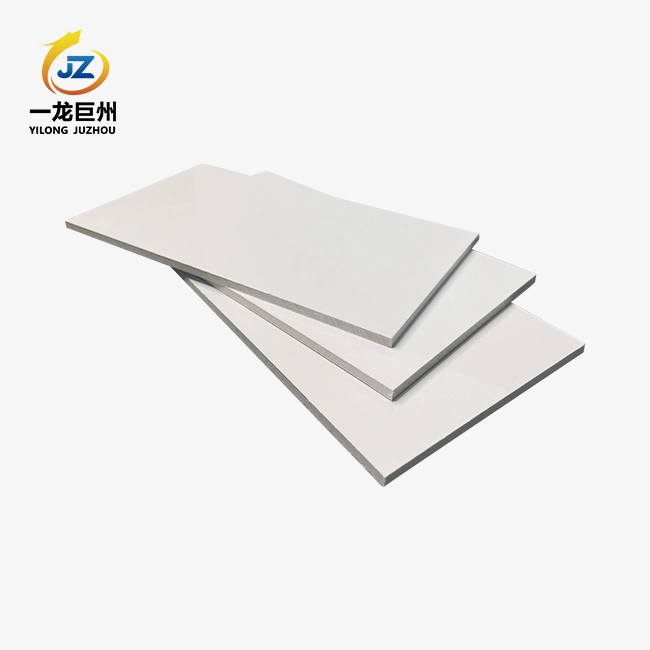
YILONG JUZHOU A2 aluminum composite panels are available in widths of 1220 mm, 1500 mm and 2000 mm with thicknesses of 2, 3, 4, 5 and 6 mm. You can make them as long as you desire, and for big indoor projects you can utilise panels longer than 3 m. Skins composed of aluminum are between 0.1 mm and 0.5 mm thick. Polyester paint, PET film, PVC film, and PP film are all surface treatments that come in a wide range of colors and designs, such as solid tones, woodgrain, marble, silver, and fabric. OEM & ODM variants are available to fit the needs of each project.
Key Benefits of A2 Aluminum Composite Panels
Procurement teams choose fire-rated composite panels over normal ones mainly because they are safer, but there are many more benefits besides just fire rating.

Here are the main performance factors that set A2-rated panels apart from other materials:
- Fire resistance Class A2: Mineral content prevents the core from igniting, dripping burning droplets, or producing dense smoke during a fire event. This immediately promotes the safety of evacuation in busy venues such as airports, hospitals, and transit stations.
- Waterproof, moistureproof and mildewproof: The panel system is resistant to water infiltration and biological growth, making it suited for food processing facilities, pharmaceutical industries and high-humidity interior settings.
- No formaldehyde & no radiation: The material complies with environmental protection criteria and is a green building product, the specification required in procurement contracts for the healthcare and education industries.
- Flexible fabrication: Panels can be drilled, nailed, and bent without cracking. This extreme flexibility enables curved wall installations and intricate architectural elements without custom tooling.
- Impact-resistant structure: The bonded aluminum-mineral structure will not fracture and maintains wall continuity under physical stresses found in high-traffic institutional environments.
All of these features work together to meet the toughest performance needs in business, healthcare, and industrial settings. When code compliance and long-term durability are important, project teams always choose A2-rated mineral-core panels over fire-resistant B1 options.
Applications and Use Cases
Where A2 Panels Perform Best
In many indoor settings where fire safety rules, cleanliness standards, and visual needs all come together, A2 aluminum composite walls are chosen. The main type of use is for decorating the inside walls of buildings, which includes hospitals, schools, shopping malls, office buildings, subways, airports, train stations, stadiums, art galleries, gyms, villas, medical aesthetic centers, hotels, and conference centers.
When used in healthcare settings, the surface film choices, such as A2 ACP panel, can be cleaned with disinfectants over and over again without breaking down, which meets infection control standards. In transit facilities like airports and subway stops, the low smoke emission rate keeps people able to see how to get out in case of an emergency. The mold- and chemical-resistant surface can stand up to harsh cleaning cycles and is useful for industrial facilities like drug factories and food processing plants.
Another important use case is high-rise curtain walls and facade cladding. Building codes in many places legally require non-combustible cladding materials on structures taller than 18 meters. A2-classified panels meet this requirement, while B1 fire-retardant panels are not allowed.
Comparing A2 Panels with Other Panel Classifications
Knowing where A2 panels fit into the bigger ACP classification system helps buying teams make decisions about specifications that they can back up.
A1-rated panels are completely non-flammable and don't contain any biological materials. They are usually made of solid metal or mineral board. They have the best fire safety rating, but they are harder to build with and cost more to make. A2 panels are a good compromise because they are officially non-flammable according to EN 13501-1 and have a peel strength of more than 7 N/mm. They can also be coated on the outside, colored to match, and made using standard methods.
B1-classified fire-resistant screens are made up of about 50 to 60% minerals. Even though they put out fires themselves, they can still support a small fire, which means that they are not allowed to be used on the facades of high-rise buildings according to current international building rules. Because they are made of less dense materials, they are lighter and less expensive, which makes them good for indoor work on a budget where fire risk is low.
Standard PE-core panels put cost and ease of use first. They are commonly used for interior signage and low-rise commercial interiors, but they pose a big fire risk in any setting where people will be present or where regulations will be closely watched.
For procurement workers who have to weigh performance against cost, the choice is clear: A2 ACP board meets the requirements for projects in controlled areas, public buildings, or buildings taller than 18 meters, which need either A2 or A1 classification. For jobs that aren't as big and have normal business interiors, B1 panels may be a cheaper way to meet local codes.
Procurement Guide: Sourcing A2 Aluminum Composite Panels
What to Verify Before Placing an Order
There's more to finding fire-rated composite panels for international projects than just comparing prices per square meter. Suppliers you can trust should give you up-to-date fire rating test results from reputable labs like SGS or Intertek that show they meet EN 13501-1 or NFPA 285 standards. Ask for proof that the mineral core has more than 90% inorganic residue, which proves that the material is actually classified as A2 and not a mistakenly labeled B1 blend.
YILONG JUZHOU has two factories. One is in Foshan City, Guangdong Province; the other is in Xianyang High-tech Zone, Shaanxi Province. China Environmental Protection Standard Certification, ISO certification, and CE certification are all held by the company. The standard lead time for production is three to seven days, and 50,000 m² of stock is kept on hand. Exports leave from the seaports of Shenzhen, Guangzhou, Shanghai, and Qingdao. Xi'an, Guangzhou, Shenzhen, and Foshan can be used for road transport. Requests for samples are fulfilled in 3 to 5 days, and you can get free samples.
The company supports OEM and ODM configurations, offers a three-year quality guarantee, and offers design and installation technical services to wholesalers and procurement teams that are in charge of big orders. Response time is 24 hours or less.
Conclusion
A2 aluminum composite panel offers a unique mix of fire safety, environmental compliance, and design flexibility that not many other materials in the same price range can match. A2-rated panels are a specification-ready solution for a variety of uses, including hospital renovations, transit hub interiors, and the facades of business high-rise buildings. They have a non-combustible mineral core, clean-surface finish choices, and measurements that can be changed to fit your needs. For procurement teams that have to deal with code requirements and long-term performance goals, the evidence consistently supports A2 classification as the responsible default for high-occupancy and regulated environments.
FAQ
Q1: What makes an A2 panel different from a B1 fire-retardant panel?
A B1 panel has between 50 and 60% minerals in it and can still catch fire, but it will put itself out on its own. According to ISO 1182 and ISO 1716 standards, an A2 panel can't catch fire because it is made up of more than 90% artificial mineral material. This difference is important officially when building tall buildings.
Q2: Can A2 composite panels be used for both interior and exterior applications?
Yes, YILONG JUZHOU's panels are used to decorate the inside walls of hospitals, schools, airports, and hotels. They are also required by fire rules for use as building wall cladding in places where non-combustible materials are needed.
Q3: How do I verify that a panel is genuinely A2-classified?
Get a copy of the supplier's most recent fire classification test report from a different lab. Ask for proof that the mineral residue is higher than 90% by showing proof of the ash content. Panels that are approved by EN 13501-1 or NFPA 285 have test results that can be tracked.
Q4: What surface finishes are available?
Polyester paint, PET film, PVC film, and PP film are some of the options. The color designs come in plain, woodgrain, marble, metallic, and cloth styles. Through OEM agreements, you can get finishes that are just right for you.
Partner with YILONG JUZHOU for A2 Aluminum Composite Panel Supply
YILONG JUZHOU is a reliable company that makes A2 aluminum composite panels. They have two factories in Shaanxi and Guangdong, are certified by ISO and CE, and have a ready stock of 50,000 m². We offer OEM and ODM customization, a quality guaranty that lasts for three years, and shipping all over the world. To get a free sample or a competitive bulk quote today, email your project details to cnyang2000114@gmail.com.
References
1. European Committee for Standardization. EN 13501-1: Fire Classification of Construction Products and Building Elements. CEN, 2018.
2. International Organization for Standardization. ISO 1716: Reaction to Fire Tests — Determination of the Gross Heat of Combustion. ISO, 2018.
3. International Organization for Standardization. ISO 1182: Reaction to Fire Tests — Non-Combustibility Test. ISO, 2020.
4. National Fire Protection Association. NFPA 285: Standard Fire Test Method for Evaluation of Fire Propagation Characteristics of Exterior Non-Load-Bearing Wall Assemblies. NFPA, 2019.
5. ASTM International. ASTM D1781: Standard Test Method for Climbing Drum Peel for Adhesives. ASTM, 2020.
6. Building Research Establishment. BR 135: Fire Performance of External Thermal Insulation for Walls of Multistorey Buildings. BRE Press, 2013.

Send Inquiry
You may like
Related Industry Knowledge
- PE Aluminum Composite Board Sheet: Sizes, Specs and Uses
- melamine fireproof board Surface Finish and Design Options
- Installation Guide for Inorganic pre-coated panels in Construction
- Can Calcium silicate aluminum composite board Improve Insulation?
- Can Calcium Silicate Aluminum Composite Boards Replace Traditional Insulation Panels?
- ACP Sheets: Pros, Cons, and Uses Explained
- Is Calcium Silicate Fireproof Board Easy to Install?
- UV light curing board Scratch Resistance and Durability Explained
- How do I choose the right aluminum composite panels for my building?
- Antibacterial wall panel medical rigid sheet wall protection