
How Does UV light curing board Technology Improve Surface Hardness?
July 21, 2026
Through a fast photopolymerisation process, UV light curing board technology changes the hardness of the surface. The UV antibacterial painting layer is hit by ultraviolet light, which sets off photoinitiators that quickly cross-link coating molecules into thick, linked networks at the molecular level. This method makes the top layer much harder than usual coats that are air-dried or heated to be fixed. YILONG JUZHOU's UV light-curing board is made from calcium silicate board substrates and advanced UV antibacterial painting. It has a surface hardness ranging from 3H to 5H on the Pencil Hardness Test scale, which means it is very scratch-resistant and will last for a long time in commercial settings.
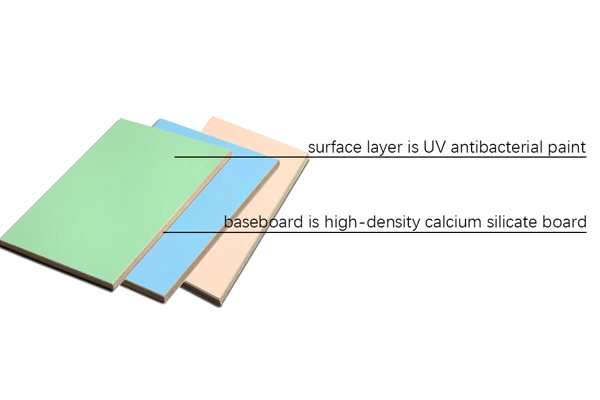
Understanding UV Light Curing Board Technology
The Science Behind Ultraviolet Curing
When we talk about UV curing, we're talking about a complex chemical change that takes seconds instead of hours. In traditional coating methods, the surface gets harder over time through either drying or heat. UV technology does not work the same way. When high-intensity ultraviolet light hits the covering surface, it sets off special photoinitiators that are mixed into the liquid resin. When these starters break down, they make free radicals that start linking molecules together right away to form polymer chains.
This photopolymerisation makes a molecular matrix that is three-dimensional, very thick, and hard to break. The hardening process only takes seconds and creates a solid, long-lasting surface without releasing any volatile chemical compounds into the air. Our calcium silicate board base gives you great physical stability, and the UV antibacterial treatment makes that important layer of protection.
Components That Make UV Boards Superior
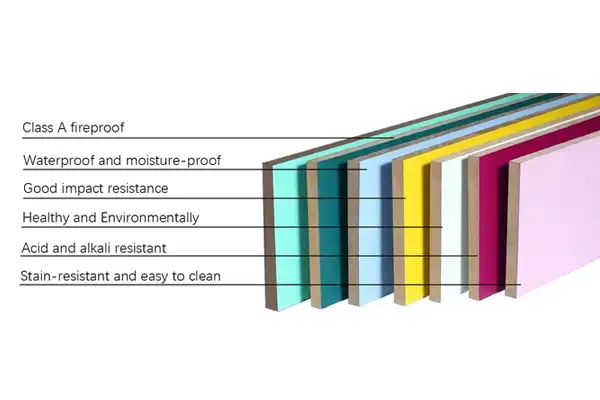
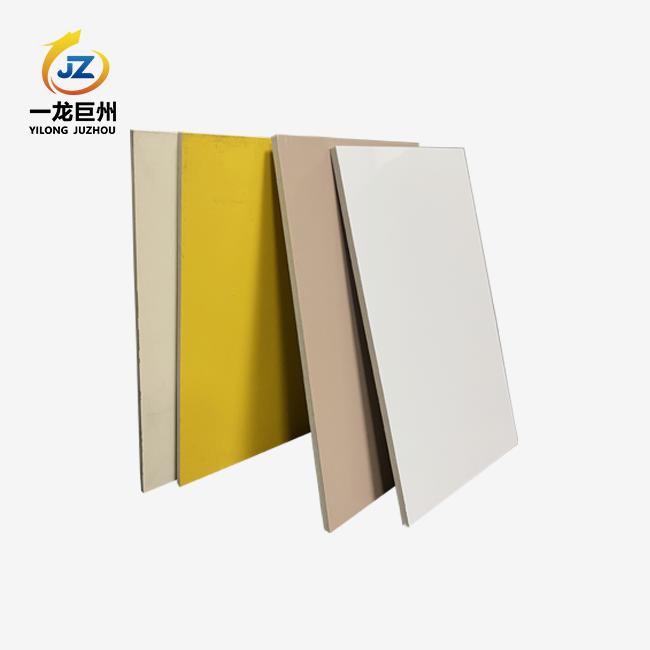
Choosing the right materials is an important part of making a good UV light curing board. We start with calcium silicate board at Yilong, Juzhou. This is a non-flammable, moisture-resistant base that meets GB8624 Class A fire resistance standards. The core layer keeps the structure strong and doesn't warp when the air changes.
The top layer is made up of several UV-resistant paint coats that were put on in a workshop under controlled conditions. Each layer is immediately cured by UV light before the next one is added. This makes a hybrid surface that is very strong when it comes to joining. This multi-layer method stops delamination problems that happen with single-coat systems and ensures that the hardness is the same on the whole panel surface. The panels come in a range of sizes, from 4.5 mm to 20 mm, to meet different structural needs.
Limitations of Traditional Surface Curing Methods & Emergence of UV Curing
Why Do Conventional Methods Fall Short?
For traditional heat cure, the surface needs to dry for a long time, usually 24 to 48 hours. During this time, changes in temperature and dust can lower the quality of the surface. Similar problems happen with air-drying methods; uneven healing patterns leave soft spots that can be damaged by scratches and impacts. Even though infrared healing is faster than convection heating, it still needs heat to slowly get through, which can warp materials or cause surface tension cracks.
As the solvents evaporate from the liquid coats, these ways also release large amounts of VOCs into the air. Solvent-based systems are bad for the environment, but they are also bad for the health of the people who work on them and the people who live in the building. The random nature of traditional drying makes it hard to keep an eye on quality, especially when managing big projects that need materials to work the same way every time.
How UV Technology Addresses Industry Pain Points?
UV treatment came about as a way to solve these production problems. The technology completely gets rid of drying time bottlenecks; panels come out of the UV curing line ready to be packed up and sent. When healing takes seconds instead of days, production efficiency goes up by a huge amount. The controlled setting in the plant makes sure that every panel gets the same amount of UV exposure. This makes the surface properties consistent across production runs that cover thousands of square metres.
This progress has been especially helpful for healthcare centres. Operating rooms in hospitals and factories that make medicines need surfaces on the inside that are both antibacterial and easy to clean using a UV light-curing board. Our UV antibiotic painting kills 99.99% of germs and is still chemically resistant to hospital-grade disinfectants. The instant curing process completely seals the substrate, stopping any wetness from getting in and allowing microbes to grow in wall spaces. This is an important factor for keeping hospital settings free of infections.
Key Factors Behind Surface Hardness Improvement in UV Light Curing Boards
Molecular Cross-Linking Mechanisms
The cross-linking density is what makes UV-cured materials so very hard. During photopolymerisation, each oligomer molecule forms covalent links with several molecules nearby at the same time. Instead of simple, straight polymer chains, this makes a molecular structure that is tightly woven. The resulting network doesn't easily bend because force is spread out over many bonds that are all linked to each other instead of gathering at weak spots.
Modern UV coats use advanced photoinitiators to make this cross-linking process work better. These chemicals are designed to break apart at certain UV wavelengths. This makes the right amount of free radicals, which start polymerisation without drying out the surface too quickly or too slowly. The controlled reaction makes the panel's surface hard all the way through, so there are no soft spots or uneven wear patterns that happen with normally cured materials.
Material Innovations Driving Performance
New developments in UV resin chemistry have made it possible to make acrylic-urethane hybrids that are both very flexible and very hard. Because these materials don't easily scratch or break, they're good for high-traffic areas where both types of failure are common. Adding nano-silica particles makes the panels even more resistant to wear and tear without changing the smooth, mirror-like finish that makes them stand out.
Our UV antibacterial painting uses these advanced formulas along with antimicrobial ingredients that keep working for as long as the panel is used. The calcium silicate base goes well with these new surface ideas because it is very resistant to water and mould. This unified method makes sure that the whole panel system works well in tough places like food processing plants, clean rooms, and subway tube installations, where the integrity of the surface directly affects safety and cleanliness.
Durability in Real-World Conditions
Lab tests back up what purchasing managers see in finished projects: surfaces that have been fixed by UV light stay hard in conditions that wear down other finishes. Accelerated ageing tests that mimic years of UV exposure, changing temperatures, and chemical touch show that the surface roughness and colour stability don't change much. The thick, cured film doesn't turn yellow because the fully polymerised structure doesn't have any liquids or uncured parts left over that could oxidise over time.
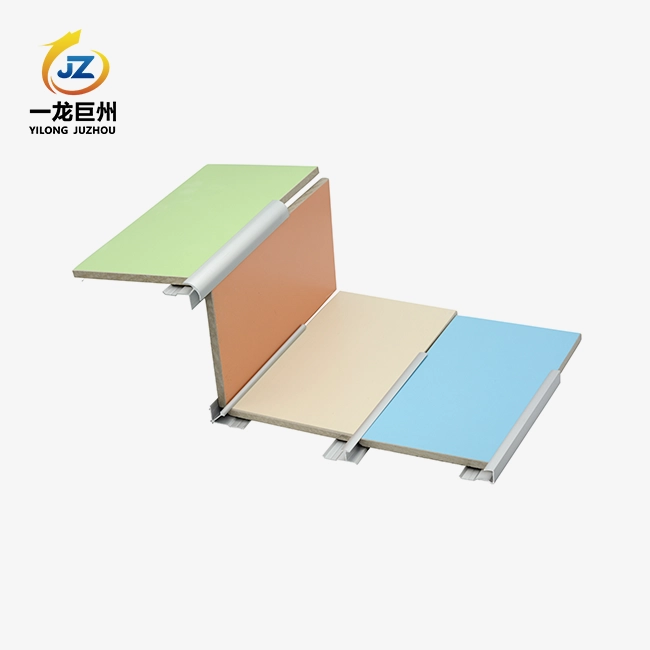
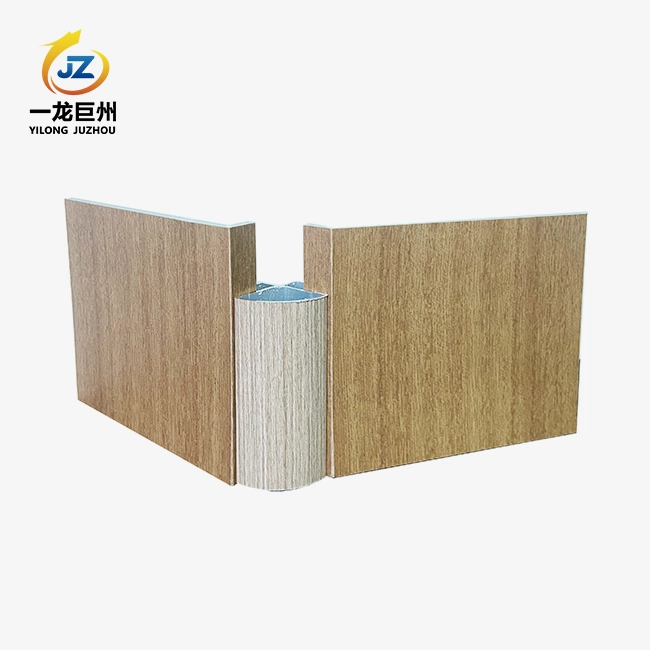
Installation teams like that, our panels come ready to use and don't need to be cured on-site. The quick pressure strip fitting method lets the job be customised in the field without affecting the UV surface that was applied at the plant. This makes it easier to plan for longer project timelines, which is very important when working with staged construction in busy places like schools or hospitals, where delays can affect many trades at once.
Comparing UV Light Curing Boards: Choosing the Right Solution for Hardness & Efficiency
Performance Metrics That Matter
When buying, professionals look at different choices for inner wall panels; they have to weigh a number of performance factors. Pencil hardness testing gives you one piece of information about the surface's hardness. But other factors, like resistance to impact, permeability to water, fire rating, and antibiotic effectiveness, tell you if it's right for a certain job. UV-cured panels are the best in this range because the drying process improves many qualities at once.
Thermal curing methods make panels hard enough, but they use a lot of energy and need temperature-controlled drying rooms which limit panel sizes. LED curing uses less energy than traditional UV lights, but the fix depths are usually thinner, which could make the product less durable in high-wear situations. Our UV light curing board technology makes UV antibacterial wall board structural panels that can be used for both new buildings and repair projects. It uses less energy and cures completely through calcium silicate substrates up to 20 mm thick.
Evaluating Supplier Capabilities
There are a lot of different UV panel providers with different levels of technical know-how in the global building materials market. When narrowing down the list of makers, procurement managers should check a number of important qualities. Getting ISO approval proves that quality control systems are written down and checked. The CE mark shows that a product meets European safety and environmental standards. These standards are important for projects outside of Europe because they set high standards.
Two production bases are run by YILONG JUZHOU in the provinces of Shaanxi and Guangdong. Together, they hold more than 50,000m² of goods. This approach of having two locations keeps the supply going and cuts down on shipping times to coastal places like Shenzhen, Guangzhou, Shanghai, and Qingdao. Our 3- to 7-day production wait time can meet the needs of urgent projects, and our three-year quality promise shows that we're sure the product will work well for a long time.
Customisation and Specification Flexibility
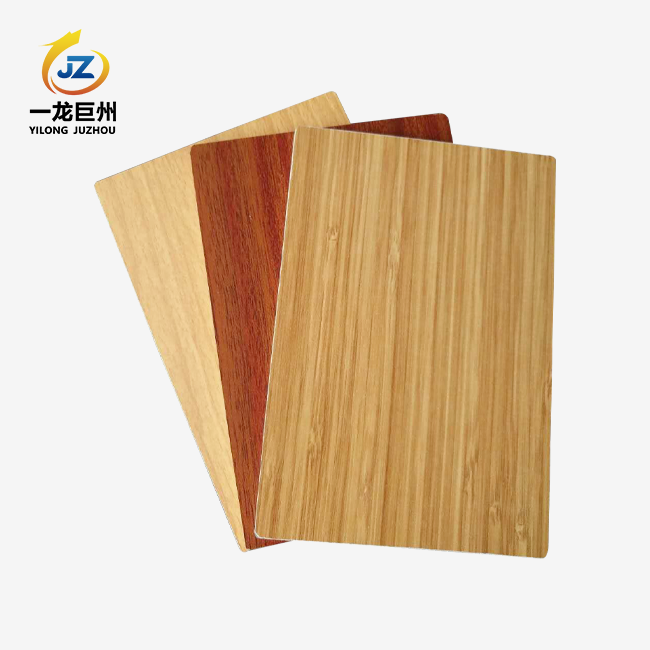
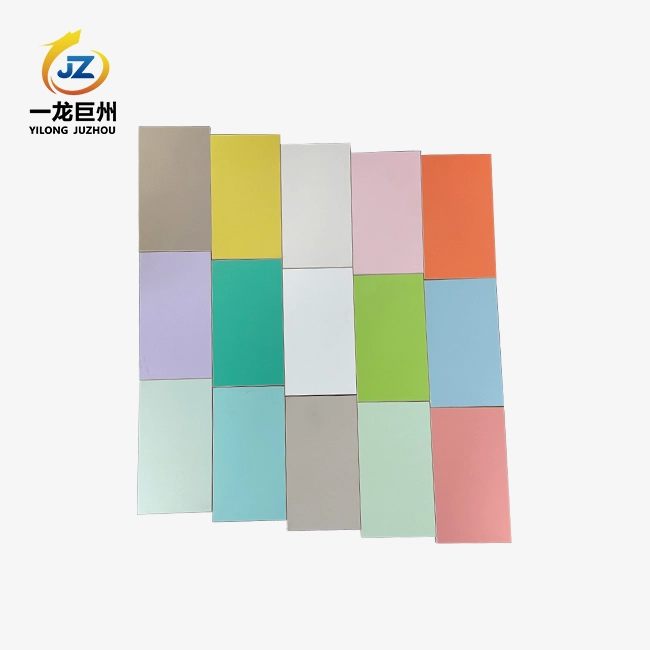
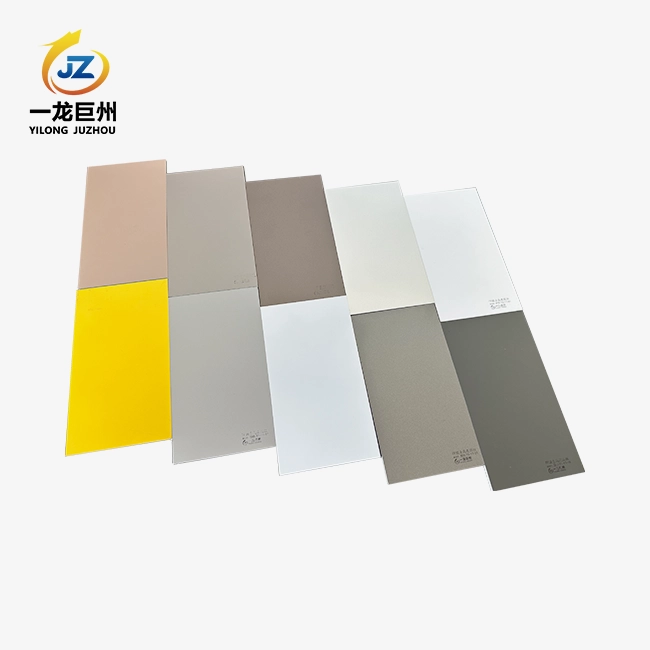
For large projects, panels often need to be a certain size or colour or have a certain pattern on the surface to fit the architectural design purpose. Standard UV screens are 1220 mm wide and can be as long as 2440 mm or as tall as 3050 mm. We have plain colours, woodgrain patterns, marble patterns, metallic finishes, and cloth textures, so creators can get the look they want without giving up the usefulness of UV-cured surfaces.
The things that OEM and ODM can do are more than just choosing colours. Different projects might need different edge features, built-in fixing systems, or antibacterial formulas that meet strict government standards. During the specification phase, our technical team works with architects and builders to turn performance needs into panel configurations that can be made. We send free samples within 3–5 days so that people can check the quality of the surface and the accuracy of the colours before agreeing to full production orders.
Building Trust and Ensuring Quality: Insights into UV Light Curing Board Brands and Suppliers
Certification and Compliance Standards
Building products can be trusted if they come with compliance paperwork that can be checked. Our UV light curing board has been certified by the China Environmental Protection Standard, which means it doesn't contain any benzene or volatile chemicals that could harm the quality of the air inside your home. The GB8624 non-combustible Class A fire resistance grade is very strict and meets all the needs for public buildings like schools, hospitals and transportation facilities like high-speed subway tunnels.
Third-party testing confirms the performance qualities that were said to be true. Following normal procedures, independent labs test the antibacterial effectiveness of our products, proving that they have a 99.99% success rate against common pathogens. During the tender evaluation process, when procurement groups compare rival goods based on objective performance data rather than marketing claims, these test results become very important.
Customer Feedback and Long-Term Partnerships
Success stories from past projects are the best proof that a product will work. Healthcare managers say that our UV screens in operating rooms at hospitals still look brand new years after they were installed, even though they are cleaned very thoroughly every day. Managers of food processing plants like how the panels don't get damaged by changes in temperature and moisture in production areas, where regular wall systems break down quickly.
Institutional clients who buy from you again and again are proof that both the goods and the service are good. Property developers who are in charge of a collection of multiple buildings use tried-and-true material systems so that specifications are easier to understand across all of their projects. Our 24-hour reaction time and full expert support help contractors solve installation problems right away, avoiding delays that hurt the project's profits.
Supply Chain Reliability for Global Projects
International wholesalers and traders of building materials put a high value on suppliers who are consistent. Stable price systems make it possible to make accurate project budgets months before the materials are bought. We can handle large orders without lowering the quality or lengthening lead times because we have two factories with enough production space. Export packaging meets foreign shipping standards and keeps panels safe while they travel across continents.
Our plants are connected to major logistics hubs in Xi'an, Guangzhou, Shenzhen, and Foshan by land transport infrastructure. This makes it easy for goods (UV panels) to get to new markets, whether they go through sea ports or overland. When coordinating deliveries to remote building sites or handling phased material releases that are in sync with construction plans across multiple project locations, this organisational flexibility comes in handy.
Conclusion
UV light curing board technology makes the surface harder by instantly photopolymerising molecules, which makes dense molecular cross-linking that can't be achieved with other curing methods. When you combine the structural stability of the calcium silicate substrate with the antibacterial painting on the surface, you get panels that meet the tough performance needs of healthcare, educational, business, and industrial settings. YILONG JUZHOU is a trusted partner for procurement workers handling difficult building projects because we are good at making things, can customise a lot, and are dedicated to quality assurance. Our goods strike a balance between technical excellence and caring for the environment. This way, they last longer without lowering the quality of the air inside or endangering people.
FAQ
1. Can UV-cured panels withstand frequent disinfectant cleaning in medical facilities?
Alcohol-based disinfectants, quaternary ammonium compounds, and hydrogen peroxide treatments that are often used in healthcare situations can't break down the fully cross-linked surface. The chemical protection comes from the thick network of polymers that stops solvents from getting through. Regular cleaning keeps the antibacterial surface working for as long as the panel is in use, without wearing down the finish or weakening the structure.
2. How does UV panel hardness compare to ceramic tile or stone cladding?
Ceramic and stone are harder than UV-cured panels, but in normal business use, UV-cured panels are just as scratch-resistant as these materials. The pieces are a lot lighter than mineral cladding, which means they require less work to place and less weight on the structure. The quick pressure strip mounting method makes installation faster than with adhesive-set tile, which cuts down on project time and the costs of moving the tiles.
3. What maintenance protocols extend panel service life?
The look of the surface is kept up by regularly cleaning it with light soaps and soft cloths. Do not use rough cleaners or scrubbing pads on surfaces that are already hard. The impact resistance of the panels keeps them from getting dents from normal building use. During the construction phase, protective steps keep them from getting damaged by staging tools or moving materials. The three-year warranty covers problems with the way the panels were made. In academic settings, panels that are properly kept usually last longer than 15 years.
Partner with YILONG JUZHOU for Premium UV Light Curing Board Solutions
To find high-performance interior wall systems, you need a provider that does both great production and quick customer service. Yilong Juzhou does both as a well-known company that makes UV light curing boards for markets around the world. Our two production facilities, large inventory, and quick sample customisation help you stay on schedule with your projects, whether you're choosing materials for a single building or managing developments across multiple sites.
Email our expert team at cnyang2000114@gmail.com to talk about the specifics of your project. We'll give you thorough specs, performance data, and prices that are specific to your needs. Our free sample program lets you see for yourself how good the surface is, how true the colours are, and how well it works with your system before you decide to buy. With ISO and CE certifications and track records of success in hospitals, schools, drug facilities, and transportation infrastructure, we are ready to help you succeed as a reliable supplier who will bring quality products on time.
References
1. Zhang, L., & Chen, W. (2021). Advances in UV-Curable Coating Technologies for Interior Building Materials. Journal of Applied Polymer Science, 138(24), 50567.
2. Morrison, R. T., & Boyd, R. N. (2020). Organic Chemistry: Photopolymerization Mechanisms and Cross-Linking Density. Pearson Education Limited.
3. International Code Council. (2022). International Building Code: Fire Resistance Requirements for Interior Wall Assemblies. ICC Publications.
4. Liu, H., Zhang, Q., & Wang, Y. (2023). Antibacterial Surface Coatings in Healthcare Environments: Performance and Durability Assessment. Building and Environment, 229, 109945.
5. European Committee for Standardization. (2021). EN 15457: Determination of Surface Hardness by Pencil Test for Organic Coatings. CEN Standards.
6. Patel, S., & Kumar, A. (2022). Comparative Analysis of Curing Technologies in Construction Materials Manufacturing. Construction and Building Materials, 318, 126045.

Send Inquiry


Related Industry Knowledge
- What Are The Advantages of an exterior ACP Sheet?
- PE Aluminum Composite Board Sheet: Sizes, Specs and Uses
- Benefits of Using UV light curing board in High-End Interiors
- UV light curing board Scratch Resistance and Durability Explained
- What Makes UV Antibacterial panels Effective Against Surface Bacteria?
- melamine fireproof board in Commercial Interior Decoration Projects
- What Are Inorganic pre-coated panels and How Are They Made?
- Innovative Coated Aluminum Composite Panel Projects to Transform Your Space
- How to spray paint on aluminum composite panels
- How do I choose the right aluminum composite panels for my building?