
Fiberglass Resin Board: Benefits and Applications
October 9, 2026
Fiberglass resin board stands out as a high-performance composite panel worth seriously considering when specifying interior wall materials for commercial or public projects. The wall panel consists of a fibreglass felt core, laminated on both sides with melamine paper, and provides a rare combination of fire resistance, antibacterial protection, moisture resistance, and design adaptability. If you are selecting materials for a hospital refurbishment, a hotel lobby, or a large-scale infrastructure project, knowing what this panel has to offer can greatly impact your procurement decisions.
What Is Fiberglass Resin Board? Essential Properties and Manufacturing Process
Core Composition and Structure
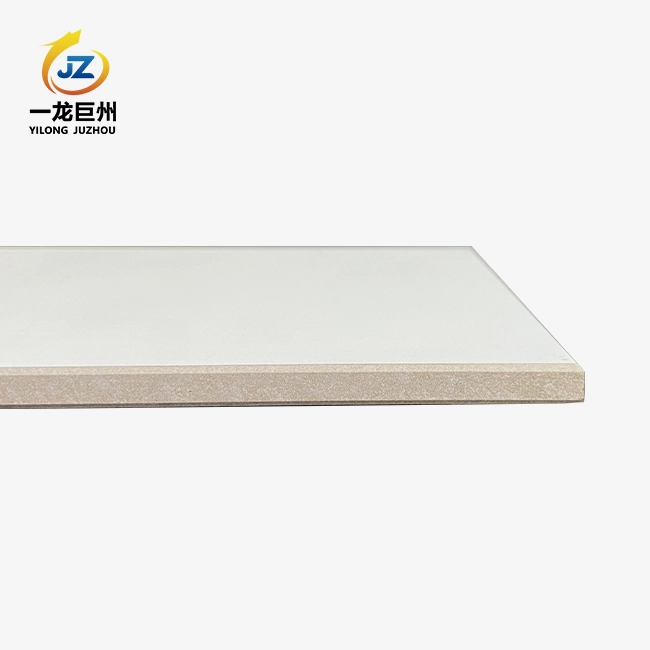
YILONG JUZHOU fibreglass resin board is made of fibreglass felt as the base and glued with resin. Then the board on both sides is covered with melamine paper. This layered construction results in a screen that is sturdy, holds its size, and does not warp with temperature and humidity changes. Finished with a top layer of melamine for an artistic effect on the surface. It also makes the surface scratch-resistant and easy to clean, which is especially significant in locations that have a lot of foot traffic.

Key Technical Specifications
It is available in different thicknesses: 1, 2, 3, 4, 5, 6, and 8 mm. Most sheets are of size 1220 × 2440 mm. These measurements are the same as normal building module lines, so there is less waste from having to trim things on site. Surface destroys 99.99% of germs, according to established tests. If you have a spot that needs to be kept clean, like a surgical room or a hospital environment, you can utilise this.

Manufacturing Quality Control
For Class A Non-Combustible wall boards, glue is carefully laid and set by heat and regulated pressure. Each sheet is of uniform thickness. Poor-quality laminates might delaminate due to holes and weak places. This technique removes those flaws. This creates a panel that will be structurally sound for the length of its use. That makes them cheaper to own than products that need to be updated constantly.
Comparing Fiberglass Resin Board with Alternative Materials
How It Stands Against Plywood, Metal, and Plastic Panels
Procurement teams often compare composite laminates to PVC wall panels, corrugated metal sheets, and plywood. Plywood soaks up water over time, which makes mold grow. This means it can't be used in healthcare areas. Metal sheets don't get wet, but they are heavy and make it harder to move and put together. If you leave PVC pieces out in the sun or heat for a long time, they will break down quickly and aren't very good at resisting fire.
The fiberglass resin composite panel is the only thing that can fix all of these issues. It's easier to put up than metal and doesn't need any special tools. It also meets strict fire rules used in public buildings all over the world and in the US, thanks to its A-grade rating as not flammable. If you look at the total cost over its whole life, not just the unit price, this composite laminate always gives you a good return.
Benefits and Advantages of Using Fiberglass Resin Board in Industrial Applications
The performance rating for this wall panel material looks at a lot of useful factors at the same time. This site is great for business-to-business buyers because of the following:
- Non-Combustible A-Group Rating: The panel has a rated Class A fire resistance and meets the International Building Code criteria for commercial occupancies and public institutions. This obviates the requirement for extra intumescent coatings or fire-certified gypsum backing in many setups.
- 99.99% Antibacterial Performance: The surface actively prevents the growth of germs, a must for hospitals, food processing facilities and pharmaceutical clean rooms where infection control standards are non-negotiable.
- Waterproof, Moisture-Proof and Mildew-Proof - The resin-fiber matrix is liquid penetration repellent, making it ideal for damp regions, tunnels, subway stations and any situation in which condensation or splash exposure is frequent.
- Surface That Won’t Scratch or Wear: The melamine paper surface resists abrasion from cleaning equipment, carts and foot traffic, so it stays free of scratches and other damage for years of heavy use.
- High Impact Resistance: The composite construction absorbs impact energy without breaking or denting, preventing the damage to the wall often experienced in corridors of schools, airports, and logistical facilities.
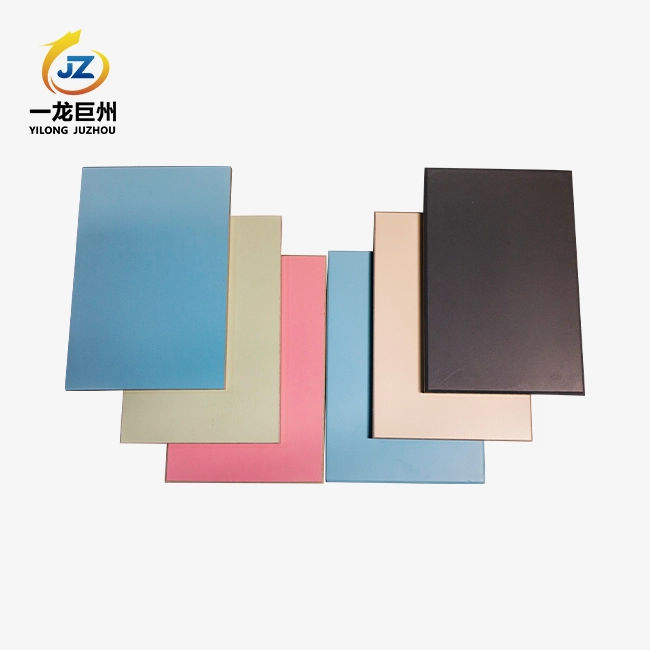
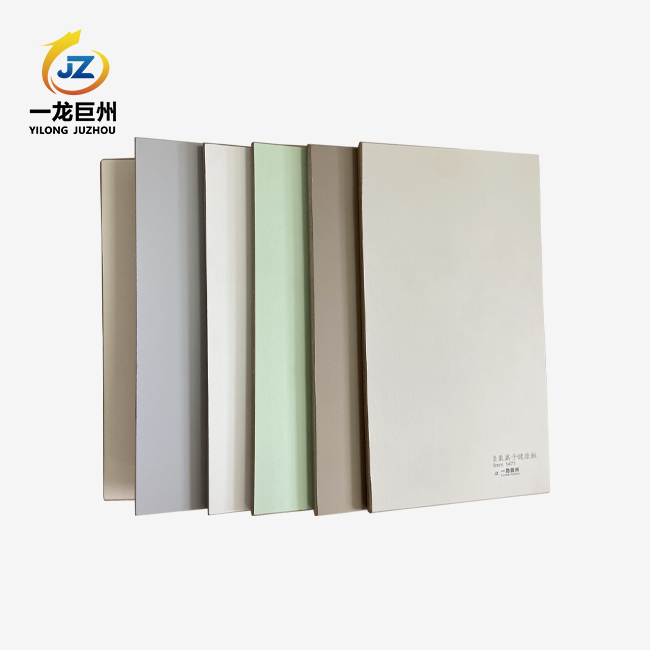
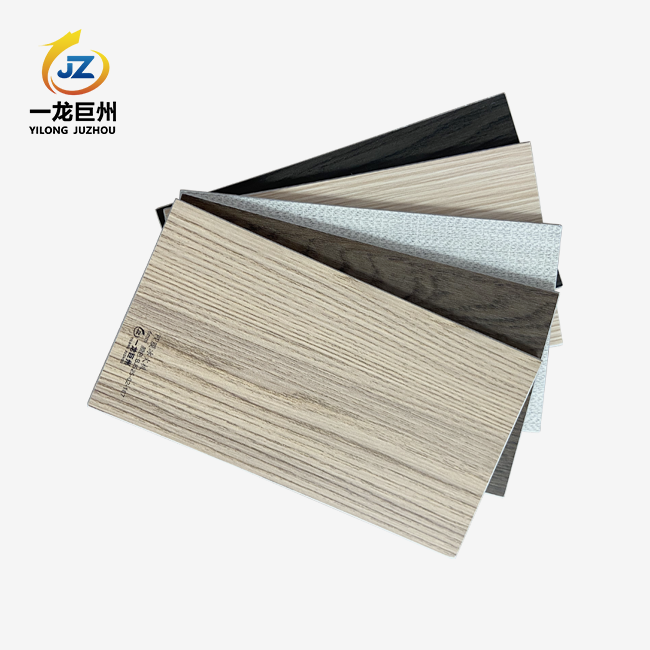
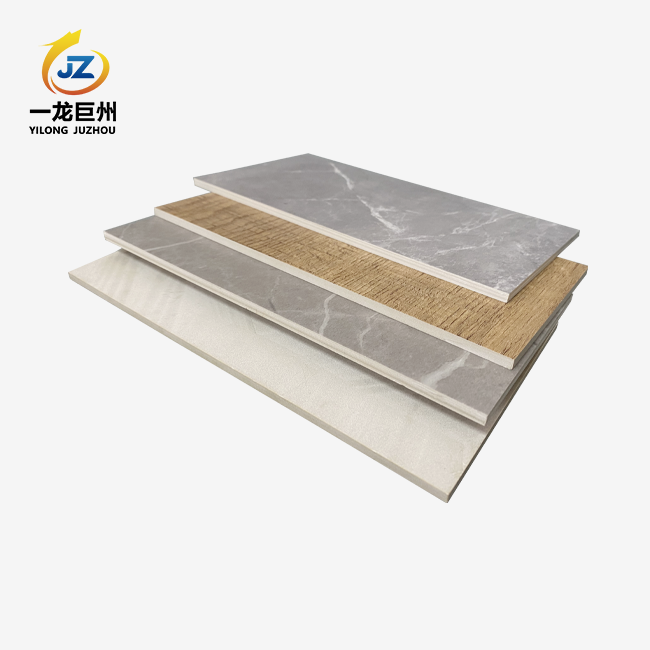
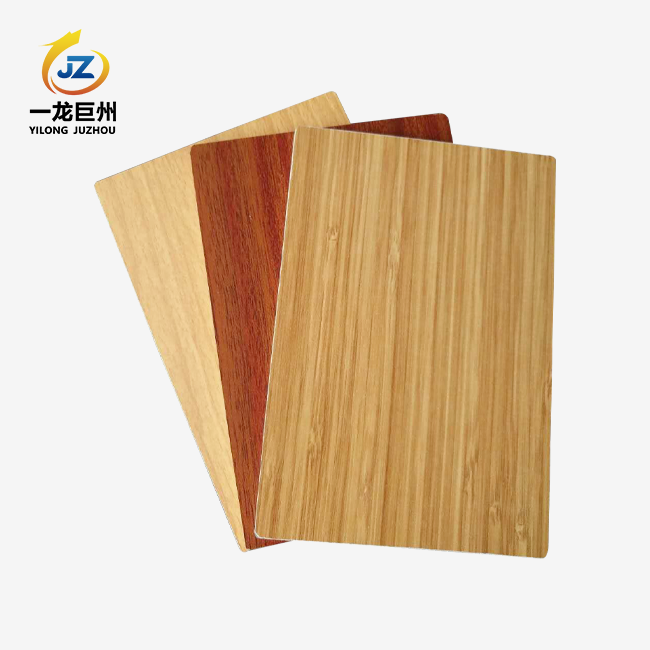
- Variety of Surface Finishes The panel is available in solid colour, woodgrain, marble pattern, metallic pattern and cloth texture, supporting a wide range of architectural aesthetics without compromising performance.
- Health & Environment Protection: The material has China Environmental Protection Standard Certification, ISO, and CE certification. Low-VOC emissions for healthy indoor air.
- Easy to install: Panels may be cut, drilled, and fixed with normal carpentry equipment, reducing labour time and skill on site compared to tile or stone alternatives.
Fiberglass resin board carries an “A-Grade” rating, meaning it is non-flammable. The panel meets Class A fire safety standards. These are the same standards that businesses and government buildings are required to follow under the International Building Code. In most cases, this means you do not need any additional fire-resistant coatings or gypsum backing.
Typical Uses and Application Scenarios for Fiberglass Resin Board
Public and Commercial Buildings
The panel believes that it will be used a lot in places like schools, hospitals, train stops, kindergartens, office buildings, and subways. When it comes to hygiene and impact resistance, the different working stresses in each place are taken into account. In the case of a hospital hallway, the floor needs to be able to be cleaned and sanitized several times a day without getting worn down. It is built to take that kind of damage.
Hospitality and High-End Residential
Class A Non-Combustible wall boards are suitable for use in hotels, high-end clubs, homes, and shopping malls thanks to their versatile decorative surface options. The panels feature woodgrain and marble patterns that mimic the look of expensive natural materials, but they are easier to install and weigh far less than natural stone. Users of these venues prefer this panel because it helps interior designers stick to their budgets while still delivering the high-end aesthetic you'd expect from a luxury hotel project.
Industrial and Specialized Environments
It's important that the materials don't let water or mildew in at places like food processing plants, drug factories, and tunnel linings. Because engineers can choose the exact width of each panel, they can easily see what kind of support is needed for a composite wall system. This cuts down on both over-engineering and the cost of materials at the same time.
How to Procure Fiberglass Resin Board: A Guide for International Buyers
If you want to buy composite wall panels from outside of China, it's best to deal with companies that have licenses that can be checked, extra production lines, and can help you with the design process. There are two factories for YILONG JUZHOU. One is in Foshan City, Guangdong Province, and the other is in Xianyang High-tech Zone, Shaanxi Province. This always makes it possible to keep big contracts.
Once an order is approved, the usual wait time is 3–7 days. However, there is a stock of 50,000 m² that can be sent right away. The ports of Shenzhen, Guangzhou, Shanghai, and Qingdao are where exports go. For road travel, you can go to Xi'an, Guangzhou, Shenzhen, or Foshan. Buyers can choose from different ways to send freight and save money with this area spread.
It can be set up with either OEM or ODM, so developers and distributors can ask for custom sizes, patterns on the surface, or branding. In three to five days, samples can be sent out. This gives design teams enough time to try the samples on their own before deciding to buy in bulk. Every package comes with a quality guarantee that lasts for three years. This lowers the financial risk of buying things on a long-term basis.
Conclusion
Today's business, healthcare, and industrial buildings need strong wall materials inside. Fiberglass resin board is an ideal option that fulfills this demand. Fiberglass resin composite panels are a great way to get what you need. Having a product that is resistant to fire, works well with antibiotics, keeps out moisture, and can be painted makes it easier to meet the high standards needed in controlled settings. When buying teams look at different kinds of B2B wall panel options, it's tough to discover ones that work just as well and cost as little.
FAQ
Q1: What thicknesses are available, and how do I choose the right one?
YILONG JUZHOU supplies panels in 1, 2, 3, 4, 5, 6, and 8 mm thicknesses. Thinner panels suit surface cladding over existing substrates, while thicker profiles provide additional rigidity for freestanding partition systems or areas with high impact exposure. The technical team can advise on the appropriate specification for your project during the sample stage.
Q2: Is the antibacterial performance independently verified?
The 99.99% antibacterial rate is based on standardized laboratory test protocols. The product holds China Environmental Protection Standard Certification, ISO, and CE certifications, all of which involve third-party audit processes.
Q3: Can I request custom colors or surface patterns?
Yes. OEM and ODM customization is available for surface finish, dimensions, and packaging. Standard options include solid color, woodgrain, marble, metallic, and cloth patterns. Custom designs can be accommodated with sufficient lead time.
Q4: How does pricing compare with ceramic tile or natural stone?
Per square meter, installed cost is typically lower than ceramic tile or stone when labor, substrate preparation, and weight-related structural reinforcement are included in the comparison. The reduced installation complexity of the panel system further lowers the total project cost.
Partner with YILONG JUZHOU — Trusted Fiberglass Resin Board Manufacturer
Every question is answered by YILONG JUZHOU within 24 hours, and free samples are sent out within 3–5 days. A lot of people in over 30 countries buy fiberglass resin board from our well-known business. For three years, we promise that every order will be of high quality, and we offer full technical help from the time of creation until installation. You can email us at cnyang2000114@gmail.com to get samples, talk about OEM needs, or get a volume quote that works for your project.
References
1. Hollaway, L. C. (2010). A review of the present and future utilisation of FRP composites in the civil infrastructure with reference to their important in-service properties. Construction and Building Materials.
2. Mouritz, A. P., & Gibson, A. G. (2006). Fire Properties of Polymer Composite Materials. Springer.
3. Pilato, L. A., & Michno, M. J. (1994). Advanced Composite Materials. Springer-Verlag.
4. American Composites Manufacturers Association. (2021). Composites Industry Report: Construction and Infrastructure Applications.
5. International Building Code. (2021). IBC Chapter 8: Interior Finishes — Fire Classification Requirements. International Code Council.
6. Sanjay, M. R., et al. (2018). A comprehensive review of techniques for natural fibers as reinforcement in composites: Preparation, processing and characterization. Carbohydrate Polymers, Elsevier.

Send Inquiry


Related Industry Knowledge
- Ice fireproof board Safety Certification and Testing Standards
- PP Healthy Panel Results: What Do They Mean?
- Painting Aluminum Composite Panel: A Step-by-Step Guide
- UV Antibacterial panels Material Structure and Coating Technology
- What is a PP healthy panel? Uses, Benefits & Future Trends Explained
- Why Choose ice fireproof board for Industrial Wall Protection?
- How to clean an aluminum composite panel?
- Why Calcium Silicate Aluminum Composite Boards Are Ideal for High-Temperature Environments?
- Where to buy aluminum composite panel?
- What are the common issues faced during aluminum panel installation, and how to avoid them?