
How Does melamine fireproof board Enhance Interior Fire Safety?
July 15, 2026
Fire safety is still the most important thing to think about when planning the inside of hospitals, schools, and businesses. Melamine fireproof board solves this important problem by combining a calcium silicate core with melamine paper layers on top. It is designed to be class-A fire-resistant while still being aesthetically pleasing. Unlike most decorative panels, which help fires spread faster, this composite material puts out fires on its own during thermal events, stops smoke from forming, and keeps structures from collapsing. This makes it an essential solution for architects and procurement teams who are in charge of high-traffic areas where life safety and regulatory compliance meet.
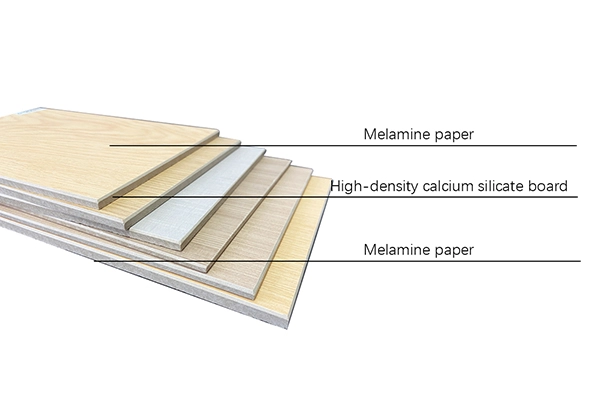
Understanding Melamine Fireproof Board and Its Fire Safety Properties
The way modern fire-resistant walls are made is the result of decades of progress in material science that has been shaped to fit stricter building rules.
What Makes This Material Structurally Different?
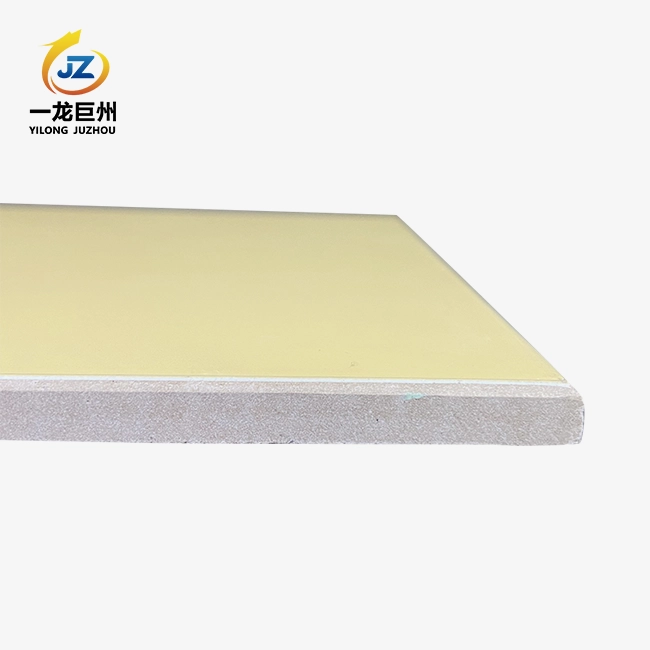
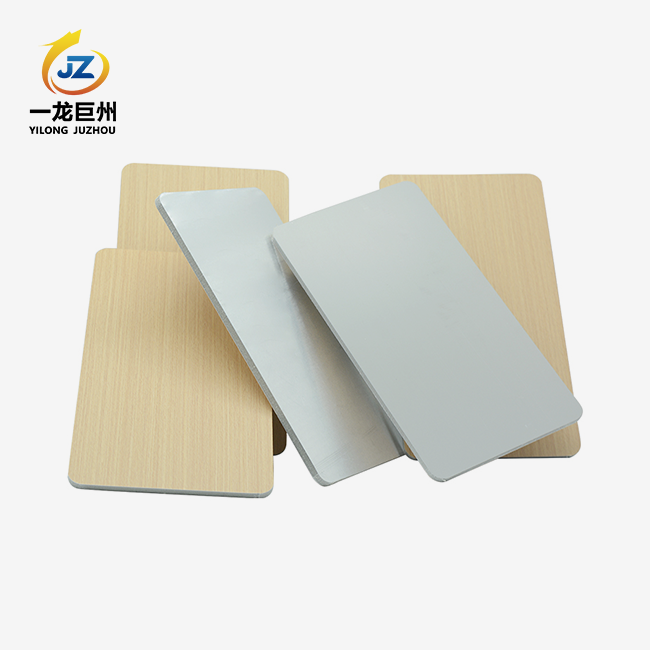
The panel is made up of a calcium silicate base, which is a mineral board that can't catch fire and was chosen for its high thermal stability, and ornamental paper that has been soaked in melamine resin on one or both sides. The calcium silicate base can withstand temperatures above 1000°C without breaking, and the melamine layer on top makes it durable and easy to clean, both of which are both important in educational settings. This two-layer design solves a problem that has been around for a long time: it combines fire safety with the visual freedom that customers want.
The board comes in different widths (4.5mm to 15mm) and normal sizes (1220mm × 2440mm) or custom heights up to 3050mm, so it can be used in a variety of ways. For industrial kitchens and hallways, thicker profiles are better at resisting impact, while thinner profiles are better for dividing walls where weight reduction is important.
Fire Resistance Ratings and Performance Benchmarks
To get Class A fire protection, a material must pass strict tests like ASTM E84 or EN 13501, showing flame spread indexes below 25 and smoke development grades below 450. During fire tests, the calcium silicate core creates a protective carbonisation layer that stops oxygen from moving. This slows down burning and stops flashover, which is the quick change from a small fire to a full-room fire that is most dangerous in tight areas.
Good, safe melamine panels usually have a density of more than 1350 kg/m³, which helps them have a stiffness and elasticity of about 9000 MPa. These mechanical properties translate to real-world resilience: the panels can handle being hit by moving medical equipment in hospitals, not getting dented by wheeled carts in airports, and keeping their shape under heat stress that would make regular MDF or plywood fall apart in minutes.
Chemical Safety and Environmental Compliance
In addition to its fire resistance, the material's low formaldehyde release profile (certified to E1 or E0 standards) addresses indoor air quality issues that are very important for schools and healthcare centres. UV curing is used in the production process to make a thick film on the surface that stops volatile organic compounds from escaping from the base. This means that places can be used right away after installation, without having to wait for off-gassing to happen.
The top layer of melamine fireproof board is resistant to weak acids, alkalis, and common disinfectants. It can keep its defensive qualities even after being cleaned many times with hospital-grade chemicals. This chemical stability makes the panel last longer while keeping its fire-resistant properties. This is different from painting surfaces, which wear down over time and reveal flammable bases.
How Melamine Fireproof Board Enhances Interior Fire Safety: A Functional Analysis?
Understanding how fire protection works helps people who work in buying choose the right materials.
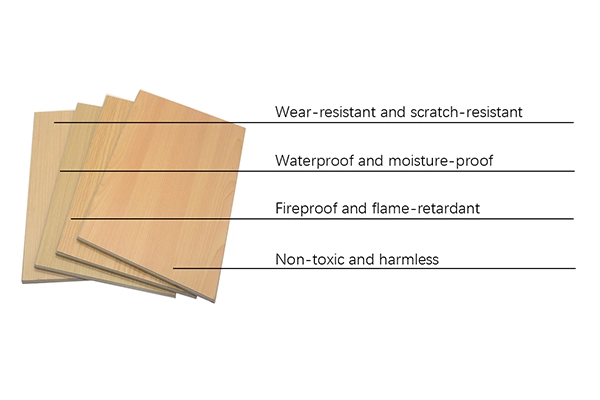
Flame Spread Barriers and Heat Transfer Reduction
By stopping flames from spreading across wall surfaces, the board acts as a passive fire defence system. When melamine is put in direct flame, the surface breaks down in a way called endothermic breakdown, which absorbs heat energy instead of adding to the fire. In the meantime, the calcium silicate core keeps heat from getting to nearby flammable materials or structural parts by acting as a thermal barrier.
Comparative testing shows that some options are much better than others. Standard MDF will catch fire in three to five minutes when it comes in contact with a 500°C heat source. Fire-resistant treated plywood may take eight to twelve minutes to catch fire, but it will finally keep burning. The melamine fireproof board, on the other hand, can stand up to long-term contact without catching fire. Depending on its thickness, it can protect for 60 minutes or more. This difference can be measured in lives saved during emergency evacuations.
Structural Stability Under Thermal Stress
A lot of the time, traditional artistic panels break before they catch fire because they bend and come loose from the wall, leaving gaps where flames can spread behind finished surfaces. Due to its structural stability, calcium silicate makes sure that the panel stays in place during a fire, creating separate areas that stop the fire from spreading to other rooms or floors.
If a material has an impact resistance rating of above 3N in scratch hardness and above 400 cycles in Taber abrasion tests, it means it can handle damage that could compromise fire shields. If you break a gypsum board, the insulation inside could become exposed and catch fire. The fireproof melamine panel's tough surface keeps its defensive function even after regular wear in high-traffic areas.
Long-Term Maintenance and Performance Preservation
Fire safety isn't just about the day it's installed; it needs elements that keep their fire-resistant qualities over time. The non-porous surface of melamine keeps water away, which stops mould growth that weakens the fire protection of porous materials. Cleaning it regularly with normal cleaners keeps it clean without wearing away the fire-resistant layer, which is different from painting surfaces that need to be re-coated often.
Edge closing with PVC or ABS bands keeps the calcium silicate core safe from damp places like bathrooms and kitchens, so it stays the same size for a long time. When installed correctly, with the right fixing and joint treatment, the panel will continue to play its part in the general fire compartmentalisation strategy.
Certifications That Validate Reliability
Third-party testing by reputable groups gives the proof needed for building reviews and insurance compliance. Melamine fire and ice board panels that are approved by ASTM E84, EN 13501, or other similar foreign standards have been through a lot of tests to make sure they don't spread flames, smoke, or harmful gases. These certifications give project managers peace of mind that the material will do what it's supposed to do for many years to come, since business buildings last for decades.
Choosing the Right Melamine Fireproof Board for Your Project
To choose the right fire-resistant walls, you have to balance technical requirements with the needs of the project.
Evaluating Manufacturers and Quality Indicators
On the global market, there are manufacturers whose quality control and expert help skills are not all the same. Established manufacturers keep their factories ISO-certified, test their materials all the time, and give architects and engineers a lot of detailed information that makes the design process easier.
When evaluating possible suppliers, procurement teams should make sure that the certifications are real, look at example panels to make sure that the surface finish is consistent, and make sure that there is expert support available to help with installation. Manufacturers that offer both OEM and ODM services are able to adapt to the needs of each project, whether that means changing the sizes or colours to match the finish on a building piece.
Customisation Options for Specific Fire Safety Requirements
Picking the right thickness has a direct effect on both how long the fire resistance lasts and how the fitting is done. A 6 mm panel is enough to protect office walls with one-hour fire ratings, while 12 mm to 15 mm panels offer better protection for hallways and exits that need two-hour ratings. The width of the panel also affects how well it blocks noise and keeps heat in, which are both important benefits for healthcare facilities that put patient comfort first.
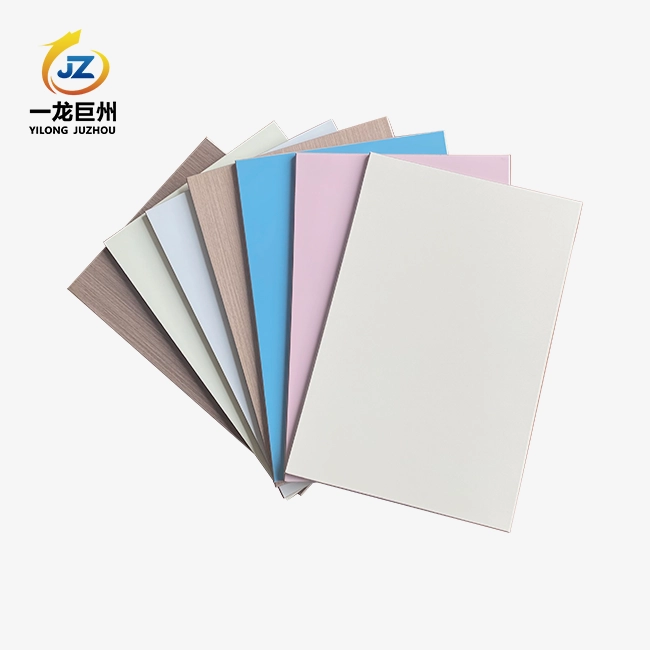
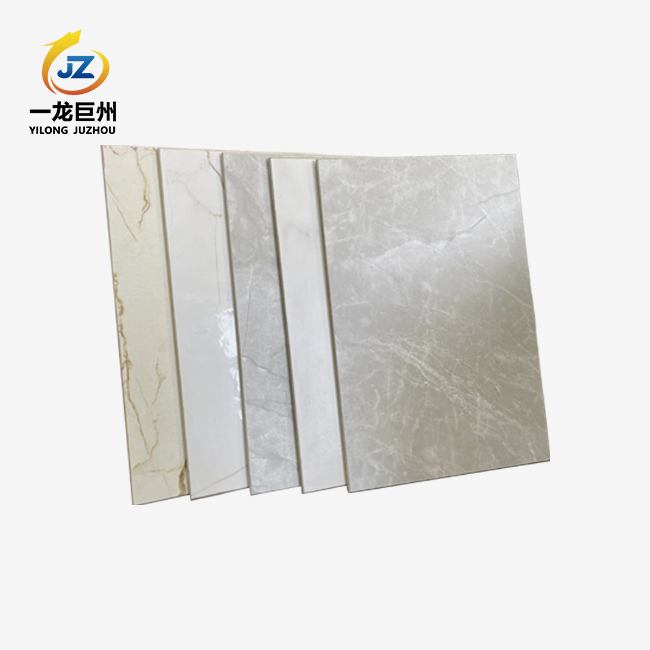
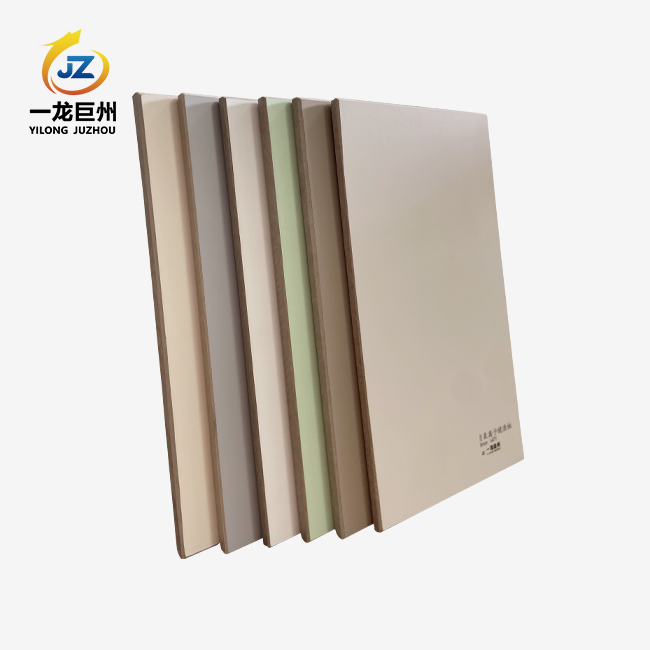
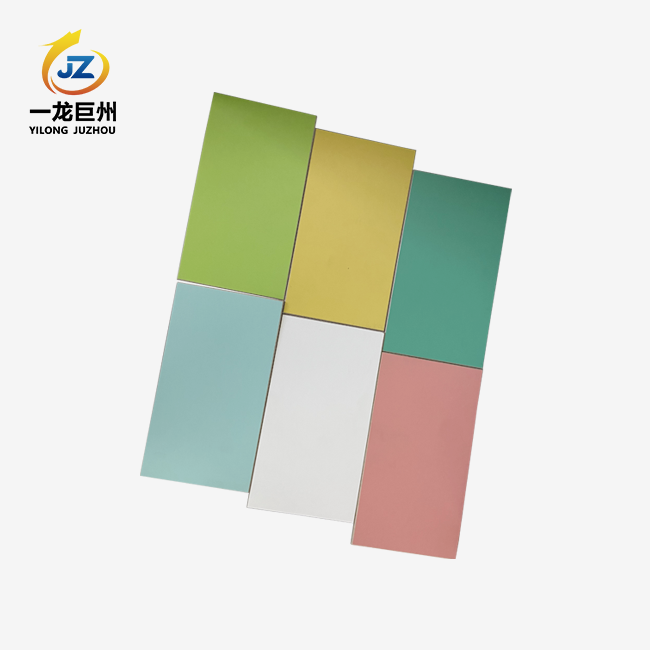
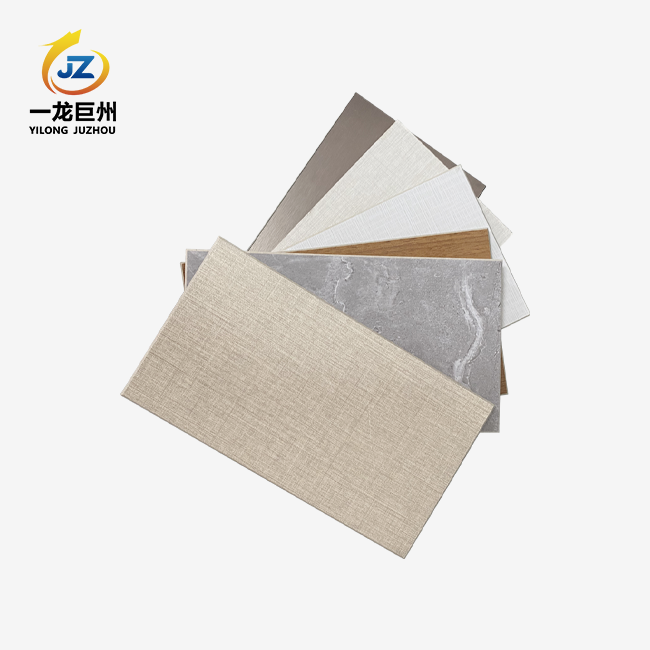
The range of surface finishes goes beyond fire safety and into the world of design integration. Solid colours look good in simple administrative settings, while woodgrain designs add visual warmth to hospitality settings without adding any materials that could catch fire. Designers can use marble and silver patterns to give hotel halls and high-end office buildings a luxurious look while still following all fire safety rules.
Balancing Cost with Performance Requirements
Different types of projects have very different budget limits. The budget for remodelling a public school is different from the budget for building a high-end hotel, but both need approved fire safety. The projected service life, installation labour, and upkeep costs are all part of the lifecycle cost. This gives a more accurate picture of the value than just looking at the original material cost.
Usually, melamine fireproof board panels cost more than regular decorative surfaces. However, this investment saves money on insurance premiums because they are safer, and it also saves money on replacement costs because they don't get damaged as easily as cheaper options would. The total cost of ownership often favours higher-quality fire-resistant materials over the course of a building's 20-year life.
Supplier Reliability and Warranty Coverage
Timelines for projects rely on materials being available at all times and being delivered on time. Suppliers who keep a lot of stock, like YILONG JUZHOU, which has 50,000m² of stock across all of its production sites, can meet both instant needs and phased building plans without having to stop supplies.
Warranty terms show how confident the maker is in the melamine paper fireproof wall panel product's longevity. If materials don't meet standards, project owners can get their money back through a three-year quality warranty that covers delamination, discolouration, and loss of fire performance. Technical help that responds quickly (answers within 24 hours) keeps installation delays from affecting the rest of the construction plan.
Conclusion
Interior fire safety in commercial buildings depends on material selections that balance regulatory compliance, long-term durability, and design flexibility. Melamine fireproof board panels made with calcium silicate cores and melamine surface layers offer Class A fire resistance, great impact resistance, and long-lasting performance that doesn't need any upkeep in healthcare, transportation, and office settings. Because they have been shown to stop the spread of flames, keep their protective properties for decades of use, and not break under high temperatures, builders and building managers who put life safety first can't do without them. The material's antibacterial properties, chemical protection, and environmental safety credentials meet all of the needs of modern educational buildings. It provides a complete answer that doesn't have the performance problems that come with other options.
FAQ
1. How does fireproof melamine board compare to standard fire-retardant coatings?
When applied to flammable surfaces, fire-retardant coatings offer short-term protection that wears away over time due to UV exposure, cleaning, and mechanical wear. The coating forms a shield on top, but it doesn't change how flammable the material underneath is. This means that parts that have been damaged will return to full combustibility. Fireproof melamine panels have non-combustible calcium silicate layers that make the whole structure fire-resistant. This means that the panels will always be safe, even if the surface gets worn down. The panels keep their Class A grades for as long as they are in use; they don't need to be reapplied.
2. Are these panels safe for environments requiring strict VOC controls?
The materials get formaldehyde emission certificates of E1 or E0 and don't have any benzene or other volatile organic chemicals in them. During production, UV curing makes a thick film on the surface that surrounds the base and stops gas from escaping. After installation, air quality tests always show that the panels are ready for use, without the off-gassing time that is needed for systems with a lot of adhesives or painted finishes. This makes them perfect for schools, hospitals, and other sensitive places.
3. What certifications should procurement teams verify before purchase?
Buyers should make sure that the product has a Class A fire resistance certification from a recognised standard like ASTM E84 or EN 13501, as well as environmental compliance certifications for formaldehyde emissions from CARB Phase 2 or TSCA Title VI, and ISO 9001 quality management proof to make sure that the product is consistently made. Instead of just believing what the maker says, get test results from approved labs and make sure the certification applies to the exact product setup being bought, since differences in thickness and finish can affect scores.
Partner with YILONG JUZHOU for Certified Fire Safety Solutions
YILONG JUZHOU has two factories, one in Shaanxi and one in Guangdong. They keep a 50,000m² inventory on hand to meet the needs of current projects and accommodate phased building plans. As a melamine fireproof board maker, we can fully customise everything from the thickness and size of the panels to the designs on the surfaces to match your architectural vision. Our products are backed by ISO and CE certifications that show they meet international building codes. We offer free customised samples that are sent within 3–5 days, so you can try them out before making a full purchase pledge. Our expert team is available 24 hours a day, seven days a week, and we promise the quality of our work for three years. They will help you with your projects from the planning stages to the installation phase, making sure that fire safety systems work as planned for their entire lifetime. Email us at cnyang2000114@gmail.com to talk about your project needs and get reliable protective panel options.
References
1. National Fire Protection Association. NFPA 101: Life Safety Code Handbook. 2021 Edition. Quincy, MA: NFPA Publications.
2. ASTM International. ASTM E84-21: Standard Test Method for Surface Burning Characteristics of Building Materials. West Conshohocken, PA: ASTM International Standards Organization.
3. European Committee for Standardization. EN 13501-1: Fire Classification of Construction Products and Building Elements Using Data from Reaction to Fire Tests. Brussels: CEN Publications, 2018.
4. Green Building Council. Fire Safety and Sustainable Materials in Commercial Construction: Performance Analysis and Lifecycle Assessment. Washington DC: USGBC Research Division, 2020.
5. Society of Fire Protection Engineers. SFPE Handbook of Fire Protection Engineering, Fifth Edition. New York: Springer Publishing, 2016.
6. International Code Council. International Building Code Chapter 8: Interior Finishes and Fire-Resistance-Rated Construction. Country Club Hills, IL: ICC Publications, 2021.

Send Inquiry

Related Industry Knowledge
- PE Aluminum Composite Board Sheet: Sizes, Specs and Uses
- How Does melamine fireproof board Enhance Interior Fire Safety?
- melamine fireproof board Durability in High-Traffic Environments
- Why Choose Inorganic pre-coated panels for Wall Cladding Systems?
- Where Are Antibacterial Wall Panels Most Commonly Used
- ice fireproof board Applications in Cold Storage and Fire Safety
- UV Antibacterial panels vs Traditional Wall Panels: Key Differences
- A Buyer's Guide to Aluminum Composite Material (ACM)
- Calcium Silicate Aluminum Composite Board Explained: Structure, Benefits, and Uses
- Print on Aluminum Composite Panel: A Modern Twist on Traditional Wall Art