
Why Choose Inorganic pre-coated panels for Wall Cladding Systems?
July 14, 2026
Picking the right material for wall siding is an important part of any building job. Developers, site managers, and industry operators who require dependability, safety, and long-term performance have chosen inorganic pre-coated panels as their preferred option. These panels have a calcium silicate board base and UV-cured antibacterial coats on top of it. This makes them non-flammable, clean, and easy to style. They have Class A fire ratings, kill 99.99% of bacteria, and don't need much upkeep, all of which directly lead to lower lifetime costs and better safety for occupants. This wall-covering technology meets the important needs of modern construction sites, like when you're making an operating room in a hospital, a cleanroom for pharmaceuticals, or a tube stop with a lot of foot traffic.
Understanding Inorganic Pre-Coated Panels: Composition and Benefits
What Makes Inorganic Pre-Coated Panels Unique?
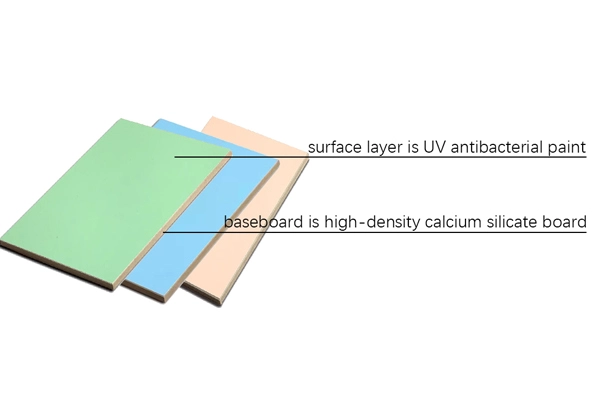
At their heart, these panels are made up of a calcium silicate board base and an antibacterial surface covering that has been UV-cured. This artificial material is made of minerals, so it is naturally resistant to fire and keeps its shape even when it gets wet. The UV coating process makes a thick, chemically linked film that doesn't let germs grow and is resistant to scratches and chemical cleaners that are common in food processing and healthcare settings. This structure doesn't break down or release volatile chemicals like biological composite materials do. It stays safe and inert throughout its service life.
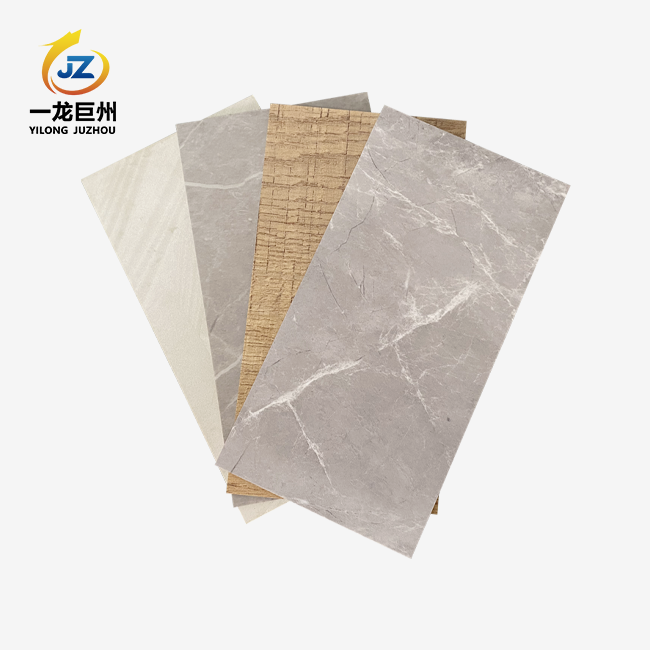
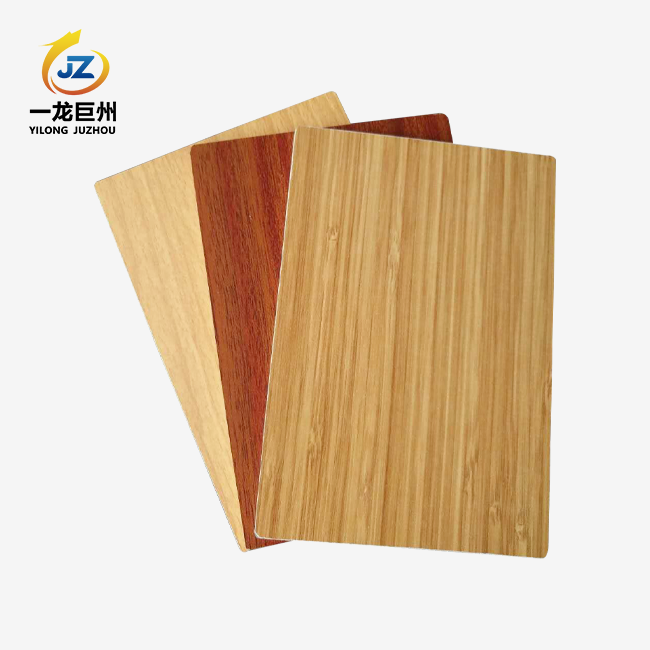
YILONG JUZHOU's factories in Shaanxi and Guangdong use controlled workplace conditions to make the products. Precise stacking and curing methods make sure that the quality of each batch is the same. The panels come in normal widths of 1220mm and lengths of up to 3050mm, and their thicknesses can be changed from 4.5mm to 20mm. They are also ready to be installed. Surface finishes come in basic colors, woods, marble, metallic, and cloth patterns, and more. This gives designers a lot of options without sacrificing function.
Core Benefits That Matter to Your Projects
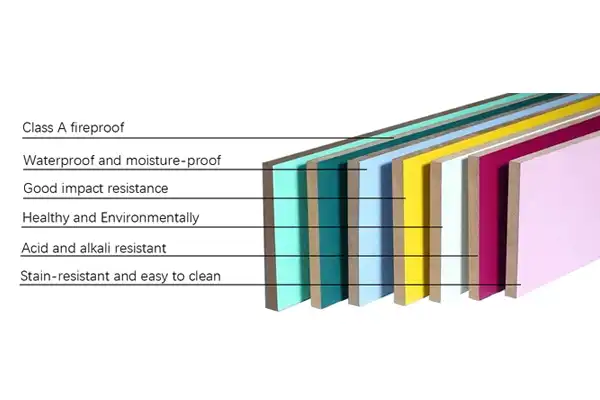
There are measured benefits to these wall covering systems that have a direct effect on project costs and schedules. The antibacterial layer gets rid of 99.99% of surface germs, which is enough to meet strict infection control standards in hospitals and cleanrooms without having to keep applying chemicals. Fire resistance rated as GB8624 Class A non-combustible makes sure that building rules are followed in places like caves, high-rise buildings, and institutions where fire safety is a must.
Mold growth and structural damage are stopped by moisture resistance in damp places like food factories and drug plants. Impact resistance keeps walls safe from things like shopping carts, people walking by, and accidents, which can happen in places like schools, shops, and arenas. Since the panels don't contain any benzene or flammable chemicals, they can be used right away after installation without having to wait for them to "off-gas." Color stability from UV curing means that walls will look good for decades, so they don't need to be painted as often as standard wall systems do.
Labor costs go down a lot when installations are done efficiently. With factory-customized panels, the quick pressure strip method lets crews finish jobs faster than with regular plasterboard or tile. This speed is very important, especially for phased building plans where delays affect many trades.
Comparing Inorganic Pre-Coated Panels with Alternative Cladding Options
Why They Outperform Aluminum Composite Panels?
Standard aluminum composite panels have a plastic core that only gets Class B fire ratings most of the time. When there is a fire, these things can give off harmful smoke and help the flames spread, which is dangerous in places with a lot of people. With their mineral base, inorganic pre-coated panels completely remove this risk and achieve Class A1 non-combustibility without the use of fire-retardant additives that break down over time.
Inorganic pre-coated panels, with a calcium silicate structure, are also good for resisting corrosion. Metal-based systems rust when they are used in coastal buildings or tunnels where salt air and water are present. In situations that would break down aluminum panels in years, the inorganic base stays solid in terms of size and structure. As a result, less maintenance is needed because building teams don't have to change panels and reseal them all the time, which is common with composite materials.
Advantages Over Powder-Coated Steel and PVC Panels
Powder-coated steel is pretty durable, but it doesn't have the antibacterial qualities that are needed in healthcare and food processing. Steel also moves heat around, which can make cold spots that can grow mold and condensation in places where the temperature is managed. PVC walls can prevent some water damage, but they give off plasticizers over time and can catch fire and produce toxic smoke.
These holes are filled with calcium silicate panels that have UV coats that kill germs. Their artificial makeup automatically stops living things from growing on them without any chemical help. In climate-controlled areas, thermal insulation lowers the cost of energy use. The UV-cured surface has a Mohs hardness grade of 4-6H, which is much higher than most building paints. It also keeps its look even after being cleaned very hard. These panels are better for the environment because they are made of reusable materials and help earn points for LEED and BREEAM green building standards.
When procurement teams look at lifetime value, they see that higher original material costs are quickly cancelled out by lower energy use, less upkeep, and longer replacement intervals. When projects are looking at the total cost of ownership, these wall-covering solutions always come out on top.
Practical Applications and Performance of Inorganic Pre-Coated Panels
Healthcare and Cleanroom Environments
The toughest places for wall cladding are operating rooms, intensive care units, and cleanrooms where drugs are made. Surfaces in these areas need to be able to handle being sterilized with vaporized hydrogen peroxide, disinfected with chlorine, and cleaned with water often without breaking down. The UV antibacterial coating stays in place even after thousands of cleaning rounds, keeping its 99.99% germ-kill rate, which was confirmed by ISO testing.
Seamless fitting methods reduce the number of places where dirt and other things can get stuck. In cleanrooms that follow ISO 14644 standards, where particle counts must stay within tight limits, anti-static qualities stop dust from sticking to surfaces. More and more, veterinary hospitals and medical beauty centers are choosing these panels because they can meet the standards for human healthcare while also being durable enough to handle stress from animals.
Tunnel and Transportation Infrastructure
Underground stops and high-speed train tunnels in cities are subject to special environmental stresses. Walls are constantly being shaken, the temperature changes, underground seepage causes humidity, and car exhaust leaves deposits. Class A products must be used to protect escape paths because of fire safety rules. These panels have special diffuse reflection coatings that cut down on driving glare and make the best use of lights, which increases safety without adding more electricity infrastructure.
The heart doesn't absorb water, so the structure doesn't break down over time like it does in regular gypsum-based systems. The chemically neutral surface makes it easy for maintenance teams to clean off road salt and carbon deposits. Municipal transport authorities that are in charge of infrastructure that lasts for decades find that the low upkeep needs and reliability work well with their limited running budgets.
Commercial and Institutional Facilities
These panels are good for schools, shopping stores, and office buildings because they can look good in all of those places. Architects ask for marble and wooden designs that look like expensive natural materials but are much lighter and cheaper. Color consistency across big installations creates a uniform look that can't be achieved with standard painting.
Impact resistance keeps hallways and shared areas that get a lot of use from getting dents and scratches. The antimicrobial and moisture-proof qualities are used to keep food factories and business kitchens clean. Because panels can be put up in existing buildings without a lot of demolition, they are perfect for remodeling projects where people need to stay in the building during work.
How to Make an Informed Purchase: Procurement and Supplier Selection Guide
Evaluating Supplier Capabilities and Certifications
Checking the qualifications of the manufacturer is the first step in a successful purchase. Check that the sellers you're considering have ISO quality control standards, CE marking for European markets, and compliance with the China Environmental Protection Standard. YILONG JUZHOU has two production bases in Shaanxi and Guangdong. This gives the company's supply chain redundancy and faster shipping times to big seaports like Shanghai, Shenzhen, Guangzhou, and Qingdao.
When projects are scaled up, the production ability of a medical clean room is important. Reliable suppliers can keep up with tight building schedules without any delays because they keep 50,000 square meters of stock on hand and can start making things in 3 to 7 days. Check the warranty terms. Reputable makers offer three-year quality promises that cover things like delamination, fading, and the strength of the structure.
Customization and Technical Support
Standard panel sizes work for most uses, but complicated building plans need special sizes and finishes. When a supplier offers both OEM and ODM services, they can make custom specs for each project. Ask for samples. YILONG JUZHOU gives away free samples within 3–5 days, so you can try them out before you decide to buy a lot of them.
Technical help during the planning and installation stages prevents mistakes from happening that cost a lot of money. Suppliers should help with the paperwork needed for fire tests for building permits, give instructions on how to put up different mounting systems, and help with fixing problems during construction. Smaller projects are affected by minimum order numbers (MOQs). Make sure that the MOQs you need match your volume needs.
Pricing and Value Assessment
Material costs change based on order number, thickness, and the difficulty of the finish. Ask for thorough quotes that break down the price per unit, the cost of shipping, and the terms of payment. Volume-based savings can cut the cost of each panel by a lot for big jobs. But don't just look at ex-factory prices; also look at landing costs that include freight and import taxes.
Look at the total value, which goes beyond the buying price. Figure out how much you will save on maintenance over the course of 20 years by not having to paint or fix things as often. Think about how efficient the construction workers are—panels that can be put up faster save workers the same amount of money. Lifecycle cost models for temperature-controlled buildings should include the energy savings that come from better thermal performance.
Future Trends and Environmental Impact of Inorganic Pre-Coated Panels
Sustainability and Green Building Contributions
The construction industry around the world is under more and more pressure to have less of an effect on the earth. These wall covering systems meet a number of standards for sustainability at the same time. Low VOC emissions during and after installation improve room air quality, which is a key factor for getting LEED and WELL building approvals. When compared to composite materials that need special removal, calcium silicate substrates that can be recycled lower the amount of trash that ends up in landfills.
A better energy economy comes from thermal insulation qualities that lower the loads on HVAC systems. Panels help buildings get better energy ratings, which lowers their carbon footprints over many years of use. When companies invest in clean production methods and renewable energy at their factories, their goods are even better for the earth.
Technological Advancements and Market Growth
Coating technology keeps getting better, with nanocoatings that clean themselves and better protection against scratches and UV light. More research into how well antibiotics work against new pathogens increases their usefulness in designing for pandemics. Digital printing lets you make photorealistic finishes and unique graphics, which gives branded surroundings new ways to look good.
The market is growing faster, especially in healthcare infrastructure growth, where choices about specifications are based on preventing infections. Institutional buildings that are getting old need repairs that meet current safety standards without having to be rebuilt from scratch. This is a perfect situation for panel-based solutions. For public safety, investments in transport facilities around the world focus on long-lasting materials that are not flammable.
Companies that use these new materials, medical antibacterial wall panels, in their purchasing plans are seen as stars in sustainability and save money in the long run. Early adopters have an edge over their competitors because their running costs are lower and their facilities work better.
Conclusion
Choosing wall covering materials requires a thorough look at how well they work, how safe they are, how much they cost, and how they affect the environment. From non-combustible fire safety and 99.99% antibacterial protection to artistic flexibility and decades-long longevity, inorganic pre-coated panels offer quantifiable benefits in every area. These systems have been shown to be reliable, which is good for healthcare facilities, transportation infrastructure, business projects, and industrial operations. With specifications that can be changed, quick delivery times, and full expert support, they are a smart investment that saves people, lowers lifecycle costs, and meets changing sustainability standards. With mineral-based construction, UV-cured coatings, and precise production, a wall cladding option is made to meet the needs of current building sites.
FAQ
1. Are inorganic pre-coated panels suitable for all climate zones?
Of course. The calcium silicate base stays the same size even when temperatures drop below zero or rise to tropical levels of heat. Moisture protection keeps things from breaking down in wet coastal areas, and UV-stable coatings keep things from fading in hot deserts. These panels are reliable for use inside and outside anywhere in the world because they are made of artificial materials that don't crack when they freeze and thaw.
2. How do inorganic pre-coated panels compare with aluminum composite panels in fire safety?
A lot of standard aluminum composite panels have Class B polyethylene bases, which can spread fire and harmful smoke. Because they are made of minerals, inorganic pre-coated panels are Class A1 noncombustible because they don't give off any dangerous gases when they catch fire. Because of this important difference, they have to be used in many high-rise buildings, caves, and institutions where fire rules don't allow flammable materials.
3. What warranty terms are typically offered by top suppliers?
Manufacturers with a good reputation, like YILONG JUZHOU, offer three-year quality warranties that cover structural stability, coating adhesion, and color fastness. For some uses, you may be able to get longer guarantees. Make sure that the warranty covers delamination, antibiotic performance, and fire rating maintenance for the whole time of the warranty term to make sure that your investment is fully protected.
Partner with YILONG JUZHOU for Your Wall Cladding Needs
Decisions about specifications have an effect on how a project turns out for years after the building is done. YILONG JUZHOU can help you with your wall covering needs because they have direct access to high-quality Inorganic pre-coated panel systems from the plant. Our two factories, one in Shaanxi and one in Guangdong, keep a lot of stock on hand so that orders can be filled quickly. Our technical teams also help with design from the proposal stage all the way through installation. We know the performance standards your projects need because we are a reputable producer of Inorganic pre-coated panels serving the healthcare, transportation, and business sectors worldwide. You can email our team at cnyang2000114@gmail.com to get free samples, talk about unique requirements, or get quotes for your job. Partner with a reputable provider who is dedicated to the success of your project and enjoy the quality and dependability that comes with it.
References
1. Chen, W., & Liu, H. (2021). Fire-Resistant Building Materials: Performance Standards and Testing Methods. Building Science Press.
2. International Code Council. (2023). International Building Code: Chapter 8 – Interior Finishes. ICC Publications.
3. Zhang, Y., Wang, S., & Li, Q. (2022). "Antimicrobial Performance of UV-Cured Coatings in Healthcare Environments." Journal of Hospital Infection Control, 48(3), 215-229.
4. American Society for Testing and Materials. (2023). ASTM E84 – Standard Test Method for Surface Burning Characteristics of Building Materials. ASTM International.
5. Green Building Council. (2023). LEED v4.1 Building Design and Construction: Material Selection Credits. USGBC Publications.
6. Thompson, R., & Martinez, D. (2022). "Lifecycle Cost Analysis of Wall Cladding Systems in Commercial Construction." Construction Economics Review, 37(2), 145-162.

Send Inquiry

Related Industry Knowledge
- What Are The Advantages of an exterior ACP Sheet?
- What Are Inorganic pre-coated panels and How Are They Made?
- Why Choose Inorganic pre-coated panels for Wall Cladding Systems?
- How to Beat the Heat with Aluminium Composite Panels
- How to clean an aluminum composite panel?
- Top 10 Tips for Working with Aluminum Composite Material Panels
- Why Calcium Silicate Aluminum Composite Boards Are Ideal for High-Temperature Environments?
- Innovative Coated Aluminum Composite Panel Projects to Transform Your Space
- How to Choose the Right Calcium Silicate Aluminum Composite Board for Your Project
- The Rise of ACP Panels for Modern Kitchen Design