
How Durable Is an Exterior wall ACP panel in Harsh Weather?
November 17, 2026
Exterior wall ACP panels are engineered to withstand punishing environmental conditions across decades of continuous exposure. Composed of two aluminum skins bonded to a fire-resistant mineral core, these aluminum composite panels resist UV degradation, moisture infiltration, corrosion, and thermal cycling with measurable consistency. Independent salt-spray tests show quality ACP cladding retaining structural integrity beyond 20 years when properly installed and maintained. Whether your project faces coastal humidity, desert heat, or freezing winters, a well-specified exterior ACP panel delivers dependable façade performance that protects both the building envelope and your investment.
Understanding Exterior Wall ACP Panels and Their Durability
The way facades are built today has changed because of aluminum alloy panels. These panels are strong and light. Because ACP panels are made of two layers, mechanical stress is spread out evenly across their face. This means that they don't dent or bend when the weather gets hot or breezy. This is not the same as solid aluminum sheets or regular cement renders.
What Makes an ACP Panel's Structure So Resilient?
The main material of the panel is what makes it different. At YILONG JUZHOU, the ACP panel has aluminum skins that are between 0.1 mm and 0.5 mm thick and cores made of refractory material on both sides. There are options for total panel thickness of 2 mm, 3 mm, 4 mm, 5 mm, and 6 mm, so buying teams can choose the right thickness for the building. The top coat of polyester paint makes the finish smooth and stable in UV light. It can also be mixed to match any Pantone color.
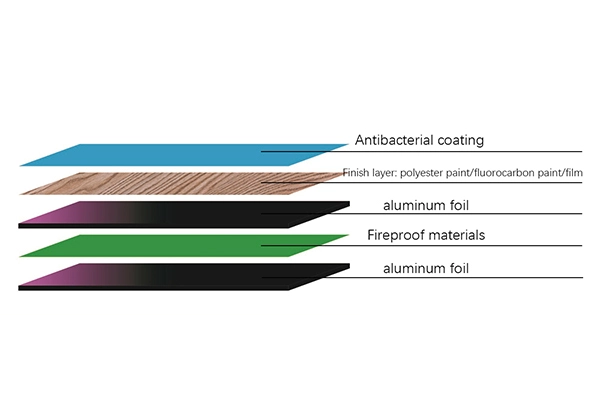
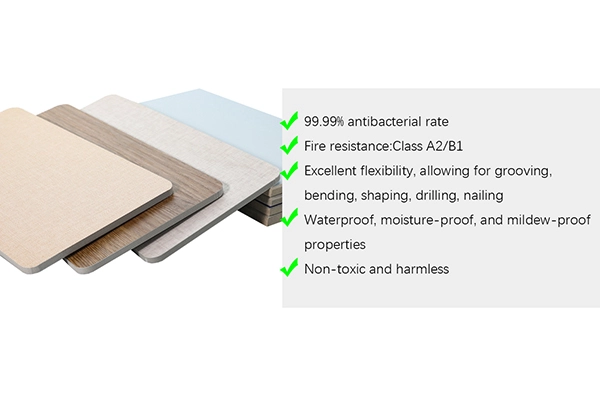
Exterior ACP panels, following strict rules set by international building rules, have Class A2 and B1 fire ratings. This means it won't catch fire. It is known as a green building material because it doesn't have any formaldehyde, smell, or radiation in it. When healthcare and education institutions buy materials, this is an important feature for them to look for.
Core Durability Challenges and How Exterior Wall ACP Panels Overcome Them
Environments always put stress on building materials used on the outside. Small cracks let water in, UV light ruins top coats, wind loads bend cladding over and over, and freeze-thaw cycles make every joint bigger and smaller. It is possible to measure how fast each of these forces eats away at standard materials.
Fire and Moisture Resistance
Not only at the joint, but also at the panel level, a good aluminum composite coating keeps water out. Waterproof, resistant to getting wet, and immune to mildew. Because the mineral-filled core doesn't soak up a lot of water, fiber cement boards don't separate or swell up where they get wet.
UV Stability and Corrosion Protection
The YILONG JUZHOU panels' polyester covering is put on in a controlled setting at the plant, and it sticks very well to the metal base. Acid rain doesn't chalk, fade, or scratch this surface. As you move closer to the coast, salt spray speeds up rusting. The natural oxide layer on the metal skin and the paint finish work together to protect against corrosion.
Impact and Mechanical Durability
It is less likely that aluminum alloy panels will break than ceramic or glass tile covering. They won't break when hit at low speeds, which makes them perfect for places like airport lobbies, subways, and stadiums where a lot of people walk by. You can bend the material into curved forms for the front of your house without breaking the top layer because it is very flexible.
This is why ACP siding is still the most popular choice for building new businesses and remodeling old ones in tough places around the world.
Comparing Exterior Wall ACP Panels with Alternative Cladding Materials
A lot of the time, concrete, fiber cement boards, ceramic tiles, and solid aluminum sheets are compared to the exterior wall ACP panel. It is always better to use ACP because it is lighter, easier to work with, and costs less in the long run.
ACP vs. Solid Metal Panels
While solid metal sheets also don't rust, they are much heavier per square meter, which drives up the cost of the chassis and the structure's dead loads. Composite aluminum cladding is about 30–50% lighter than solid aluminum that is stiff in the same way. This means that the base doesn't need as much support for rebuilding jobs.
ACP vs. Fiber Cement and Other Boards
Fiber cement boards soak up water over time, and when they freeze and thaw, they lose their shape. Plus, their extra weight makes it hard for them to move around in tall buildings. On the other hand, aluminum alloy sheets stay flat in a lot of different temperatures. Custom widths of 1,220 mm, 1,500 mm, and 2,000 mm, as well as fully customizable lengths longer than 3 meters, give builders more ways to cover than with fiber cement.
When buying, teams and project managers know about these trade-offs, they can pick the cladding choice that fits their budget, amount of exposure to the environment, and goals for how the building looks.
Best Practices for Installation and Maintenance to Maximize ACP Panel Durability
Even the best metal wall panel won't last as long as it should if it's not put in the right way. Really, the service life relies on things like getting the base ready, making sure the sub-frame is straight, and sealing the joints.
Installation Essentials
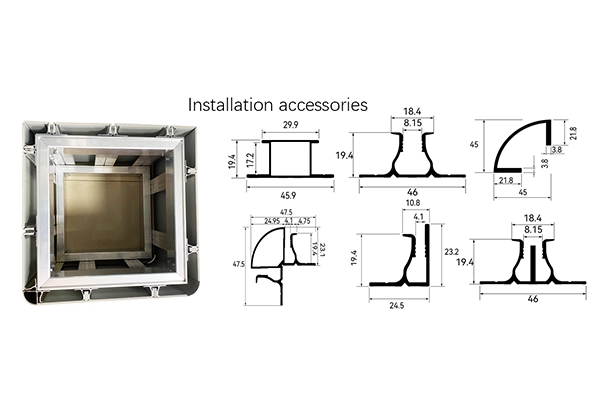
A level metal or stainless steel sub-frame is needed for the panel. The rainscreen principle says that this frame makes a way for air to flow behind the face of the panel. Different pressures are evened out, and moisture vapor is stopped before it can get through. It's easy to put up YILONG JUZHOU panels because they can be drilled, nailed, and bent on-site. This cuts down on the time needed to make them by a large amount. You can make the heights your own above 3 meters, so big buildings don't have to have horizontal joints on the sides.
Routine Maintenance Protocols
Check the polyester finish once a year and clean it gently with neutral-pH soap and soft cloths to keep it in good shape. The coating's UV-protective layer will wear off over time if you use rough pads or cleaners that are high in acids. Water won't get to your skin if you fix any scratched edges right away with paint that works with aluminum.
If you follow a strict installation process and do regular upkeep, your aluminum composite panels will last a lot longer than the usual 20 years.
Procurement Considerations for Durable Exterior Wall ACP Panels in Harsh Weather
You can't just look at prices to find Exterior ACP panels for industry, healthcare, or big business projects. They need to make sure that the seller has the right certifications, can customize the product, and responds quickly before they place large orders.
Project managers who are good at their jobs look for these things in an outdoor wall ACP panel supplier:
- Fire and Environmental Certification: Confirm Class A2 or B1 fire ratings and environmental certifications such as ISO and CE. YILONG JUZHOU panels carry China Environmental Protection Standard Certification, ISO, and CE, providing documentation suitable for formal tender submissions.
- Customization Capability: OEM and ODM services allow procurement teams to specify exact dimensions, colors, and surface finishes. Custom lengths, widths up to 2,000 mm, and Pantone-matched solid colors eliminate costly on-site modifications.
- Lead Time and Stock Availability: With 50,000 m² of stock on hand and a production cycle of 3–7 days, YILONG JUZHOU supports phased construction schedules without supply disruptions. Responses to technical or commercial inquiries arrive within 24 hours.
- Sampling Before Commitment: Free samples ship within 3–5 days, allowing specifiers to conduct hands-on material evaluations and coating adhesion tests before placing bulk orders.
- Logistics and Export Capability: Operating from dual production bases in Foshan, Guangdong, and Xi'an, Shaanxi, YILONG JUZHOU routes shipments through major sea ports including Shenzhen, Guangzhou, Shanghai, and Qingdao, as well as land transport hubs in Xi'an, Guangzhou, Shenzhen, and Foshan.
Logistics and the ability to export: YILONG JUZHOU has two factories, one in Foshan, Guangdong, and one in Xi'an, Shaanxi. Xi'an, Guangzhou, Shenzhen, and Foshan are all important land travel hubs as well as major sea ports for ships, such as Shenzhen, Guangzhou, Shanghai, and Qingdao.
Conclusion
The exterior wall ACP panel has been shown to last a long time in all kinds of bad weather. They have mineral cores that don't catch fire, metal skins that don't rust, and UV-stable polyester coats that protect against the real failure modes that weaken normal coatings over time. These panels should last at least 20 years if you put them up right on a sub-frame with airflow and do some simple maintenance once a year.
FAQ
Q1: How long do exterior ACP panels last in extreme weather?
If you put up good aluminum composite panels the right way and maintain them regularly, they will last more than 20 years in harsh climates like coastal, tropical, and freeze-thaw areas. Two key things that make this last so long are the mineral-filled, fire-resistant core and the polyester layer that is sprayed on at the plant.
Q2: What certifications should I require from an ACP panel supplier?
It must be approved by ISO, have a CE mark, and show proof that it has a fire rating of at least Class A2 or B1. There is no formaldehyde in the walls, and they meet green building standards, as shown by environmental compliance documents. Hospital, school, and government bids need these.
Q3: Can ACP panels be fabricated on-site to non-standard dimensions?
Yes. The wood can be drilled, nailed, cut, and bent with normal working tools. More than 3 meters tall, and any length you want can be bought at the plant level to cut down on waste on big jobs.
Q4: How do I maintain aluminum composite cladding?
Use water and a neutral-pH soap to clean it once a year. You can use a soft cloth or a low-pressure rinse. You shouldn't use rough tools or acidic liquids. Check the edges and joints once a year, and fix any damage to the coating right away to keep water out.
Partner with YILONG JUZHOU for Reliable Exterior Wall ACP Panel Supply
It takes three to seven days to make the exterior wall ACP panel at YILONG JUZHOU, which has two plants and 50,000 m² of ready stock. This will help your project keep going. We can make changes to it depending on what the OEM/ODM wants. We also guarantee the quality for three years and offer full expert help for planning and setting up. To get a free sample or project price right away, email us at cnyang2000114@gmail.com.
References
1. American Architectural Manufacturers Association. AAMA 2605: Voluntary Specification for Superior Performing Organic Coatings on Aluminum Extrusions and Panels. AAMA, 2017.
2. European Committee for Standardization. EN 13501-1: Fire Classification of Construction Products and Building Elements. CEN, 2018.
3. Hollaway, L. C. Handbook of Polymer Composites for Engineers. Woodhead Publishing, 1994.
4. National Fire Protection Association. NFPA 285: Standard Fire Test Method for Evaluation of Fire Propagation Characteristics of Exterior Non-Load-Bearing Wall Assemblies. NFPA, 2019.
5. Szokolay, S. V. Introduction to Architectural Science: The Basis of Sustainable Design. Architectural Press, 2008.
6. Construction and Building Materials Journal. Elsevier, 2021. Vol. 305 — Special Issue on Aluminum Composite Panel Performance in Extreme Climates.

Send Inquiry


Related Industry Knowledge
- What Are The Advantages of an exterior ACP Sheet?
- How to Choose an Exterior wall ACP panel for Your Building
- Can Calcium silicate aluminum composite board Improve Insulation?
- What Is the Best Exterior wall ACP panel for Modern Facades?
- Can Calcium Silicate Aluminum Composite Boards Replace Traditional Insulation Panels?
- How to Choose the Right PP Healthy Panel for Interior Wall Decoration
- How Does UV light curing board Technology Improve Surface Hardness?
- What Are Inorganic pre-coated panels and How Are They Made?
- Medical Clean Board Features and Benefits Explained
- How do I choose the right aluminum composite panels for my building?