
What Is the Best Exterior wall ACP panel for Modern Facades?
September 11, 2026
When architects and procurement managers ask which cladding material delivers the strongest balance of safety, aesthetics, and long-term value, the answer consistently points to the exterior wall ACP panel. An aluminum composite panel engineered for facades combines two aluminum skins bonded to a fire-retardant mineral core, producing a lightweight yet rigid cladding system that meets demanding building codes. With thicknesses from 2 mm to 6 mm, widths up to 2000 mm, and fully customizable lengths, today's facade panels serve everything from high-rise curtain walls to hospital retrofits—making the selection process both critical and nuanced.
Understanding Exterior Wall ACP Panels: Key Features and Benefits
What Makes ACP Different From Traditional Cladding
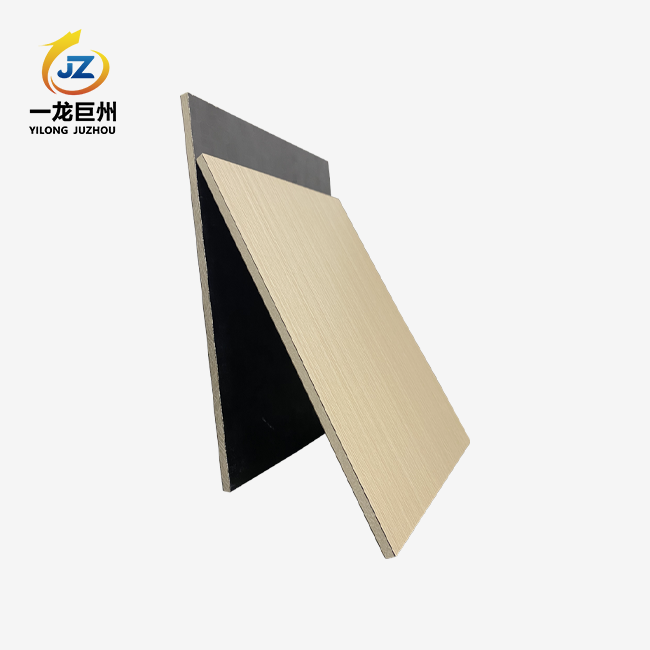
A sandwich structure known as an Exterior wall ACP panel is constructed with a refractory mineral substance in the center and two aluminum alloy skins that have a polyester paint layer on top of them. Another component of this sandwich construction is a polyester paint layer. The information that was published in Construction & Building Materials (Elsevier, 2021) indicates that this design is capable of producing a panel that weighs around 5.5 kilograms per square meter and has a thickness of 4 millimeters. This is about fifty percent lighter than a sheet of solid metal with the same level of stiffness. The reduction in weight has the effect of immediately lowering the dead loads on the structure, which in turn makes it simpler to position objects on projects that have more than one level.

In the core composition, the grades are differentiated from one another. There is no risk of fire starting with Cores in Class A2, and Cores in Class B1 do not cause fires to start. NFPA 285 and EN 13501-1 are two examples of international standards that are met by both. In the United States, projects that adhere to IBC Chapter 14 are required to choose panels with ratings of either A2 or B1 for high-rises. In light of this, obtaining core permission is an essential prerequisite for purchasing products.
The main reasons why this material is a good choice for facades are listed below:
- Class A2/B1 fire resistance: The mineral-filled core stops flames from spreading vertically, which is very important for high-rise buildings, hospitals, and transit hubs. Independent burn tests show that the material is not flammable when exposed to a flame for a long time.
- Waterproof, moisture-proof, and mildew-proof construction: The sealed aluminum skin keeps water out, protecting the substrate in coastal, humid, and high-rainfall climates, such as the Gulf Coast and Pacific Northwest in the United States.
- Formaldehyde-free, odorless, and radiation-free composition: No volatile organic compounds are released during or after installation, which supports LEED certification and the health of people who work in hospitals, schools, and hotels.
- High flexibility and manufacturing versatility: Panels don't crack when they are routed, bent, drilled, nailed, or curved into unique shapes. This lets architects create the wide shapes that modern architecture calls for.
- Strong and not easily broken: The hybrid structure doesn't break when it's hit, which is a big plus in public areas with a lot of foot traffic compared to ceramic tile or glass-fiber options.

All of these qualities work together to solve the problems that procurement teams have the most on business and government projects. It's less expensive to make changes in the middle of a project when the panel meets fire codes, doesn't absorb water, and can be shaped to fit your needs.
How to Choose the Best Exterior Wall ACP Panel for Your Project
Matching Panel Specification to Project Demand
There isn't a single exterior wall ACP panel that works for all buildings. Instead, the right panel depends on the height of the building, the temperature zone, the fire code, and the design purpose. A 20-story business building in Chicago needs a 4 mm panel with 0.5 mm aluminum covers and an A2 core. A 3 mm screen with a B1 core might work fine for the front of a one-story store in a neighbourhood market.
Important rating factors that should match the needs of your project:
- Thickness range: Available in 2 / 3 / 4 / 5 / 6 mm. For bigger sub-frame spans, thicker panels offer more flexural stiffness, which lowers the costs of secondary structure on large surfaces.
- Width options: Standard widths of 1220 mm, 1500 mm, and 2000 mm can fit modular curtain wall grids without making too much waste during production.
- Aluminum skin thickness: Ranges from 0.1 mm to 0.5 mm. AAMA 2605 guidelines say that skins thinner than 0.3 mm can cause oil-canning, which is waviness on the surface of big flat panels. Standard skins for facade-grade performance are 0.5 mm.
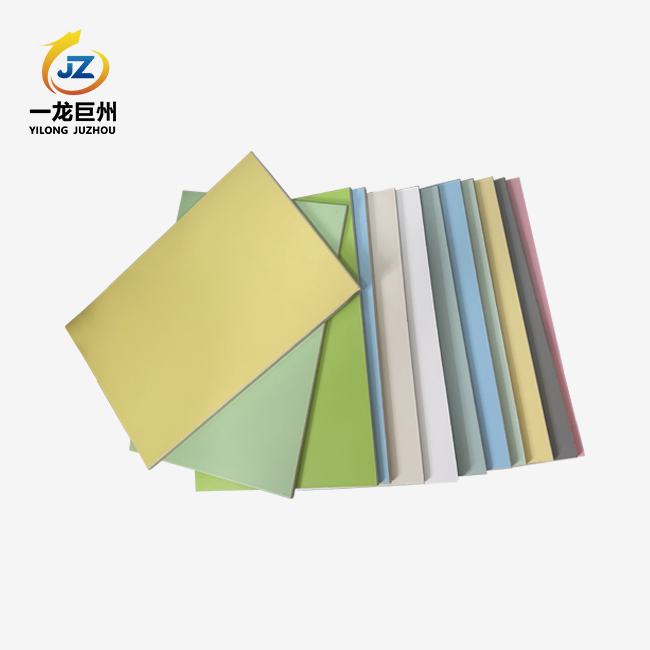
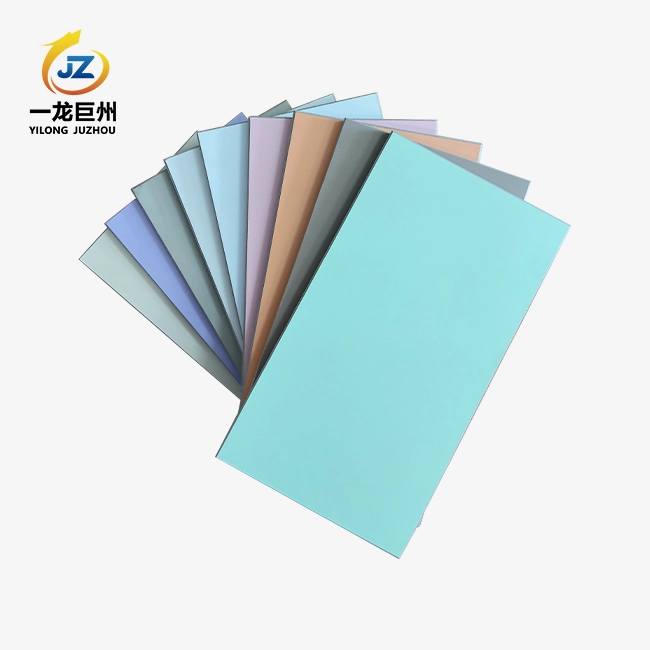
- Color and finish: Pantone-matched solid colors help make sure that the design is exactly what was meant. Polyester paint finishes that give stable batch-to-batch color delta values below 0.8 are one choice for the surface.
- Custom panel lengths over 3 meters: For airport hubs, stadium concourses, and tunnel linings where continuous runs get rid of horizontal joints, custom panels that are too long cut down on installation time and possible leak points.
Exterior Wall ACP Panel Installation Best Practices
Securing Longevity Through Correct Sub-Frame Design
There is no outside wall ACP panel that performs better than the aforementioned panel's installation. Rather than inadequate materials, installation errors are the primary cause of facade covering failures such as delamination, surface waviness, and joint failure, according to the findings of research that was published in the Journal of Facade Engineering (2019).
In order to properly install something, there are four steps that must be taken: checking the layout of the sub-frame, allowing for tolerances in the fabrication of the panels, mechanically fixing the panels with pre-drilled holes to accommodate thermal expansion, and weather-sealing the joints with neutral-cure silicone that is rated for facade exposure.
Most of the time, people do not take thermal expansion into sufficient consideration. At a temperature of around 23 µm/m·°C, aluminum undergoes swelling. There is a temperature differential of 45 degrees Celsius between the summer high and winter low in Phoenix, Arizona, which causes a panel that is three meters in length and is mounted on a wall that faces south to shift in a straight line by about three millimeters. It is possible to tolerate the shift without breaking by using large fixed holes and moving joints of the appropriate size.
The adherence of the sealant, the fastening torque, and the integrity of the surface coating are all evaluated during a post-installation examination that takes place within thirty days after the installation ceremony. This detects any issues that may exist before water penetrates the structure and causes harm that goes undetected.
Maintenance and Performance Optimization of Exterior Wall ACP Panels
Extending Service Life Through Scheduled Care
Scheduled care can extend the life of an exterior ACP panel. The durability data published by the ASHRAE Journal (2020) on building envelope performance shows that an aluminum composite facade system that is well taken care of can last for 20 years or more. The rules for maintenance are simple, but they must always be followed.
Cleaning once a year with a neutral-pH detergent (pH 6–8) and soft microfibre cloths gets rid of airborne and industrial pollutants without hurting the surface of the polyester paint. The protective layer of the coating is worn away by alkaline cleaners and rough pads, which speeds up UV damage and color loss. Manufacturers sell color-matched touch-up paint that can be used to fix small scratches on polyester-coated walls.
Adding rigid insulation boards behind the panel in a rainscreen assembly can improve its thermal insulation performance. This method, which is popular in climate zones 4 and up, lowers heating and cooling loads significantly without changing the way the wall looks.
Procurement Insights: Where and How to Buy the Best Exterior Wall ACP Panels
Navigating Global Supply for B2B Buyers
MarketsandMarkets (2023) says that the world's market for Exterior wall ACP panels was more than USD 7.2 billion in 2023. Growth was driven by industrial building and infrastructure repair in North America, the Middle East, and Southeast Asia.
When evaluating a provider for business-to-business (B2B) purchases, you should focus on four things: certified fire performance paperwork, production capacity for big orders, the ability to customise, and the dependability of logistics. Geographic redundancy protects delivery schedules during regional problems. For example, suppliers with factories in both Foshan, Guangdong, and Xianyang, Shaanxi, are examples of such suppliers. Export readiness through ports in Shenzhen, Guangzhou, Shanghai, and Qingdao makes it possible for ocean freight to go to places on the West Coast and Gulf Coast of the United States.
Large buyers should talk to OEM and ODM companies about making deals that match the panel's size, color, and certifications with the project's requirements from the start. This way, buyers can avoid having to make expensive changes in the middle of an order.
Conclusion
To choose the best aluminum wall cladding material, you need to think about things like fire safety, dimensional flexibility, surface sturdiness, and how easy it is to get. A2 or B1-rated mineral core, aluminum skins of the right thickness, and a polyester or PVDF surface layer make up an exterior wall ACP panel that offers measurable performance in business towers, healthcare facilities, transit infrastructure, and speciality industrial buildings. Throughout the lifetime of a project, procurement teams that check core certification, define the right skin thickness, and work with makers that offer OEM customisation and reliable export logistics will always get better facade results.
FAQ
1. Why do ACP panels outperform traditional brick or concrete cladding on modern facades?
Masonry is much heavier than Exterior wall ACP panels, which lowers the load on the structure and the cost of the base. Their flat, even surface keeps heat from crossing as it does in concrete, and their aluminum skin doesn't rust, so they don't need to be painted over and over again.
2. How do I verify that a panel meets fire safety requirements for a U.S. project?
Ask the maker for a third-party test record that includes both the NFPA 285 (system-level fire test) and the ASTM E84 (surface burning characteristics) tests. Under IBC Chapter 14, A2 or B1 core approval is needed for high-rise projects. Make sure that the test report is valid for the panel thickness and core grade that you are buying.
3. What is the typical lifespan of an aluminum composite facade panel?
Polyester-coated panels can safely last 15 to 20 years outside if they are installed correctly and are serviced once a year. PVDF-coated versions make that range last longer than 20 years in normal North American weather.
4. Can panels be produced in lengths exceeding 3 meters?
Yes. Custom lengths longer than 3 meters can be made, which is especially useful for airport terminals, stadium facades, and tunnel lining projects where minimising joints is both technically and architecturally preferred.
Partner With YILONG JUZHOU — Trusted Exterior Wall ACP Panel Supplier
YILONG JUZHOU operates dual production bases in Foshan and Shaanxi, maintaining 50,000 m² of ready stock with a 3–7-day production lead time. As a certified exterior wall ACP panel manufacturer, we offer Class A2/B1 fire ratings, full OEM/ODM customization, free samples dispatched within 3–5 days, and a three-year quality guarantee. Contact our technical team at cnyang2000114@gmail.com to request specifications and competitive pricing for your next facade project.
References
1. Cai, S., & Zhang, B. (2021). Mechanical performance of aluminum composite panels under combined loading. Construction & Building Materials, Elsevier.
2. International Code Council. (2021). IBC Chapter 14: Exterior Walls. International Building Code.
3. American Architectural Manufacturers Association. (2023). AAMA 2605: Voluntary Specification, Performance Requirements and Test Procedures for Superior Performing Organic Coatings on Aluminum Extrusions and Panels.
4. Overend, M., & Louter, C. (2019). Failure analysis of facade cladding systems: Installation-driven defects. Journal of Facade Engineering, 7(1).
5. ASHRAE. (2020). Building Envelope Performance and Service Life Optimization. ASHRAE Journal, 62(4).
6. MarketsandMarkets. (2023). Aluminum Composite Panel Market — Global Forecast to 2028.

Send Inquiry

Related Industry Knowledge
- How does an aluminum composite panel Improve Building Facades?
- ice fireproof board Moisture Resistance and Durability Features
- Applications of Inorganic pre-coated panels in Commercial Buildings
- Why Should Architects Consider Aluminum Composite Panels for Facades?
- What Is a Calcium Silicate Aluminum Composite Board? A Complete Guide
- Medical Clean Board for Hospital Wall and Ceiling Systems
- What Is ice fireproof board and How Does It Resist High Heat?
- Medical Clean Board Features and Benefits Explained
- How to Choose the Right Calcium Silicate Aluminum Composite Board for Your Project
- The Importance of Adhesion Testing for ACM Panels as Painting Supports