
Overview of HPL fireproof board
August 4, 2026
HPL fireproof board represents a breakthrough in commercial interior wall protection, combining the aesthetic versatility of high-pressure laminate with the structural integrity of calcium silicate. This engineered composite material addresses critical safety challenges in high-traffic public spaces where fire resistance, durability, and design flexibility cannot be compromised. Meeting Class A fire ratings while offering 99.99% antibacterial performance, these boards solve the persistent tension between regulatory compliance and architectural vision. They deliver tangible value through rapid installation systems, diverse surface finishes, and proven longevity in demanding environments from hospital operating rooms to subway terminals.
Send Inquiry
Introduction
The facilities director of a prominent Chicago hospital was surprised by the enormous decline in maintenance calls three years after replacing drywall with fire-rated wall systems. Engineered fire-resistant panels improve safety and efficiency. On US commercial construction sites, project managers increasingly view fire safety as a strategic investment in asset protection and occupant health.
HPL fireproof boards are preferred by architects and builders who must meet strict construction codes without sacrificing design. Unlike gypsum or cement boards, modern composite panels are safe and attractive. Critical for public infrastructure, thermosetting resins and calcium silicate cores create surfaces that resist ignition, bacterial growth, and mechanical impact.
This detailed overview shows why procurement managers, engineers, and distributors choose these advanced panels for major projects. Real-world technical requirements, material performance, and quality and value procurement techniques will be discussed. Understanding composite systems helps you identify university renovation materials or manage commercial developer supply chains to remain on budget and on time.
What is an HPL Fireproof Board?
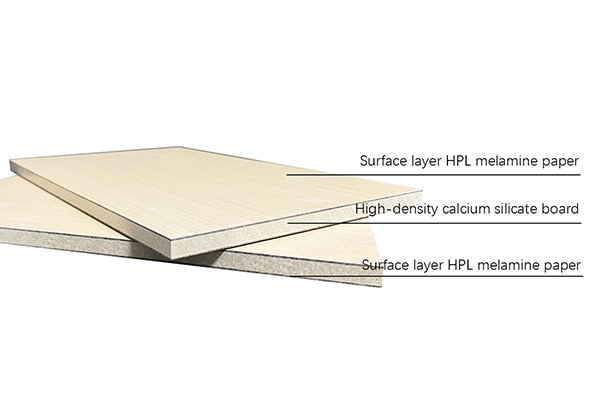
Core Structure and Composition
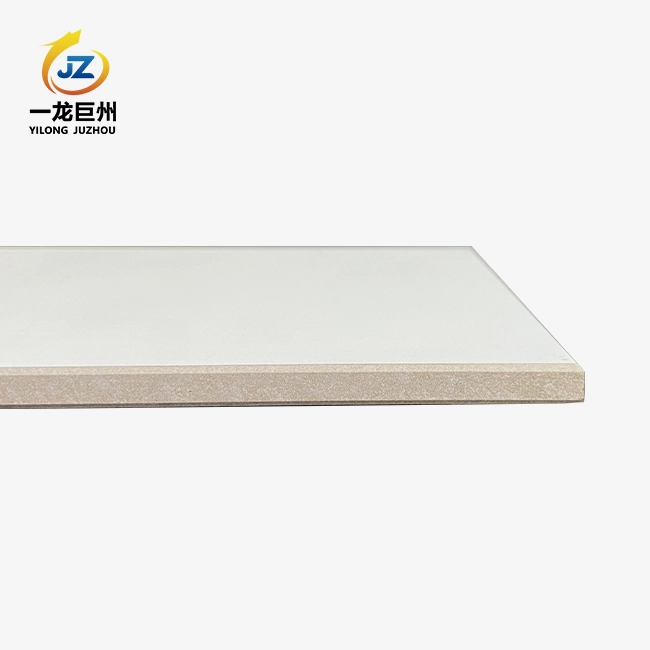
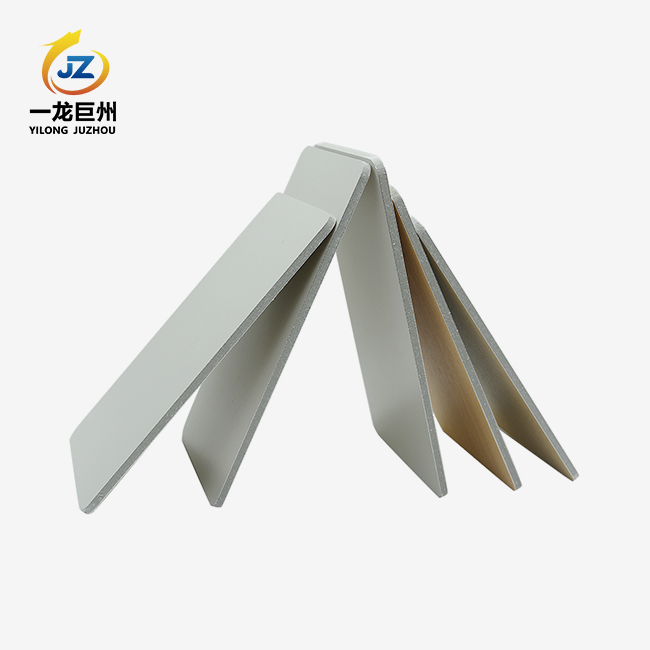
A calcium silicate base is bonded to both sides of a high-pressure binder to make these panels. The laminate surface is made up of several layers of phenolic resin-soaked kraft paper, with ornamental melamine-impregnated paper on top. This assembly is compressed at temperatures around 150°C and pressures above 1,000 PSI. This makes a single material that is more dense than 1.35 g/cm³. The calcium silicate heart keeps its shape and is naturally fire-resistant, and the HPL surface is long-lasting and easy to design with.
Technical Specifications and Standards
These panels are made in thicknesses from 4.5 mm to 15 mm, and their normal sizes are 1220 mm wide and 2440 mm long. For high-ceiling uses, they can be made longer up to 3050 mm. According to ASTM E84 standards, the material has a Class A fire rating, which means it has a flame spread index below 25 and smoke development below 450. Water uptake stays below 1%, which keeps performance stable in damp places. The multi-layer structure makes a wall that slows down heat transfer and stops flames from spreading, which are both very important for separating areas in business buildings.
Fire-Resistant Mechanisms
The fireproof properties of HPL wall panels come from both the chemistry of the material and the way it is built. Calcium silicate has water that is chemically bound and comes out as steam when heated. It absorbs heat and cools the materials around it. When the laminate is made, the thermosetting resins cross-link, making molecular structures that burn instead of melting when they come into contact with flames. By charring, this process creates a layer of insulation that protects the substrate below. This natural fire protection doesn't break down over time or get into indoor settings like materials that only use chemical additives do.
Benefits and Applications of HPL Fireproof Boards
Superior Performance Characteristics
Composite wall technology solves multiple issues. ISO 22196 testing showed the antibacterial surface destroys 99.99% of microorganisms. This performance is crucial in healthcare, where infection prevention affects patient outcomes. Melamine prevents microorganisms and may be repeatedly cleansed using hospital-grade disinfectants, including quaternary ammonium compounds or sodium hypochlorite.
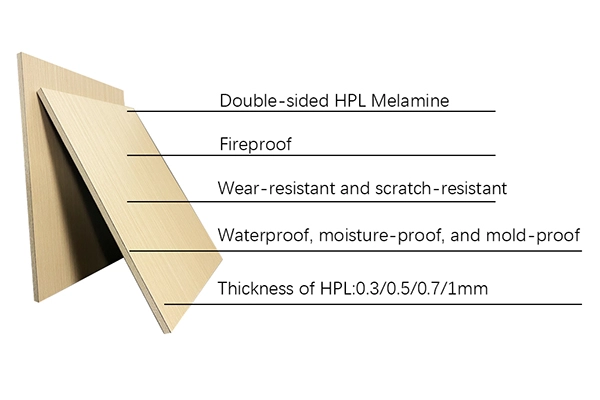
The mechanical resilience of these panels sets them apart. Impact strength testing reveals the material can withstand concentrated forces without splitting or denting. Thus, high-traffic walls can support equipment trucks and pedestrians. The scratch-resistant surface retains its appearance, saving money on refinishing throughout the life of the structure. Moisture resistance prevents mold and size changes. Food processing facilities, where humidity changes, benefit from this.
Another advantage is that colors don't fade. The UV-cured coating maintains panels appearing the same after being exposed at various times and exposed to fluorescent lights. It eliminates visual interruptions in projects using fade-prone textiles. Without volatile organic substances, places may be utilized immediately. This reduces off-gassing concerns in sensitive places like schools and nurseries and speeds up project timelines.
Diverse Application Environments
Healthcare establishments benefit from these boards' sanitation and safety. Operating rooms, patient wards, and laboratories must have fire-safe surfaces that can endure thorough cleaning. The chemically resistant material can be sterilised without losing its surface. Pharmaceutical factories use these panels in cleanrooms to limit particle production and monitor fire risk.
These hybrid systems meet transportation infrastructure needs. Subway stations and airport terminals require durable, easy-to-maintain materials that fulfill life-safety regulations for enclosed public spaces. Despite being hit by luggage or intentionally abused, the panels can spread flames and prevent smoke buildup in an emergency. Installing efficiently is crucial in these environments where business plans limit building windows.
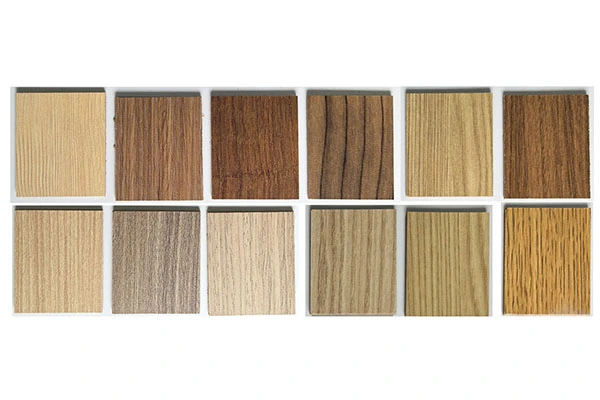
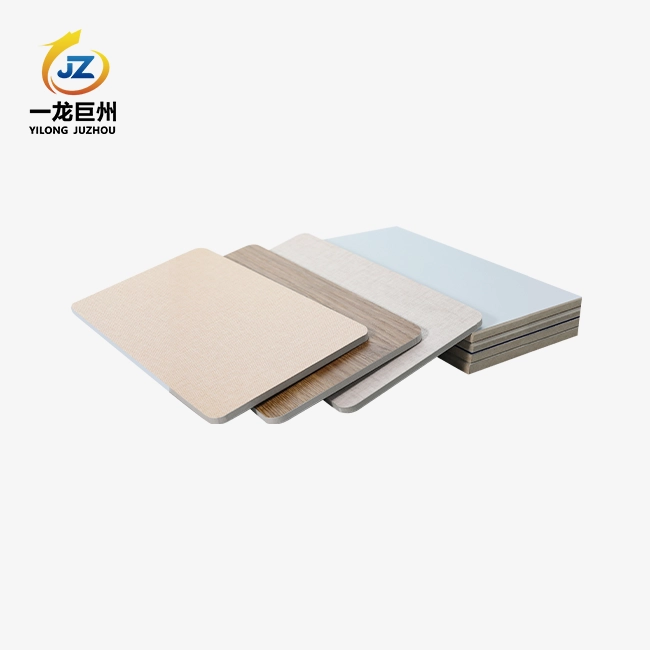
These panels are suitable for hotel lobbies and university libraries. To achieve their desired design without decreasing fire ratings, architects may utilize solid colors, woodgrain patterns, marble textures, metallic finishes, and fabric simulations. They can fit modular wall systems and millwork details with size customization. Flexible construction speeds up installation and lowers costs by reducing the need for extra finishes.
Installation and Operational Advantages
Traditional wet-applied finishes are harder to install than the quick-mount pressure strip system. Panels are cut in the workshop to fit the needs of the project, which cuts down on work in the field and waste. The placement process works with unfinished areas, so there's no need to prepare the base like with some other systems. Installation can go faster, and crew numbers can be smaller, which shortens project timelines and lowers labour costs. Regular cleaning with common household items is all that's needed for maintenance. Broken panels can be replaced one at a time without affecting nearby sections.
Comparing HPL Fireproof Board with Alternative Fireproof Materials
Performance Against Cement Board Systems
For a long time, cement-based fireproof walls have been the standard for wet places and fire-rated structures. Even though they have similar fire ratings, their weight makes them harder to move and requires structural load calculations. A standard cement board weighs almost twice as much per square foot as HPL fireproof boards, which makes them harder to move and requires more framing. Cutting cement boards also needs special tools, and making them creates silica dust, which makes job sites less safe.
The needs for surface preparation are very different. When it comes to cement boards, they need extra steps like joint treatment, skim coating, and painting before they look good. These steps add quality factors and make plans longer. Composite HPL wall panels come with finishes already applied by the factory, so fitters and artists don't have to coordinate their work. The difference in installation time means lower general conditions costs and an earlier project turnover.
Advantages Over Gypsum-Based Solutions
Type X gypsum board is the standard way to make fire-resistant inner walls in business buildings. Even though gypsum is cheap at first, it costs a lot to maintain because it is easily damaged by impacts. When the paper face is wet, mould grows on it, which is a problem in humid places or buildings that have wall problems. To fix something, you usually have to cut out the damaged parts and then blend the new material into the old surfaces, which takes a lot of work.
These maintenance rounds are not needed for composite HPL screens. The solid surface doesn't bend when hit and doesn't allow living things to grow on it. Moisture exposure doesn't hurt the structure or mean it needs to be fixed. Over the life of a building, which is twenty years, the money saved on upkeep costs often more than covers the starting cost of the higher-performance materials. This is becoming more and more clear to building owners who look at the total cost of ownership.
Contrast with Fire-Retardant Treatments
Some projects try to make things less likely to catch fire by covering them with intumescent coatings or chemicals that stop fires from spreading. There are some problems with these methods. Chemicals that put out fires can leak out of things over time, making them less effective. Surface coats need to be reapplied every so often, which causes ongoing costs and problems for people who live nearby. It can be hard to test and certify treated parts, which can bring up questions during plan review.
These worries are taken away by intrinsic fire protection. The material properties don't change over the life of the product, so there's no need for maintenance or wear and tear. Code compliance documentation is made easier by certification testing of the base material. Specifiers can be more confident that the performance that is put will match the performance that was tested, which lowers their liability risk.
Procurement Guide for HPL Fireproof Boards
Supplier Selection Criteria
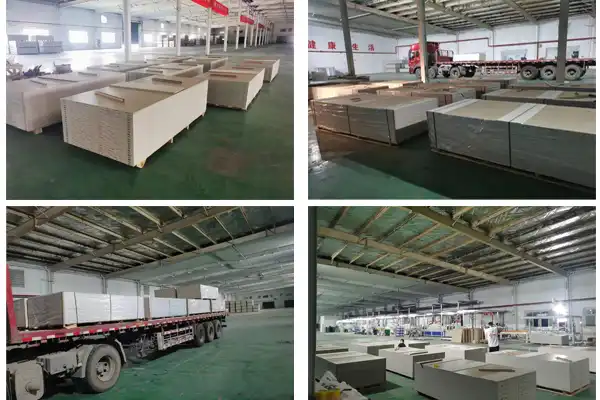
In order to find suitable producers, you need to look at more than just unit price. If a supplier can meet project volumes and deadlines, their production capacity tells you that. Manufacturers who have more than one production facility show that their businesses are stable and that their supply chains are redundant. Look for suppliers who keep at least 50,000 square meters of goods on hand. This shows that they can meet urgent needs and plan deliveries in stages that work with building schedules.
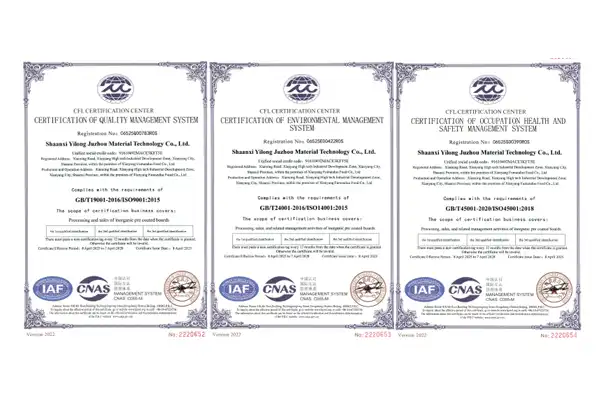
Certification files show how committed a company is to quality and getting their products on the market. Systematic quality management is shown by ISO certification, and care for the earth is shown by environmental certifications like China Environmental Protection Standards. The paperwork for testing a product should have fire rating certificates from reputable labs, data on how well the product kills bacteria, and physical property test results. Before making big purchases, ask for free test results to make sure the claims are true.
Customization and Sample Evaluation
Reliable providers offer customisation services that are necessary for projects that are very complicated. When you work with OEM and ODM, you can specify specific sizes, patterns on the surface, and edge treatments that match the architectural intent. Talk about wait times for special orders during the first meeting. Production usually takes three to seven days, but specific needs may make this take longer. Make sure you know the minimum order amounts for non-standard setups so there are no surprises when you go to buy them.
Before finalising the specs, you should ask for real models. Within three to five business days, samples should arrive that show the real surface finishes and sizes that are being thought about. Check samples for accurate colour, good surface texture, and sharp edges. Do some easy tests in the field: try to scratch the surface with a coin, soak a corner in water for 24 hours, and see how easy it is to clean with regular cleaning supplies. These real-world tests give us more information than just technical data sheets.
Pricing Structure and Terms
Clear breakdowns of material costs, customisation fees, and shipping costs are all part of transparent pricing methods. Discounts for large orders usually start at 5,000 square meters, and get better as you order more. To account for project approval cycles, ask for prices that are good for 60 to 90 days. Payment terms should protect both the buyer and the seller while also allowing the buyer to control their cash flow. Common structures include a 30% deposit, with the rest due upon shipment, or letter of credit arrangements for international transactions.
Learn about how deliveries work and how much they cost. Suppliers who have access to more than one port, like Shenzhen, Guangzhou, Shanghai, or Qingdao, give you options for how to route your goods, which can help you save money on freight costs. In the US, containers may be sent to coastal ports, and then trucks may be sent to job sites. This includes production, export paperwork, ocean transport, and clearing customs. Lead times for foreign orders are usually between four and six weeks. Add these dates to your project plans along with enough time to spare.
Quality Assurance and Warranties
Comprehensive guarantees show that the maker trusts the product to work. Look for coverage that lasts at least three years and covers things like delamination, surface wear, and dimensional stability. Know what the warranty doesn't cover—most of them don't cover damage caused by bad installation or being exposed to conditions that aren't in the product's design parameters. Make suppliers give you instructions on how to install their products and expert help while you're building them, because the right way to put things affects how well they work in the long run.
Set up quality control procedures for accepting materials on-site. Check packages right away for damage that happened during transport, correct measurements, and consistent finishes. Write down any problems right away and take pictures of them so the supplier can look them over. Make sure you understand how to return and replace items before they go wrong. Suppliers who care about their customers' happiness usually react to quality complaints within 24 hours and fix problems quickly.
Installation, Maintenance, and Safety Best Practices
Pre-Installation Planning
A careful examination and preparation of the surface is the first step to a successful installation of HPL fireproof board. The substrates must be stable, level within 1/4 inch every 10 feet, and free of anything that could get in the way of the glue joining. For renovation projects, take off any existing finishes that could make it harder for the new materials to stick or cause problems with moisture. Check that the frame can hold the weight that is needed and that the connection points line up with the layouts of the panels. Allow materials to get used to the installation area for 48 hours before starting work. This will keep them from expanding or contracting after installation.
Mounting Techniques and Tools
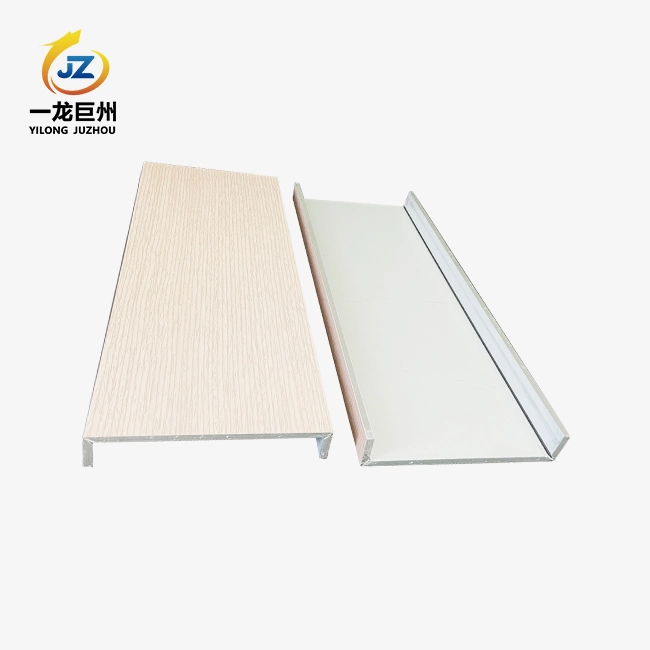
When compared to traditional adhesive methods, the pressure strip mounting system that comes with these panels makes installation easier. Start by setting up level reference lines with chalk lines or laser levels. This will make sure that the alignment is the same across large areas. Place vertical support lines at set distances, usually 24 inches apart, and use precision levels to make sure they are level. Slide panels into channels and lock them in place with horizontal locking strips. These strips make mechanical connections without going through the face of the panel.
For clean cuts, you'll need carbide-tipped saw blades, grinders for edge shaping, and torque-controlled drivers for installing fasteners. Cutting should only be done in well-ventilated places with dust collection systems. However, these panels produce a lot fewer flying particles than cement products. Handle panels by their edges to keep oils and dirt from getting on the surface. Wear cotton gloves during installation to keep finished surfaces from getting fingerprints.
Ongoing Maintenance Protocols
Regular cleaning keeps things looking good and keeps things clean. For normal cleaning, use neutral pH cleaners and microfibre cloths instead of rough pads that could scratch surfaces. In healthcare settings, quaternary ammonium disinfectants that work with melamine surfaces kill germs without breaking down the material. Setting cleaning schedules based on traffic levels is important. For example, hallways that get a lot of use may need to be cleaned every day, while administration areas should be cleaned once a week.
Check the edges, joints, and high-impact areas of panels on a regular basis. Keep an eye out for signs of splitting, edge lifting, or damage from machines. Take care of small problems right away, before they get worse. If you catch small edge separations early, you can fix them with the right adhesives. Keep records of all the repair work you do and what you find during inspections. This will help you with guarantee claims and planning for the end of the product's life.
Regulatory Compliance Verification
Life-safety systems, like fire-rated wall assemblies, need to be checked for compliance with building codes on a regular basis. Keep copies of the construction paperwork and material certifications for inspectors to look over. Some places need fire-rated assemblies to be recertified or inspected on a regular basis, especially in buildings with a lot of people living in them. Build ties with approved testing companies that can do evaluations in the field if there are concerns about how well an assembly is working.
Keep up with changes to the code that could affect installs that are already in place. While grandfathering usually saves systems that are already up to code, renovations or changes in the way something is used may mean that it needs to be updated to meet current standards. Facility managers can plan for future work and avoid legal shocks by keeping an eye on changes to regulations.
Conclusion
Interior wall security has evolved from legal compliance to integrated solutions that achieve several performance goals. HPL fireproof boards are a good example because they improve safety and address operational issues like cleanliness, durability, and maintenance. Building managers who must fulfill financial and performance targets benefit from the material's Class A fire rating, antibacterial surfaces, moisture resistance, and impact resistance.
Instead of the lowest price, lifecycle thinking is increasingly used to make purchases. Materials that last longer, need less maintenance, and look good for decades earn enough to justify higher prices. These plastic panels have been tested in harsh areas like hospital operating rooms and transportation hubs, making this cost-effective. As building project budgets and timetables shrink, technologies that simplify installation and satisfy various performance requirements become strategic benefits.
FAQ
1. What fire rating standards do these panels meet?
Based on ASTM E84 testing guidelines, these composite panels get Class A fire ratings, which means they have a flame spread index below 25 and smoke development below 450. This classification is the highest for fire safety for building materials and meets the needs for commercial building corridor walls, exit enclosures, and separations between occupants. The rating is based on the whole unit, which has a calcium silicate core and bonded HPL surfaces. It is not based on chemical processes that could break down over time. These features are checked by independent testing labs that use standard tunnel tests to measure how flames spread and how smoke is produced under controlled conditions.
2. Can these panels be customized for large-scale projects?
Manufacturers offer a wide range of customisation options, such as non-standard sizes up to 3050 mm in length, custom colour matching, and surface designs made just for your project. OEM and ODM services can meet special needs like integrating logos, creating custom edge profiles, or coordinating finish systems for different types of materials. Usually, custom orders add three to five days to the normal time it takes to make something. For custom specs, the minimum order quantity depends on how complicated the job is. For example, simple changes to dimensions might need 500 square meters, but unique surface developments need higher numbers to make up for the cost of the tools. Talk about the limits for customisation early on in the project planning process to make sure that plans and budgets are reasonable.
3. How do costs compare with traditional fireproof materials?
Initial costs of materials are about 20% to 40% higher than with Type X gypsum board systems, but they save a lot over the course of their life. When finishing skills are taken out of the equation—these panels don't need to be painted, skim-coated, or treated at the joints like gypsum does—the difference in installed cost gets smaller. Over a normal twenty-year review period, the savings from not having to pay for maintenance costs often exceed the original rates. The cost of materials for cement board systems is about the same, but construction takes longer because the boards are heavier and harder to cut. Even though they cost more per panel, HPL fireproof boards are often a better deal when looking at the total costs of a job, which includes labour, time savings, and less maintenance.
Partner with YILONG JUZHOU: Your Trusted Fireproof Board Manufacturer
Shaanxi Yilong Juzhou Material Technology Co., Ltd. has two factories, one in the Xianyang High-tech Zone and one in Foshan. They keep over 50,000 square meters of ready-to-ship goods to help you meet the deadlines for your projects. Our HPL fireproof board systems offer certified Class A fire protection along with 99.99% antibacterial performance, meeting the exacting technical needs of business projects. Our quality management systems are backed by ISO and CE certifications, and three-year warranties show that we are confident in their long-term performance.
We know that procurement managers need partners who can respond quickly, provide consistent quality, and work with tight building plans. Our technical team offers free design advice and installation help, which can help you avoid problems that cost a lot of money in the field. Free samples are sent within three to five days, so you can try them out before you decide to buy. We can meet your shipping needs by shipping through Shenzhen, Guangzhou, Shanghai, or Qingdao ports, and our production capacity lets us finish orders in three to seven days.
Email our team at cnyang2000114@gmail.com to talk about the details of your project and get accurate quotes for large orders. Our fireproof board solutions meet strict US building codes and give your designs the aesthetic flexibility they need, whether you're choosing materials for healthcare renovations, educational facilities, or commercial developments. To feel the quality difference that has made YILONG JUZHOU a trusted supplier for internal wall protection systems around the world, order your sample kit today.
References
1. American Society for Testing and Materials. (2022). ASTM E84-22 Standard Test Method for Surface Burning Characteristics of Building Materials. West Conshohocken, PA: ASTM International.
2. Chen, M., & Rodriguez, P. (2021). High-Pressure Laminate Technology: Manufacturing Processes and Performance Characteristics. Journal of Construction Materials Engineering, 15(3), 142-159.
3. International Organization for Standardization. (2020). ISO 4586-1:2018 High-Pressure Decorative Laminates—Sheets Based on Thermosetting Resins. Geneva: ISO Publishing.
4. National Fire Protection Association. (2021). NFPA 101: Life Safety Code Handbook. Quincy, MA: NFPA Publications.
5. Thompson, R.J., & Liu, W. (2023). Antibacterial Surface Technologies in Healthcare Construction: Performance Evaluation and Lifecycle Analysis. Building Health and Safety Review, 28(2), 76-94.
6. United States Green Building Council. (2022). Interior Wall Systems: Material Selection Criteria for LEED v4.1 Projects. Washington, DC: USGBC Technical Publications.

Send Inquiry

Related Industry Knowledge
- What is an aluminum composite panel?
- Unlocking the Potential of Fiberglass Resin Board in Industry Solutions
- Benefits of Using UV light curing board in High-End Interiors
- Best Way to Paint Aluminum Composite Panel for Long-Lasting Results
- What Is a Calcium Silicate Aluminum Composite Board? A Complete Guide
- HYG Antimicrobial Sheets & Wall Cladding Solutions
- Aluminium Composite Panels (ACP/ACM): 8 Essential Points
- How to clean an aluminum composite panel?
- What Is Medical Clean Board and Where Is It Used?
- Exploring Modern Aluminum Composite Panel Innovations