
Painting Aluminum Composite Panel: Key Preparation Tips
October 22, 2026
Getting a painting aluminum composite panel installation right starts well before the first sheet goes up. Whether you are sourcing panels for a hospital renovation, a hotel lobby, or a large-scale commercial fit-out, the preparation stage determines how long that finish lasts, how consistent the color stays across hundreds of square meters, and whether the coating holds up under daily wear. This guide walks through every preparation step that matters, drawn from real manufacturing and procurement experience with coil-coated ACP systems.
Understanding the Painting Process for Aluminum Composite Panels
What Sets Painted ACPs Apart from Unpainted Panels
A painting aluminum composite panel is more than just a blank sheet that has color put on it on the job site. The coating is put on in factories using a constant roll-to-roll coil coating line. This makes sure that the thickness is the same and stops color variations between batches that happen with hand spraying. The structure of the panel is made up of a mineral-filled fire-resistant core joined between two metal skins. The surface is covered with a polyester (PE) paint system for indoor use.
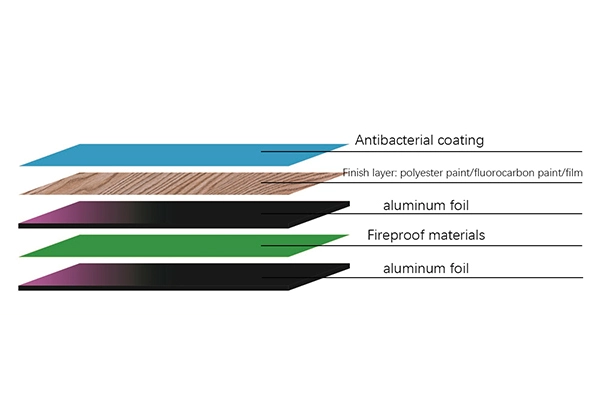
Comparing Common Coating Technologies
Teams in charge of buying things often look at polyester, PVDF, FEVE, and powder coats side by side. Polyester paint, which is used to cover the inside panels of YILONG JUZHOU, has good color saturation, a surface hardness of H to 2H (per ASTM D3363), and strong chemical resistance at a reasonable price. PVDF is more durable against UV light for exterior walls, but it costs more and is rarely worth it for internal tasks. A high-quality polyester-coated ACP is the best choice for most interior wall decoration projects in places like offices, airports, subways, medical aesthetic centers, and conference centers.
The sealing method also affects how long something lasts. With panels that are formaldehyde-, odor-, and radiation-free and approved by the China Environmental Protection Standards and CE, places like schools, hospitals, and gyms will always have safe air quality.
Key Preparation Steps Before Painting Aluminum Composite Panels
Surface Cleaning: The Step Most Teams Rush
For the solid color aluminum composite panel, the main reason why bonding fails is contamination. Fingerprint acids, oil leftovers from rolling mills, and dust in the air can all stop the metal base and primer coat from chemically bonding. In industrial lines, this is taken care of with alkaline degreasing baths and then rinsed with deionized water. This makes sure that the surface is clean enough before the paint touches it.
When purchasing managers check a source, they should make sure that the following three things are always present on a plant painting line:
- Chemical pre-treatment: Chromate conversion or chrome-free phosphating creates a microporous oxide layer on the aluminum skin, giving the primer a mechanical and chemical anchor. Studies cited in ASTM D3359 cross-hatch tests confirm that pre-treated panels achieve a 5B adhesion rating, while untreated samples frequently fall to 3B or lower.
- Primer selection and application: A two-coat system — primer plus topcoat — totaling 25–35 microns is standard for interior PE-coated panels. The primer must chemically bond to the pre-treated aluminum rather than simply sitting on the surface.
- Environmental control during coating: Temperature between 20°C and 25°C, and relative humidity below 65%, are critical during application and curing. Deviations cause solvent entrapment, which later appears as micro-blistering.
These checks protect both the quality yield of the maker and the cost to the buyer further down the line. If a panel passes factory quality control properly, it won't need to be fixed when it's installed. This saves hours of work on big business projects.
Frequently Encountered Challenges and Solutions in Painting ACPs
Root Causes of Common Coating Defects
The three most common problems that buying teams find with sellers who don't give enough information are blistering, peeling, and color differences. Blistering happens when a solvent or moisture gets trapped at the primer interface. Peeling means that the primer wasn't treated well enough, and color shifts across a batch show that the colorimetry wasn't controlled well enough during production.
A trustworthy supplier checks the Delta E (ΔE) value between the production panels and the approved master sample with a colorimeter to make sure it stays below 0.8. A ΔE above 1.5 can be seen with the naked eye and is not acceptable for projects where large wall surfaces need to look uniform, like walls in airport terminals or hotel corridors that are hundreds of meters long.
Long-Term Maintenance Practices That Protect the Investment
If you take good care of a treated ACP surface, it will last a lot longer. You can clean it with clean water, a soft sponge, and neutral detergent (pH 6–8). Do not use alkaline cleaners or rough pads on the metal because they will remove the protected gloss layer and let the aluminum skin rust. By inspecting the edge sealants, surface gloss, and joint integrity once a year, small problems can be found before they get so bad that they need to be replaced.
How to Choose the Right Painted Aluminum Composite Panel Supplier
Certifications and Standards That Actually Matter
Looking at more than just book prices when choosing a painting aluminum composite panel provider is important. Buyers should make sure that the product has a Class A2 or B1 fire rating, environmental approval from a third party, and test results that show it is resistant to salt spray (ASTM B117, minimum 3,000 hours for exterior-grade coatings) and MEK solvent rub (100+ double rubs without metal contact).
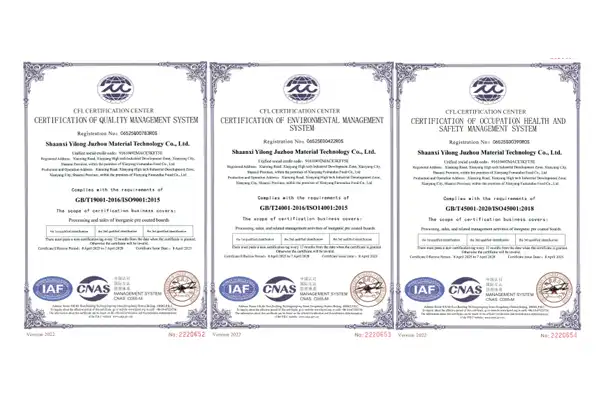
The panels made by YILONG JUZHOU are certified by ISO, CE, and the China Environmental Protection Standard. The company has two factories, one in Foshan, Guangdong, and one in Xianyang High-tech Zone, Shaanxi. It keeps 50,000 m² of stock on hand and has a 3–7-day production lead time. Shenzhen, Guangzhou, Shanghai, and Qingdao are all seaports that are connected to export logistics. This makes it possible to keep delivery plans for phased building timelines.
Customization Flexibility for Complex Projects
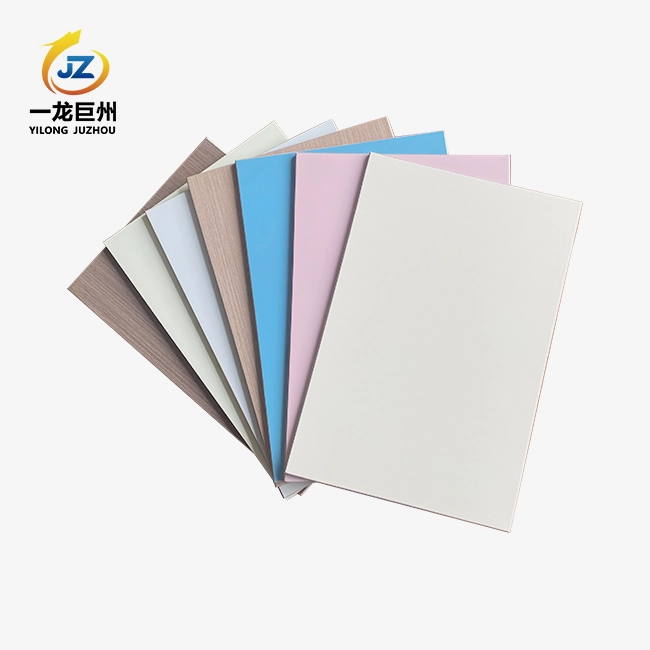
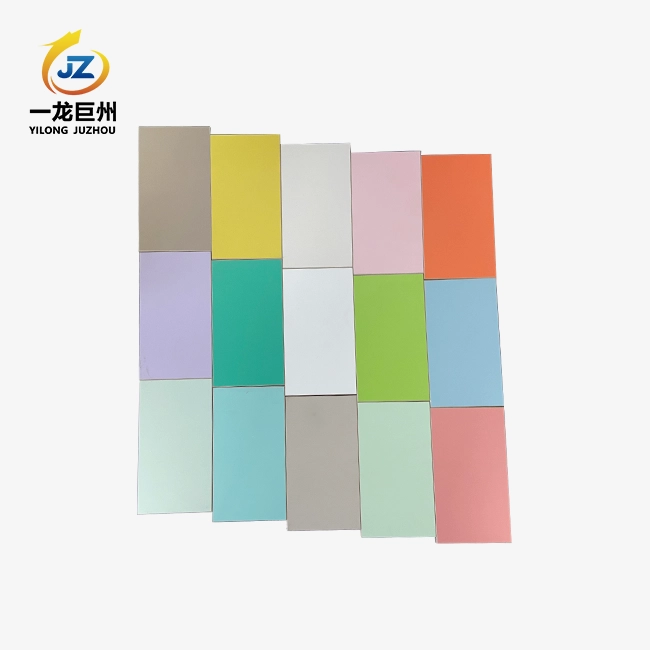
Beyond approval, the ability to customize sets commodity sellers apart from real project partners. The YILONG JUZHOU panels come in thicknesses of 2, 3, 4, 5, and 6 mm, widths of 1220, 1500, and 2000 mm, and lengths that can be fully customized, up to and including panels longer than 3 meters for high-bay industrial and infrastructure interiors. The width of an aluminum skin can be anywhere from 0.1 mm to 0.5 mm, based on the needs of the structure. The colors are exactly the same as any Pantone solid reference, and OEM/ODM orders can be made to meet the specific needs of a brand. Free samples are sent out within 3–5 days, so buying teams can use them as real-world examples before placing a full order.
Painting Aluminum Composite Panels: Step-by-Step Case Study
Interior Fit-Out for a Regional Medical Center
A polyester paint aluminum composite panel was requested by a group in the Middle East that procures materials for medical centers, for 8,400 m² of wall coverings in hallways and wards. Class B1 fire compliance, an antibacterial surface that can be cleaned, and a uniform off-white Pantone reference across all areas were some of the most important requirements that had to be met over the course of 14 months and three building stages.
The following is how the process went. At the start of the project, the procurement team asked for sample panels. Within four days, YILONG JUZHOU sent out color-matched samples that had been checked for accuracy. Before the buy order was sent out, factory quality control paperwork was provided. This included ΥE colorimetry reports, cross-hatch adhesion test results, and a fire certification. The first delivery of 3,200 m² got through Shenzhen port on time and got to the site within the agreed-upon time frame.
After the panels were put up, they were checked to make sure there was no coating delamination and that the color ΔE was below 0.6 on all of them. The operations manager for the project said that normal hospital-grade neutral detergents worked well to clean the surface without lowering the gloss. This is because the polyester coating is resistant to chemicals.
Conclusion
For painting aluminum composite panels, preparation is not an optional part of the ACP standard; it is the engineering base that determines whether a coated panel lasts 10 years or only two. Buyers who check the colorimetry controls, look over the surface pre-treatment processes, and choose suppliers with official certifications keep their projects from having to pay extra for rework and having problems with the specifications. YILONG JUZHOU is a reliable long-term partner for business, healthcare, industrial, and infrastructure projects in the US and around the world thanks to its production infrastructure, certification portfolio, and wide range of customization options.
FAQ
Q1: What thickness should I specify for interior wall cladding?
3 mm or 4 mm panels are a good mix between rigidity and weight for normal wall decoration in offices, hotels, and shopping malls. Places with a lot of foot traffic, like subways and airports, often need 4 mm or 5 mm to make them more resistant to impact.
Q2: Can panels be bent or shaped on site?
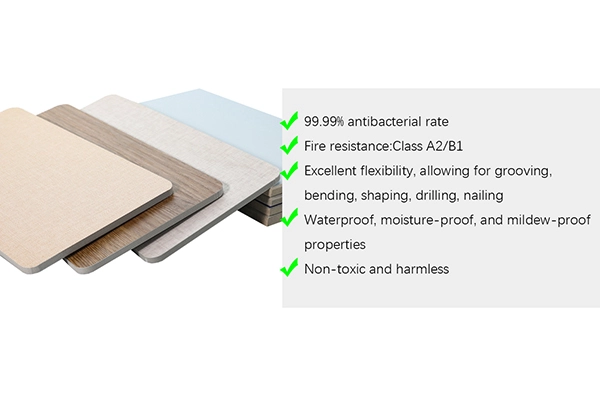
Yes. The structure of the panels can be bent, drilled, and nailed without breaking. Because it is very flexible, it can be made into bent wall pieces that can be used for feature walls in lobbies and to cover columns.
Q3: How are colors matched across large orders?
A colorimeter is used to compare production batches to a Pantone master sample that has been approved. The accepted ΔE level is less than 0.8, which makes sure that the visual quality is the same across all scheduled deliveries.
Q4: What fire rating do these panels carry?
Panels are certified to Class A2 and B1 fire ratings, which means they meet the strict building code requirements for schools, stadiums, hospitals, and public transit systems.
Partner With YILONG JUZHOU for Your Next ACP Project
Certified painting aluminum composite panel solutions from YILONG JUZHOU are made for business, healthcare, and building projects. We can meet large-scale buying deadlines because we have two production sites, a 50,000 m² stock, and lead times of 3–7 days. Get in touch with our team right away to get a custom quote, free samples, or an OEM/ODM meeting. You can email us at cnyang2000114@gmail.com. We are a reputable company that sells painting aluminum composite panels in the U.S. and other countries.
References
1. American Architectural Manufacturers Association (AAMA). AAMA 2603: Voluntary Specification, Performance Requirements and Test Procedures for Pigmented Organic Coatings on Aluminum Extrusions and Panels. AAMA, 2013.
2. ASTM International. ASTM D3359: Standard Test Methods for Rating Adhesion by Tape Test. ASTM International, 2017.
3. ASTM International. ASTM B117: Standard Practice for Operating Salt Spray (Fog) Apparatus. ASTM International, 2019.
4. Wicks, Z. W., Jones, F. N., Pappas, S. P., & Wicks, D. A. Organic Coatings: Science and Technology (3rd ed.). Wiley-Interscience, 2007.
5. Bierwagen, G. P. "Surface Defects and Their Effects on Coating Performance." Progress in Organic Coatings, vol. 28, no. 1, Elsevier, 1996.
6. Lambourne, R., & Strivens, T. A. (Eds.). Paint and Surface Coatings: Theory and Practice (2nd ed.). Woodhead Publishing, 1999.

Send Inquiry

Related Industry Knowledge
- Can Antibacterial Wall Panels Improve Indoor Hygiene?
- A Guide to Calcium Silicate Fireproof Board
- Calcium silicate fireproof board vs Gypsum Board: Which Is Better?
- Ultimate Fiberglass resin board for Beginners
- Modern Wall System Innovation: PP healthy panel for Durable, Aesthetic, and Healthy Interiors
- Why Is Medical Clean Board Important in Cleanrooms?
- melamine fireproof board in Commercial Interior Decoration Projects
- Why Choose ice fireproof board for Industrial Wall Protection?
- The Importance of Adhesion Testing for ACM Panels as Painting Supports
- What safety precautions should I take when cutting aluminum composite panels?