
Painting Aluminum Composite Panel Without Peeling or Cracking
September 29, 2026
When clients ask me how to keep their wall panels looking sharp for years, my answer always starts with the same material: a properly specified painting aluminum composite panel. This sandwich structure — fire-retardant mineral core bonded between two aluminum skins, finished with a factory-applied polyester coating — eliminates the guesswork of site painting. However, even the best factory-coated ACP can suffer peeling or cracking when procurement teams overlook root causes. This guide walks you through what triggers those failures, how to prevent them, and what to demand from a reliable supplier.
Why Painted ACP Surfaces Peel and Crack?
Failure of paint on an aluminum alloy covering doesn't usually happen overnight. It builds up slowly below the surface for a long time before a crack or lifted edge shows that there is damage.
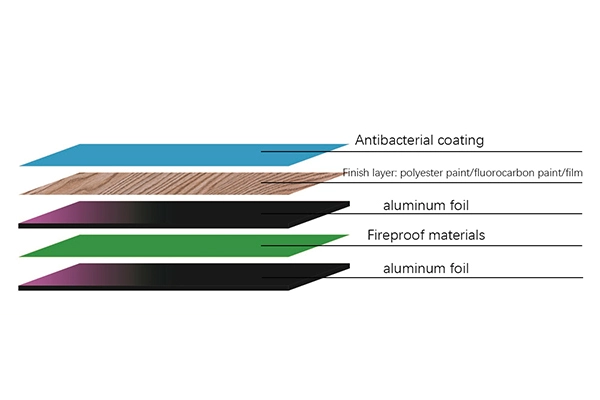
Surface Contamination Is the Invisible Culprit
The chemical bond between primer and metal is broken when oil, rust, and construction dust are left on aluminum skin before coating. ASTM D3359 says that a cross-hatch adhesion test score below 4B means that the surface wasn't properly treated before it was put on, and that's where most field failures start. Panels put up in places with a lot of humidity, like hospital hallways or subway stations, are more likely to be damaged if the substrate wasn't properly cleaned and treated with chromate before the polyester paint layer was put on.
Thermal Cycling and UV Stress Accelerate Cracking
The polyester paint ACP panel uses aluminum that expands and contracts at a rate of about 23 µm/m·°C. When a coating isn't flexible enough (as shown by T-bend tests), it can't handle that movement. Polyester (PE) paint systems that are meant to be used inside don't lose their elasticity too much at low temperatures. This is why PE-coated panels work well in places like airports, conference centers, office buildings, and shopping malls without cracking at the corners or in the grooves that were cut into them.
Proven Techniques to Prevent Peeling and Cracking
Getting a perfect, long-lasting finish on an aluminum composite panel is not a matter of luck; there is a strict order to the steps of preparation, choice, and application.
Clean, Prime, Then Coat — No Shortcuts
Before primer is put on the aluminum skin, it needs to be cleaned with an alkaline cleaner (pH 9–11), rinsed with deionized water, and completely dried. Ionic residue that breaks down adhesion within months is left behind when you skip the rinse step. Then, a chromate conversion coating or a similar preparation gives polyester or PVDF resin systems the electrical anchor they need to stick together for good.
Match the Coating System to the Environment
Not all paints work well in all rooms. Here are the types of coatings that are most useful for commercial interior projects:
- Polyester (PE) coating: Ideal for interior wall decoration in hospitals, schools, gyms, villas, and art galleries. It delivers smooth color uniformity, resists routine cleaning agents, and meets formaldehyde-free requirements critical for occupied spaces. Factory coil-coating ensures Delta E (ΔE) below 0.8 between batches, preventing visible color mismatches across large wall surfaces.
- PVDF (fluorocarbon) coating: Preferred for exterior facades and high-UV environments. Its carbon-fluorine bond retains over 80% gloss after 15 years, making it the standard for curtain wall cladding under AAMA 2605.
- Epoxy and polyurethane systems: Applied where chemical resistance matters — pharmaceutical manufacturing facilities, food processing plants, and industrial corridors subject to solvent exposure.
If you match the coating chemical to the real use setting, that is the only thing that will directly affect whether a panel's finish will last 10 years or start flaking in just two.
Control Application Conditions Rigorously
For painting aluminum composite panel, spraying in a temperature-controlled area (18–25°C, below 70% relative humidity) keeps solvents from getting trapped, which is a main cause of micro-cracking, to a minimum. For a two-coat PE system, the overall dry film thickness should be between 25 and 35 microns for each coat. ASTM D3363 says that a pencil hardness of H to 2H means that the panel has been properly cured before it is shipped.
These technical controls get rid of the most common reasons why coatings fail early, which means that project owners will pay less for maintenance over the course of the project's life.
Painted ACP vs. Alternative Surface Treatments
A lot of the time, procurement teams compare painting panels to shapes that are made of anodized metal or powder coating. There are different trade-offs for each choice that are worth looking into.
Where Painted Panels Outperform Alternatives
Anodizing makes a tough, solid oxide layer that is very resistant to scratches. However, it only comes in metallic colors and needs thicker aluminum substrates, which raises the cost of the material. Powder coating lasts a long time on extruded shapes, but it's hard to make the very thin, even films that are needed for large-format flat panels that don't have an orange-peel look.
Factory-applied PE covering on aluminum composite panels gives them solid colors that are directly matched to the Pantone chart, a smooth surface that works well in high-traffic areas like hotel lobbies and medical aesthetic centers, and low costs when used in large quantities. In training rooms and meeting rooms, matte finishes cut down on glare, and in healthcare hallways, satin finishes are a good mix between being easy to clean and looking warm.
A PE-coated composite panel is better than single-material options in almost every way when it comes to buying things for projects that need large interior wall areas with tight color consistency, custom sizes, and quick installation.
Procurement Insights: Selecting a Reliable ACP Supplier
For a solid color aluminum composite panel, if producers can't show agreement at every stage of production, quality on paper and quality in the field will not match up.
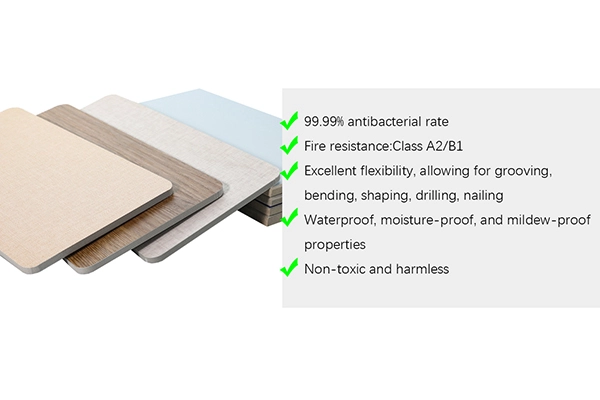
Certifications and Testing Are Non-Negotiable
Panels must be backed up by test data that has been checked. Some important standards are:
- Class A2 or B1 fire rating — meeting international fire safety standards applicable to hospitals, transit hubs, and public assembly spaces.
- Salt spray fog test (ASTM B117): 3,000–4,000 hours without filiform corrosion confirms coating integrity for demanding environments.
- MEK rub test: 100+ double rubs without metal exposure verifies full polyester cure.
- ISO and CE certification alongside China Environmental Protection Standard compliance confirms suitability for global project specifications.
Practical Ordering Considerations
Standard module sizes in commercial construction can be fitted with thicknesses of 2, 3, 4, 5 and 6 mm and widths of 1220, 1500 and 2000 mm. We can also supply custom lengths beyond 3 metres for high-ceilinged venues such as stadiums, rail stations and airports. This is an advantage that is sometimes missed when picking panels for large rooms. Depending on the stage of the project, procurement teams can alter the weight, rigidity and cost of aluminium skins from 0.1mm to 0.5mm.
Real-World Performance: What Successful Projects Reveal
For a hospital makeover project, PE-coated composite panels were chosen for their smooth, chemical-resistant surface that could be washed with disinfectant every day for three years without losing its sheen. A transportation authority chose B1-rated panels that were both water- and fire-resistant because it had to choose tunnel wall linings, something a single-layer painting surface could not always be.
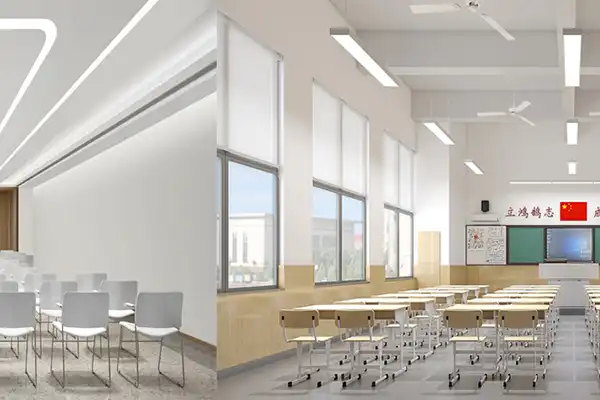
All of these solutions have one thing in common: procurement teams that emphasised certified panel requirements, factory-controlled coating quality, and supplier technical support were able to avoid costly repainting or replacing panels mid-project. If the initial specification is valid, the panel will always operate as it was intended to.
Conclusion
When painting aluminum composite panels, if you choose the right materials, use certified coating systems, and buy from a supplier who stands behind test results, you can keep these panels from peeling and cracking. A good PE-coated panel is formaldehyde-free, resistant to moisture, fire-rated to Class A2/B1, and can be made to fit your exact measurements. It works well in hospitals, office buildings, transit systems, and hotel rooms. The cost of fixing mistakes later is always higher than the cost of getting the standard right in the first place.
FAQ
Q1: How long does a correctly specified PE-coated ACP interior panel last?
If you follow the normal cleaning and maintenance steps, a polyester coating that was put on a composite panel at the factory should keep its look for 10 to 15 years. Performance is based on the width of the original coating, the quality of the material preparation, and the conditions of contact.
Q2: Can an existing painted composite panel be repainted on-site?
It is technically possible to repaint on-site, but it is hard to do. Before new paint can stick well, the old low-surface-energy layer needs to be mechanically worn away and special binding primers used. Without that prep work, standard latex or acrylic wall paints won't stick right.
Q3: Which environmental factors most affect coating durability indoors?
In interior settings, coatings break down the fastest when they are exposed to high humidity that lasts for a long time, harsh chemical cleaners, and rough contact. If you put panels in a food processing or pharmacy setting, they need coatings that are made to withstand those stresses.
Q4: Does cutting or routing a panel on-site affect the coating edge?
When done right, cutting and shaping with carbide-tipped tools keeps the polished face. Because the panel is flexible, it can be bent and drilled without coming apart, as long as the recommended bend radius standards are followed during manufacturing.
Partner With YILONG JUZHOU for Durable Painted ACP Solutions
YILONG JUZHOU has two production bases in Foshan and Shaanxi, where they make approved painting aluminum composite panel products. They keep 50,000 m² of stock on hand and can get back to you within 24 hours. We are a reliable company that makes painting aluminum composite panels. We offer OEM/ODM services, free samples that are sent out in 3–5 days, and a quality guarantee that lasts for three years. You can email our team at cnyang2000114@gmail.com to get a quote, talk to a specialist, or get our product catalog.
References
1. Journal of Coatings Technology and Research — "Adhesion Failure Mechanisms in Coil-Coated Aluminum Systems," 2019.
2. Construction and Building Materials — "Fire Performance of Aluminum Composite Panels with Mineral Core," 2021.
3. Progress in Organic Coatings — "UV Degradation and Gloss Retention of Fluoropolymer and Polyester Coatings on Metal Substrates," 2020.
4. ASTM International — "Standard Test Method for Adhesion by Tape Test (ASTM D3359)," 2022.
5. AAMA 2603 — "Voluntary Specification, Performance Requirements and Test Procedures for Pigmented Organic Coatings on Aluminum Extrusions and Panels," 2017.
6. Journal of Architectural Engineering (ASCE) — "Durability Assessment of Coated Aluminum Composite Cladding in High-Humidity Environments," 2022.

Send Inquiry


Related Industry Knowledge
- UV Antibacterial panels in Commercial Interior Design Projects
- PE aluminum composite board vs PVDF: Which Is Better?
- Can Calcium Silicate Aluminum Composite Boards Replace Traditional Insulation Panels?
- Interior and Exterior Applications of A2 Aluminum Composite Panels
- Antibacterial Vinyl Wall Sheet with various styles
- How Does UV light curing board Technology Improve Surface Hardness?
- A Beginner’s Guide to Choosing Antibacterial Wall Panels
- What Makes UV Antibacterial panels Effective Against Surface Bacteria?
- Why Choose ice fireproof board for Industrial Wall Protection?
- Exploring Modern Aluminum Composite Panel Innovations