
HPL Fireproof Board Fire Ratings and Safety Standards Explained
November 17, 2026
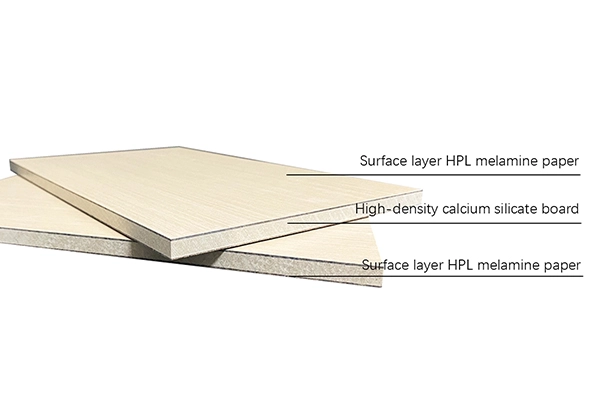
The rating for an HPL fireproof board comes from how well the entire panel does in a recognized fire test, not from its name. ASTM E84 Class A means a flame spread index of 0 to 25 and a smoke-developed index of 450 or less. This is what most buyers in the US look for. Many building codes also accept the NFPA 286 room corner test for wall finishes. The YILONG JUZHOU panel is made of a calcium silicate board that has HPL on both sides. It has a Class A fire rating. I'll talk about each standard, show you how to check test reports, and walk you through what to ask suppliers.
Understanding HPL Fireproof Board Fire Ratings and Safety Standards
Reaction to Fire Versus Fire Resistance
These two terms usually complicate tender paperwork. The speed, heat, and smoke produced by a flame on a surface are described by reaction to fire. In a regular fire, fire resistance is how long a wall, door, or floor remains solid and insulated. The reaction-to-fire of a decorative laminate doesn't guarantee it's fire-resistant. Designers should study the panel criteria to discover whether the code requires a surface classification, assembly rating, or both.
What ASTM E84, NFPA 286, EN 438, and B1 Mean
The ASTM E84 test measures how the surface burns. Class A (IBC) means a flame spread index between 0 and 25 and a smoke-developed index of 450 or less. Class B (IBC) means a flame spread index between 26 and 75. Some building codes allow the NFPA 286 room corner test for finishes on the inside of walls. An EU standard for HPL sheets is EN 438. It talks about the properties of laminate but doesn't say that a wall is fire-rated. The Euroclass system is based on EN 13501-1, and B1 is a separate classification that is used in some other markets. You can't switch these labels around, so make sure you know which one your project is called.
How the Calcium Silicate Core and HPL Surface Work Together
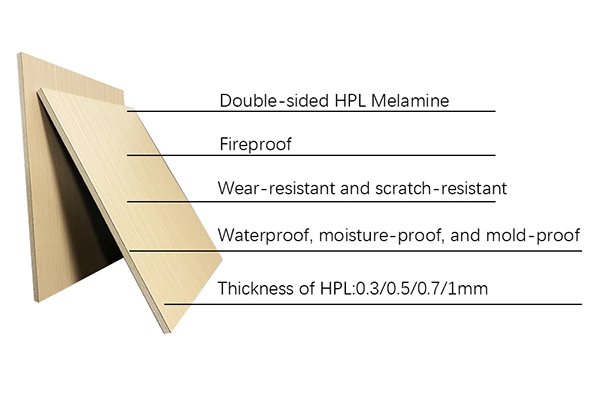
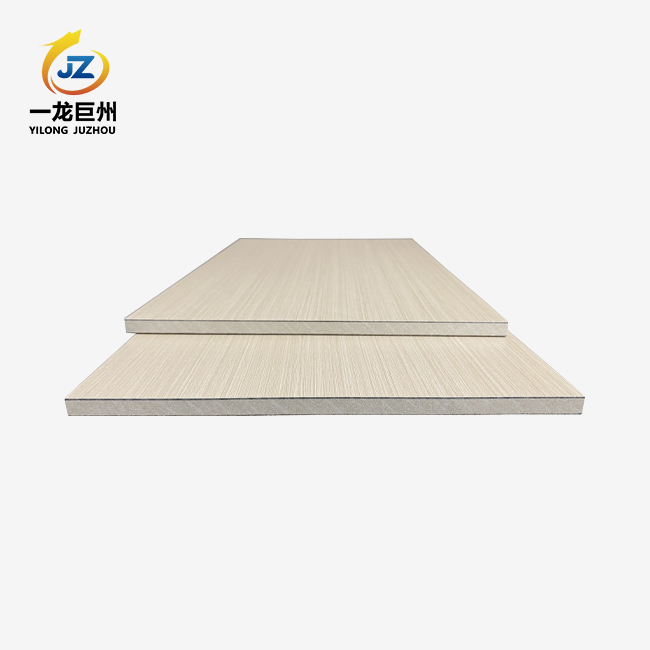
HPL is made by pressing layers of paper that have been mixed with resin under a lot of heat and pressure. This makes a dense thermoset surface. The surface of our hpl fireproof board is on both sides of a calcium silicate board, which is made of minerals. The core is important because substrates made of wood add fuel, while a core made of minerals changes the way the panel burns. The finished item has a Class A fire rating. Adhesive, thickness, joints, and the way the laminate is fixed can still change the results, so I tell buyers not to rely only on the surface laminate. Instead, they should compare the tested configuration to the installed one.
Applications and Material Comparisons for Public and Commercial Buildings
Where Fireproof Wall Panels Fit
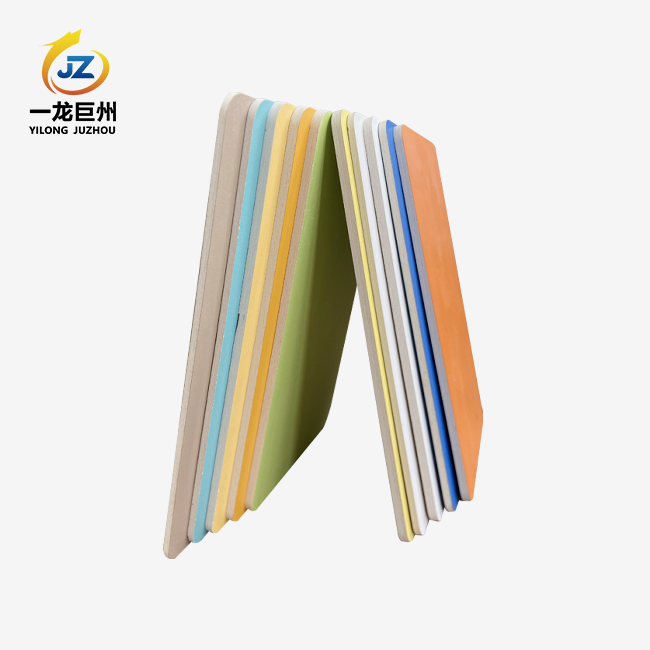
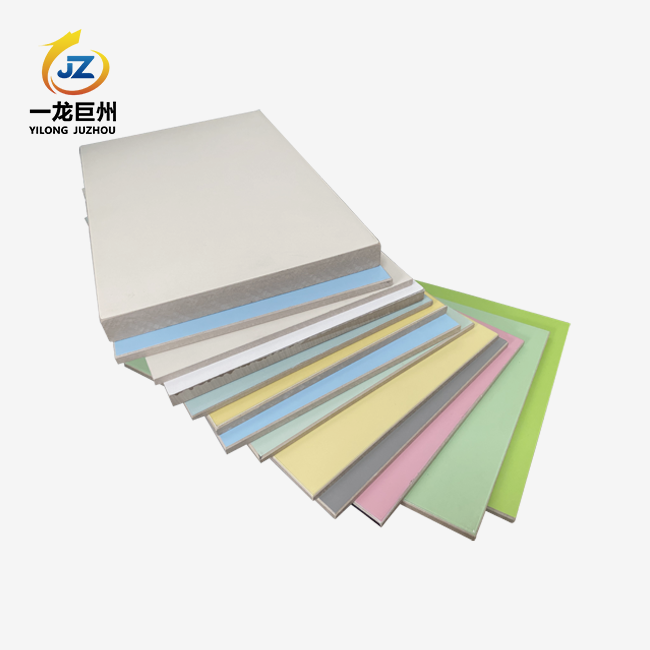
Many people gather in places where fire codes are strict, and exits are important. You can decorate and fix up the walls inside of hospitals, schools, kindergartens, libraries, office buildings, subways, airports, train stations, hotels, apartments, villas, high-end clubs, and shopping malls with our panels. Most of the time, there are strict rules about how to finish the inside of hallways, lobbies, and corridors. A Class A surface lets you choose from a variety of designs. Regular sheets are 1220 mm wide and 2440 mm long, which is 4 feet 8 inches. They can also be 3050 mm long, which is 10 feet, so they can be used to make tall lobby walls with fewer joints. It is between 4.5 mm and 15 mm thick, which is 0.18 inch to 0.59 inch. Check the code in each space.
Comparison With MDF, Plywood, Melamine, and PVC
Not only decorative faces, but also whole structures should be compared. Since the cores of standard MDF and plywood are made of wood, they need to be treated with a fire retardant and have proof of this to get the same ratings. While HPL usually stands up better to wear and tear, melamine boards are cheaper but wear out faster in busy hallways. We need to take a close look at how PVC panels are made and how smoke acts on them. The type of core has a big effect on aluminum composite panels. With an HPL face and a calcium silicate core, you get a mineral-based base and a hard surface all in one tool. You should still compare things like weight, machining, price, and lifecycle cost.
Hygiene, Moisture, and Impact in Daily Use
Projects that work on health care and education care about more than just fire. Our panels are 99.99% effective at killing bacteria, are waterproof, don't let water or moisture through, and don't let mildew grow. They are also very strong against impact, which helps keep walls from getting cracks and dents. The surface doesn't get worn down or scratched easily, which is good for hallways where carts and backpacks hit the walls all the time. When exposed to UV light, the material forms a thick film that stops gases from escaping from the substrate. The material doesn't contain any benzene or other volatile substances, so rooms won't smell after installation. Smooth faces are also easy to clean, which helps with routines for preventing infections. If your tender needs proof, ask for the test method behind any antibacterial claim.
Choosing and Verifying the Right HPL Fireproof Board
Start With Code, Application, and Approval Authority
I think you should start with the building code, the type of space, and the authority that gives the OK. In the US, that usually means the International Building Code's interior finish tables, along with any local changes. For healthcare and education, it can also mean NFPA 101. Next, choose whether you need a wall panel that is finished, a piece of furniture, or an assembly that has been tested, such as an HPL wall protection panel. Before you ask for quotes, write down the thickness, size, surface texture, moisture needs, and cleaning schedule. A supplier can suggest the right thickness from 4.5 mm to 15 mm if the inputs are clear. This way, there is no need for expensive rework after the submittals.
Reading a Fire Test Report Line by Line
A title on a certificate doesn't prove anything. The report must specify the exact product, thickness, core, adhesive, and mounting method. Check the standard, any modifications to it, the certified lab, the date of the test, what figures came up, and the report number. Don’t only look at the words “Class A”; check for the flame spread and smoke-developed numbers. A report showing merely a bare panel does not indicate how well a completed wall or door will perform. Order a sample and evaluate the quality of the edges and the surface, and approve a control sample before manufacturing a lot of them. In this manner, every batch thereafter will be of the same quality.
Common Mistakes That Cause Failed Inspections
Most people make the mistake of assuming that "fireproof," "flame-retardant," and "non-combustible" are technical words. They are marketing words. You’re not alone if you assume an EN 438 or B1 document fulfils a US code that requires ASTM E84. Teams also overlook adhesives and substrates, place a decorative sheet that has not been tested in a rated assembly, or attempt to find the cheapest choice only to have inspections take longer than intended. To prevent these problems, specify the needed standard in the bid, inspect the whole structure, and get separate documentation early. Have your architect or engineer approve it before ordering.
Procurement, Installation, and Specification for Bulk Orders
Pricing Factors and Supplier Evaluation
The price of an HPL wall protection panel is based on the thickness, finish, sheet size, customization, quantity, packaging, and where the item is being shipped. If you only compare prices per square foot, you don't see the costs of waste, testing, and replacement. Check the supplier's response time, quality control, export experience, and the amount of work they can do. It has two factories: one in Xianyang, Shaanxi, and one in Foshan, Guangdong. We always have 50,000 m² in stock, can finish a job in 3 to 7 days, and respond within 24 hours. Ships leave from Qingdao, Guangzhou, Shenzhen, or Shenzhen. If your project needs certain paperwork, just let us know. Our products have been certified by the China Environmental Protection Standard, ISO, and CE.
Installation and Maintenance
Installation changes performance that has been recorded. Quick pressure strips and factory customization are used in our system. Installers can work in bare-shell rooms, which saves time and labor. Make sure the substrate is flat, dry, and clean, and use the tried-and-true fixing methods at all joints, corners, and holes. Poor detailing can make it harder to resist water and fire. For maintenance, use soft tools and cleaners that don't scratch, and check corners and fasteners that get a lot of use on a regular basis. Its color stays the same after being UV-cured, and there isn't much color difference between panels. The rooms are also ready to use right away because they don't smell.
Specification Checklist and Customization
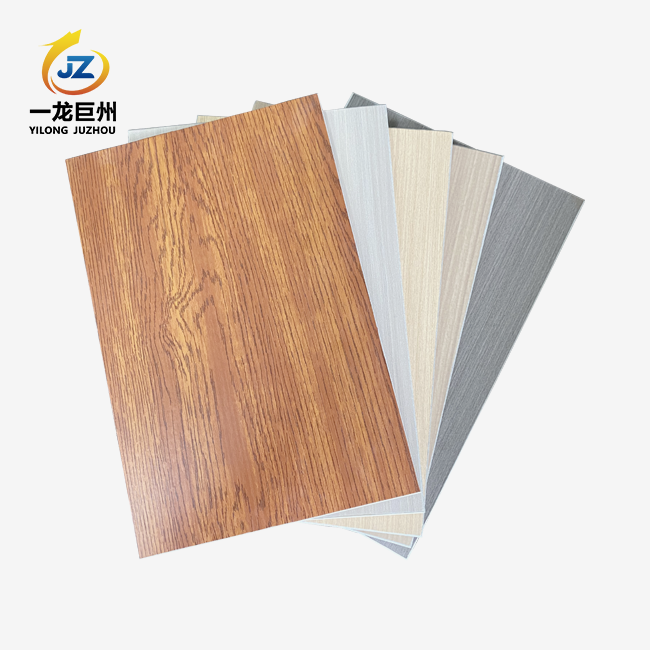
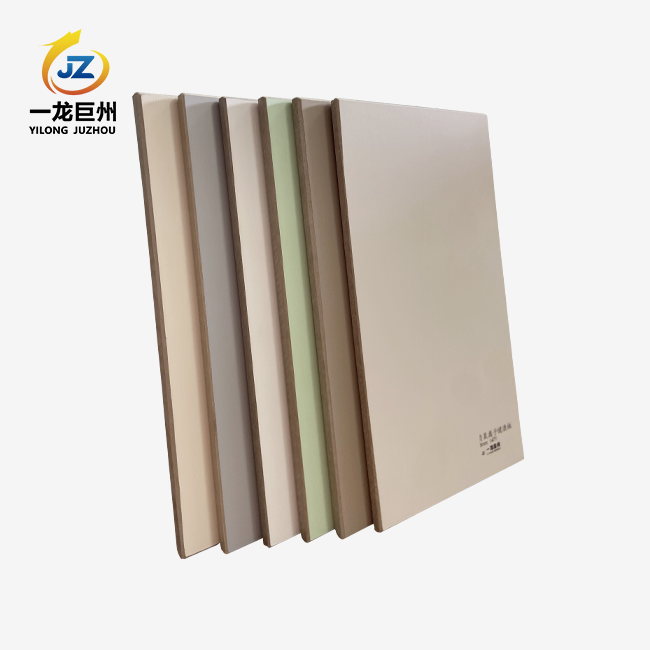
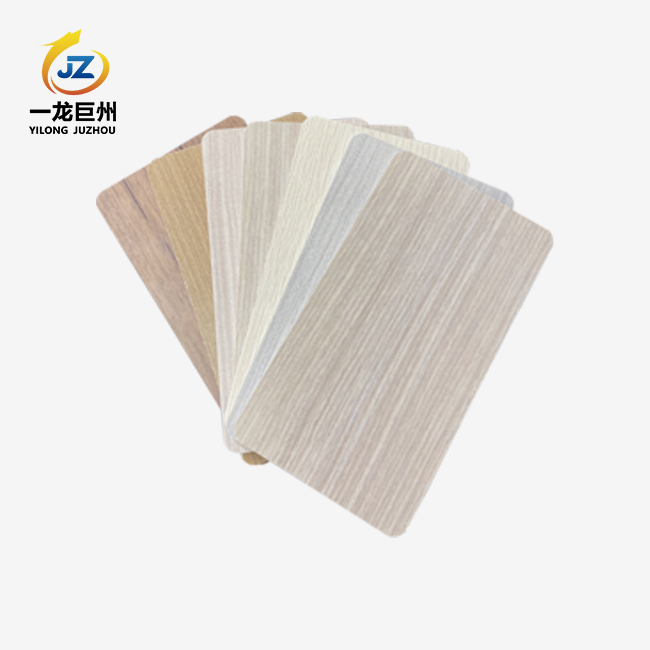
Buyers, engineering, and installers can all work together on the same project if there is a written specification. Type of product, thickness, size, core, surface finish, edge treatment, and weight should all be included. Include the fire standard, classification, lab, report number, and configuration that was tested. Then write down the business terms, such as the quantity, samples, lead time, packaging, shipping terms, warranty, and so on. You can choose from solid colors, woodgrain, marble, metallic, and cloth patterns. We also offer OEM and ODM services, free samples (usually within 3 to 5 days), design and installation technical services, and a quality guarantee that lasts for three years. Strict specifications also stop changes that would make your proof of compliance useless.
Conclusion
The performance of an HPL fireproof board is determined by its entire construction, not by the name of the laminate used. Fire-resistance ratings for walls and doors are not the same as reaction-to-fire ratings like ASTM E84 Class A. Also, EN 438, EN 13501-1, and B1 are not the same as US requirements. A mineral-based panel with a Class A fireproof rating, an antibacterial surface, resistance to moisture, and resistance to impact is made with a calcium silicate core and HPL on both sides. It can be used in public and commercial interiors. The process of choosing a sound system starts with finding the right code and ends with making sure that all the installation details are correct and the specification is clear. Inspection risk is lower when people don't make common mistakes like agreeing to marketing terms or ignoring adhesives.
FAQ
Q1: Is HPL fireproof board completely fireproof?
There is no panel that can't catch fire. The word refers to performance that has been tested, not invulnerability. Our panel is fireproof Class A, and you should make sure that the test standard and report are the same as what your code needs.
Q2: Does an ASTM E84 Class A result make a wall fire-rated?
No. ASTM E84 rates how hot the surface is. A fire-resistance rating is given to an entire assembly that has been checked for safety and insulation. You can only put an HPL panel in a rated wall if that wall was tested and approved.
Q3: Can I get samples before a bulk order?
Yes. We offer free samples and can deliver them in 3 to 5 days. We also offer OEM and ODM services. Send us your size, thickness, and finish needs, and we'll give you a quote based on those.
Request HPL Fireproof Board Samples From YILONG JUZHOU
Looking for a factory-supported HPL fireproof board manufacturer? YILONG JUZHOU gives away free samples, does OEM and ODM work, can make things in 3 to 7 days, keeps 50,000 m² of stock, and guarantees the quality for three years. Email us at cnyang2000114@gmail.com with your application, size, and code needs, and we'll get back to you within 24 hours.
References
1. International Code Council, International Building Code, 2021.
2. ASTM International, ASTM E84 Standard Test Method for Surface Burning Characteristics of Building Materials, 2023.
3. National Fire Protection Association, NFPA 286 Standard Methods of Fire Tests for Evaluating Contribution of Wall and Ceiling Interior Finish to Room Fire Growth, 2019.
4. National Fire Protection Association, NFPA 101 Life Safety Code, 2021.
5. European Committee for Standardization, EN 13501-1 Fire Classification of Construction Products and Building Elements, 2018.
6. European Committee for Standardization, EN 438-1 High-Pressure Decorative Laminates (HPL): Introduction and General Information, 2016.

Send Inquiry


Related Industry Knowledge
- Where Is UV light curing board Commonly Used in Industry?
- Negative ions healthy panel for Better Sleep: Does It Help?
- How to Choose PE aluminum composite board for Cladding
- Calcium Silicate Fireproof Board Coating System
- Interior and Exterior Applications of A2 Aluminum Composite Panels
- How Does a Negative Ion Healthy Panel Improve Indoor Air Quality?
- Why Is Medical Clean Board Important in Cleanrooms?
- Aluminium Composite Panels (ACP/ACM): 8 Essential Points
- Using Calcium Silicate Aluminum Composite Boards in Industrial Insulation Projects
- Why Calcium Silicate Aluminum Composite Boards Are Ideal for High-Temperature Environments?