
Inorganic pre-coated panels Fire Resistance and Performance Data
September 7, 2026
Inorganic pre-coated panels deliver verified Class A non-combustibility under GB 8624 and EN 13501-1 standards, making them one of the most reliable fire-resistant interior wall materials available today. Built on a high-density calcium silicate substrate bonded with a UV-cured antibacterial coating, these panels release zero toxic smoke under thermal stress, resist moisture and mold, and achieve a 99.99% antibacterial rate. For procurement teams sourcing wall solutions for hospitals, tunnels, pharmaceutical plants, or commercial high-rises, understanding the fire resistance and full performance profile of these panels is essential to reducing project risk and ensuring long-term code compliance.
Understanding Fire Resistance in Inorganic Pre-Coated Panels
Any wall panel's ability to resist fire starts with the material it's made of. A calcium silicate core, which is entirely made of minerals and contains no flammable plastics, is used in Inorganic pre-coated panels. This is very different from aluminum composite panels (ACPs), which have a polyethylene core rated at Class B combustibility, or PVC panels, which give off chlorine gas when heated.

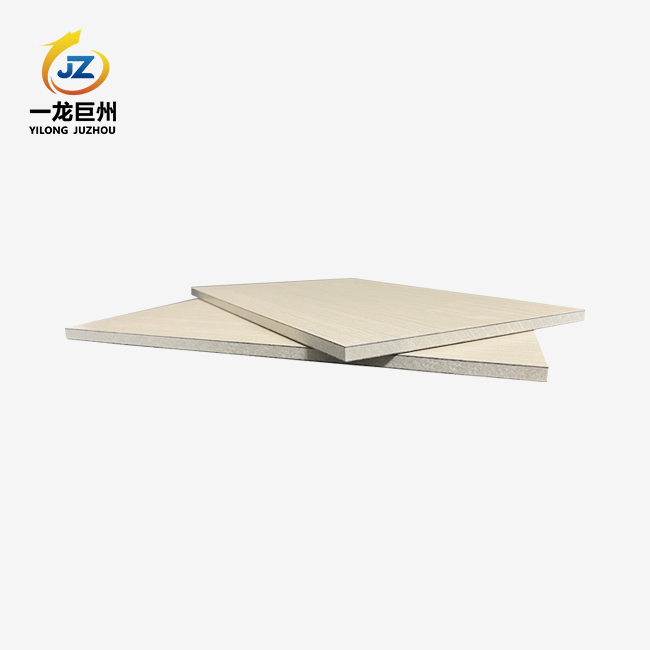
Using UV-curing technology in a controlled factory setting, the calcium silicate base is finished. This chemically bonds the top layer to the board. This factory-applied process gets rid of the risks of delamination that come with painting on-site and makes a thick, sealed surface that won't let flames spread.
Key Fire Resistance Standards Applicable to These Panels
Testing the fire resistance of interior cladding materials is based on three internationally recognized frameworks. Based on reaction-to-fire testing, China's GB 8624 gives materials that don't catch fire the highest rating, Class A. In Europe, EN 13501-1 uses a similar A1/A2 rating for situations with similar heat loads. The U.S. ASTM E84 (Surface Burning Characteristics) and UL 723 tests determine how much smoke and flame spread. Most places in North America allow panels with a flame spread index below 25 and a smoke developed index below 50 to be used inside without any restrictions.
How Thickness and Coating Type Affect Fire Rating
The panels come in a range of widths, from 4.5 mm to 20 mm, and can be as wide as 1220 mm, as long as 2440 mm, or as tall as 3050 mm. This makes them useful for a wide range of project needs. 10 mm to 20 mm thick gauges have more thermal mass, which slows the flow of heat through the wall assembly. The UV antibacterial coating is inorganic and doesn't add any fuel to the surface. This means that the substrate's Class A purity is maintained from the day it is installed until the end of its useful life.
Detailed Performance Data of Inorganic Pre-Coated Panels
Performance data for fireproof board changes the way procurement decisions are made from being based on personal preference to being based on facts. Inorganic pre-coated panels have a density range of 1.4–1.7 g/cm³ and a water absorption rate below 10%, which means they will stay the same size even in damp seaside or underground places.

Standardized tests have shown the following core speed measures to be true:
- Fire resistance: It is certified as non-combustible Class A under GB 8624, so it doesn't give off toxic smoke when heated, and flames can't spread across the UV-cured surface layer.
- Antibacterial performance: It kills 99.99% of germs thanks to its UV antibacterial coating, which meets the needs of operating rooms, intensive care units, and pharmaceutical cleanrooms for infection control.
- Moisture and mold resistance: Excellent moisture-proof performance confirmed by high-humidity cycling tests; the inorganic substrate doesn't provide mold colonies with any organic food sources, so there is no long-term biological degradation.
- Impact resistance: Walls with high mechanical resilience don't crack or dent when they're under normal working loads. This means that they don't need to be fixed as often in public areas and passageways with a lot of foot traffic.
- VOC emissions: No benzene or volatile organic compounds are released after installation; UV fixing creates a thick film that seals the base, so it can be used right away without having to wait for it to off-gas.
- Color stability: Delta E variation stays below 1.0 across production runs; UV artistic finish doesn't fade nearly as much as regular latex-painted boards do.
All of these benefits take care of the main problems that procurement teams have when they have to choose wall systems for controlled, high-occupancy areas. If a panel doesn't meet standards for fire safety or indoor air quality, the whole project could be halted. These checked data points take away that risk.
Standard ACPs, PVC frames, or galvanized steel panels are not as good as Inorganic pre-coated panels over the course of their lifetime. Regular inspections of the core are needed for ACPs, and they can be dangerous to evacuate in high-rise fires. Under sterilization conditions, PVC screens break down chemically. In wet or chemically active places, galvanized steel rusts. All three problems can't happen with the calcium silicate-based panel that has a UV antibacterial coating.
Applications Across Fire-Sensitive Environments
The Inorganic pre-coated panels' combination of a Class A fire rating and a hygienic surface makes them the best choice for a wide range of tough settings. As examples of active deployment sectors, we can list hospitals, operating rooms, medical aesthetic centers, pet hospitals, schools, drug factories, food processing plants, shopping malls, subway stops, high-speed subway lines, and stadiums.
Subway Tunnels and Underground Infrastructure
When used in high-speed subway tunnels, wall panels have to meet two requirements at the same time: Class A fire safety and good optical performance. The UV-cured surface makes light reflectance more consistent, stays clean even when exhaust grime is on it, and can handle the harsh chemical cleaners used in transit repair processes. The inorganic base won't bend or separate when the temperature changes that happen a lot in below-grade transport areas.

Healthcare and Cleanroom Interiors
ISO 14644 particulate standards are used in operating rooms and pharmacy cleanrooms with interior wall decoration 8mm Inorganic pre-coated fireproof wall panels. The smooth, non-porous UV antibacterial surface of these panels can withstand harsh sterilization methods, such as vaporized hydrogen peroxide and chlorine-based chemicals, without losing its integrity. The 99.99% antibacterial rate directly supports infection control rules that are being enforced more and more in U.S. healthcare facilities.

How To Choose the Best Fire-Resistant Panels for Your Project
To choose the best fire-resistant inner wall panel, selecting Inorganic pre-coated panels requires evaluating a number of factors at the same time instead of focusing on just one.
Make sure that any possible panel has a third-party fire certification that can be proven, not just what the maker says. When official bids are judged in the U.S. market, ASTM E84 test results and UL certifications are the most important documents. On a global level, EN 13501-1 Class A1 paperwork meets European buying rules, while GB 8624 Class A covers China and many Asian, Middle Eastern, and African export markets.
Compare the full range of thicknesses to how you plan to build your wall. Most interior divider and corridor needs can be met by panels between 6 mm and 12 mm thick. Panels between 15 mm and 20 mm thick are best for high-impact industrial areas or places that need more soundproofing. Custom sizing, which includes OEM and ODM configurations, helps procurement teams cut down on wasteful cutting on-site, save time on installation work, and keep measurements accurate during phased building plans.
Look for suppliers who will give you free samples before you commit to a large order, who will respond within 24 hours, and who will keep enough stock (50,000 m² or more) to meet project delivery milestones without stopping the supply chain. A quality guarantee that lasts for three years and expert help for installation are two more signs that a seller is truly committed to a long-term relationship rather than just transactional volume.
Future Trends in Fire Resistance Performance
For all types of buildings, not just high-rise and institutional ones, regulations in North America and Europe are moving toward tighter non-combustibility standards for internal wall materials. Both the International Building Code (IBC) and NFPA 101 are making it harder to use Class B and Class C products in public places where people gather. When procurement teams ask for Inorganic pre-coated panels, they are effectively protecting their material library against future code updates.
Coating technology is also getting better. Next-generation UV antibacterial systems use photocatalytic inorganic compounds to break down airborne pathogens instead of just stopping them from colonizing surfaces. New standards for hospitals and clean rooms will be met by panels with these improved surfaces, instead of having to rebuild the whole wall system.
Conclusion
A technically mature and code-compliant solution for fire-sensitive interior environments is inorganic pre-coated panels made on calcium silicate substrates with UV antibacterial coatings. Because they don't produce any VOCs, are resistant to moisture, and have been shown to kill bacteria, they are good for use in healthcare, industrial, transit, and commercial construction sectors. For U.S. procurement teams going through formal bid reviews, third-party certifications, measurable performance data, and customization options give them the proof they need to confidently move through the material approval stages.
FAQ
1. How do inorganic pre-coated panels compare to aluminum composite panels for fire safety?
Standard ACPs usually have a Class B-rated flammable plastic core inside them. Inorganic pre-coated panels have a Class A1 non-combustible center made of solid calcium silicate mineral. Class A is the minimum level required by most U.S. and foreign fire rules in high-rise buildings and subway tunnels. This means that ACPs are not allowed in those places.
2. What certifications should procurement teams require?
For the U.S. market, you should ask for UL 723 paperwork and ASTM E84 flame spread test results. As far as international projects go, the rules that matter are EN 13501-1 Class A1 (for Europe) and GB 8624 Class A (for China and export markets). It has the China Environmental Protection Standard Certification, the ISO certification, and the CE certification.
3. What customization options are available?
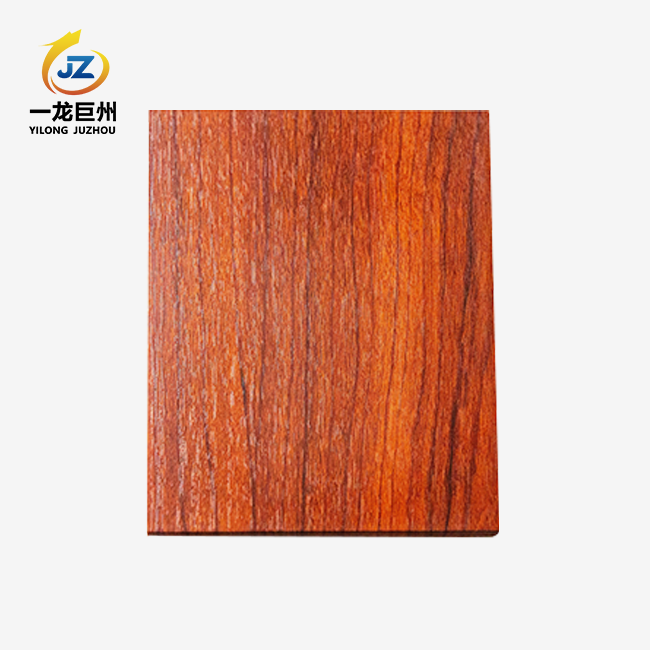
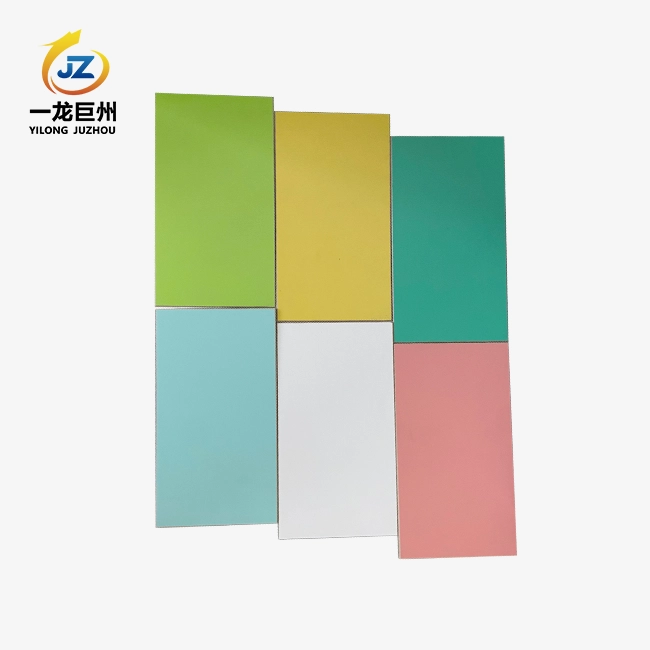
Panels come in 4.5 mm to 20 mm thick, with a normal width of 1220 mm and lengths of up to 3050 mm. Finishes for the surface can be single color, wood, marble, metallic, or cloth-patterned. OEM and ODM configurations are both welcome, and free samples will be sent within 3–5 days so that you can check the specifications.
Partner with YILONG JUZHOU — Your Trusted Inorganic Pre-Coated Panels Manufacturer
YILONG JUZHOU has two production bases, one in Foshan, Guangdong, and the other in Xianyang, Shaanxi. Each has 50,000 m² of stock, a production cycle of 3–7 days, and a 24-hour reaction time. From Shenzhen, Guangzhou, Shanghai, and Qingdao, our inorganic pre-coated panels ship. To begin the design process right away, you can ask for a free sample, download technical data sheets, or email cnyang2000114@gmail.com.
References
1. U.S. Fire Administration / FEMA. Fire Risks of Aluminum Composite Material (ACM) Cladding. 2019.
2. European Commission Joint Research Centre. Classification of Construction Products — Reaction to Fire (EN 13501-1). EUR 26789 EN. 2014.
3. National Fire Protection Association. NFPA 101: Life Safety Code. 2024 Edition.
4. Awad, H., et al. Comparative Analysis of Interior Wall Cladding Materials for Fire and Moisture Performance. Construction and Building Materials, Vol. 289. 2021.
5. U.S. Centers for Disease Control and Prevention. Guidelines for Environmental Infection Control in Health-Care Facilities. 2019 Update.
6. ASTM International. ASTM E84-23a: Standard Test Method for Surface Burning Characteristics of Building Materials. 2023.

Send Inquiry





Related Industry Knowledge
- What is an aluminum composite panel?
- UV Antibacterial panels Material Structure and Coating Technology
- What Makes melamine fireproof board Heat and Scratch Resistant?
- ice fireproof board Moisture Resistance and Durability Features
- Modern Wall System Innovation: PP healthy panel for Durable, Aesthetic, and Healthy Interiors
- Antibacterial Wall Panels vs Traditional Wall Materials: What’s the Difference
- melamine fireproof board Durability in High-Traffic Environments
- UV Antibacterial panels for Hospitals and Cleanroom Applications
- What are the key steps for installing aluminum composite panels?
- Innovative Coated Aluminum Composite Panel Projects to Transform Your Space