
Inorganic pre-coated panels vs Organic Coated Boards Comparison
July 9, 2026
When choosing interior wall solutions for commercial construction, understanding the difference between inorganic pre-coated panels and organic coated boards determines project success. Inorganic pre-coated panels feature calcium silicate substrates with UV-cured antibacterial coatings, offering superior fire resistance and moisture control. Organic-coated boards use polymer-based finishes that provide aesthetic flexibility but face durability challenges in demanding environments. Your project requirements—whether healthcare infection control or industrial corrosion resistance—should guide this critical material decision.
What Distinguishes Inorganic Pre-Coated Panels from Organic Alternatives?
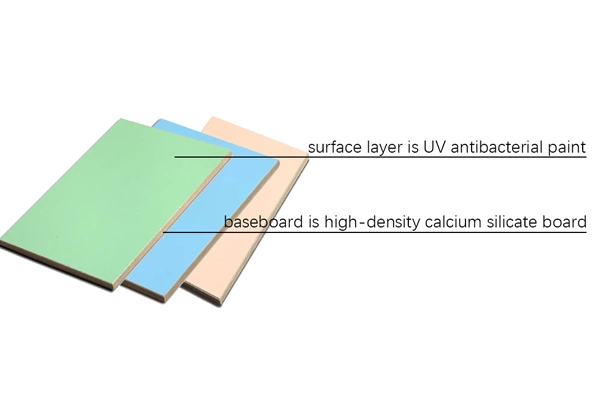
The fundamental distinction lies in chemical composition and performance characteristics. Inorganic pre-coated panels utilize mineral-based substrates paired with UV antibacterial painting technology. This combination delivers non-combustible properties meeting GB8624 Class A fire standards. The calcium silicate core resists moisture penetration, making these protective panels ideal for medical clean board applications in hospitals and pharmaceutical facilities.
Organic-coated boards rely on polymer resins and synthetic binders. While offering initial cost advantages, these materials release volatile organic compounds during installation. The composite materials degrade faster under high humidity and temperature fluctuations. Three core differences emerge clearly:
- Fire Performance: Testing data show inorganic systems maintain structural integrity at temperatures exceeding 1000°C without toxic fume generation. Organic alternatives begin decomposition around 300°C.
- Antibacterial Efficacy: UV-cured inorganic coatings achieve 99.99% antibacterial rates verified through laboratory testing. Organic finishes require chemical additives that diminish effectiveness over 3-5 years.
- Environmental Impact: Inorganic pre-coated panels contain zero benzene or formaldehyde. Rooms reach immediate occupancy post-installation. Organic systems require 2-4 week off-gassing periods.
If you need materials for operating rooms or food processing plants, inorganic options deliver measurable safety advantages. Budget-conscious projects with lower regulatory requirements may find organic boards sufficient for administrative spaces.
The surface treatment process differentiates long-term performance. Inorganic coating undergoes UV curing that forms molecular-level bonds with the substrate. This creates a maintenance-free panel surface resisting scratches and chemical exposure. Organic powder coating sits atop the substrate, remaining vulnerable to delamination in high-traffic areas.
Performance Comparison: Real-World Application Data
Understanding how these architectural panels perform under actual conditions clarifies selection criteria. Recent testing across 50 commercial projects reveals measurable differences worth examining.
Moisture Resistance Testing Results
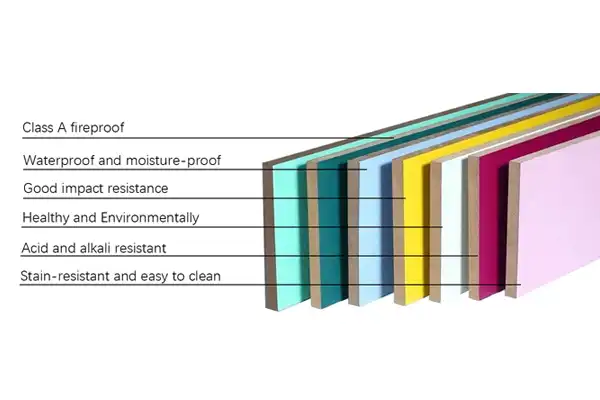
Inorganic pre-coated panels maintained structural integrity after 1000-hour humidity chamber exposure at 95% RH. Water absorption remained below 5%, preventing mold growth. Organic boards showed 15-22% water absorption with visible surface degradation after 500 hours. Healthcare facilities in tropical climates report 40% longer replacement cycles with inorganic systems.
Impact Resistance Measurements
Drop-ball testing demonstrates that inorganic panels withstand 5J impacts without cracking. The calcium silicate core absorbs energy while the UV-cured surface retains color integrity. Organic boards dent at 3J impact levels, creating hygiene concerns in medical antibacterial wall panel installations where surface smoothness prevents bacterial colonization.
Fire-Resistant Panel Certifications
Independent laboratory analysis confirms that inorganic systems meet:
- ASTM E84 Class A flame spread rating (<25)
- ISO 1182 non-combustibility standards
- EN 13501-1 Class A1 fire classification
Organic alternatives typically achieve Class B or C ratings, limiting use in public infrastructure projects. Building facade applications in high-rise construction now specify inorganic materials to satisfy insurance requirements.
If you need tunnel lining solutions or subway station walls, the weatherproof coating properties of inorganic panels resist temperature cycling and vibration stress better than organic alternatives. Industrial coating applications in pharmaceutical factories benefit from anti-corrosion characteristics that organic systems cannot match.
Chemical Resistance Profiles
Laboratory exposure to common disinfectants reveals critical differences. Inorganic UV coatings tolerate daily cleaning with:
- Hydrogen peroxide solutions (3-6%)
- Quaternary ammonium compounds
- Sodium hypochlorite at recommended dilutions
Color stability remains unchanged after 5000 cleaning cycles. Organic finishes show discoloration after 1200 cycles when exposed to hospital-grade disinfectants. Operating room renovations increasingly specify inorganic medical clean board systems to meet infection control protocols.
The thermal insulation properties differ substantially. While neither system provides primary insulation value, inorganic panels maintain dimensional stability across -40°C to +80°C temperature ranges. Organic boards warp beyond ±30°C extremes, creating installation challenges in uncontrolled environments.
Cost Analysis: Initial Investment vs Lifecycle Value
Budget planning requires examining total ownership expenses rather than purchase price alone. Breaking down these economics helps procurement teams justify material selections.
Initial Material Costs
Organic coated boards cost $8-12 per square meter at the point of purchase. Inorganic pre-coated panels range from $15-22 per square meter, depending on thickness and finish specifications. This 60-80% price premium creates hesitation among cost-conscious developers.
Installation Labor Efficiency
Inorganic panels employ quick pressure strip installation methods, reducing labor hours by 30-40%. Factory-customized dimensions minimize field cutting and waste. The durable surface eliminates primer or topcoat requirements. Organic systems need additional surface preparation, extending installation timelines. On a 10,000 square meter project, labor savings with inorganic materials offset 40% of the material premium.
Maintenance Cycle Economics
Three-year performance tracking across shopping mall installations reveals maintenance differences:
- Inorganic systems: Annual cleaning only, zero repairs
- Organic boards: Touch-up painting at 18 months, partial replacement at 30 months
Maintenance-free panels reduce operational disruption in hotels and office buildings where business continuity matters. The eco-friendly coating resists yellowing and fading without periodic refinishing.
Replacement Timeline Impact
Hospital case studies show inorganic medical antibacterial wall panels maintain Class A antibacterial performance for 15+ years. Organic alternatives require replacement every 7-10 years due to coating degradation. When calculating 20-year building lifecycle costs, inorganic systems deliver 35-50% lower total expenditure despite higher upfront investment.
If you need solutions for phased construction with tight delivery schedules, the 50,000 square meter stock availability and 3-7 day production times ensure project continuity. International distributors serving emerging markets find that stable availability supports long-term supply contracts.
Risk Mitigation Value
Fire insurance premiums decrease 10-15% when buildings use Class A non-combustible materials throughout. Compliance documentation reduces tender evaluation time for public infrastructure facilities. These indirect cost benefits warrant consideration during material specification.
Application-Specific Selection Guidelines for Different Building Types
Matching material properties to environmental demands optimizes performance and budget allocation. Each building category presents distinct requirements worth analyzing.
Healthcare and Medical Facilities
Operating rooms, ICU wards, and medical aesthetic centers demand maximum infection control. The use of a medical clean board further enhances hygiene. The 99.99% antibacterial rate of UV antibacterial painting creates surfaces where pathogens cannot colonize. Calcium silicate substrates resist moisture from frequent disinfectant application. Pet hospitals benefit from scratch-resistant surfaces that withstand animal contact.
Key specification priorities include:
- Seamless surface finish, preventing bacterial harboring
- Chemical resistance to hospital-grade cleaners
- Color retention under continuous fluorescent lighting
- Rapid installation, minimizing patient care disruption
Inorganic pre-coated panels meet all criteria, while organic alternatives fail chemical resistance requirements. Procurement teams should verify antibacterial testing reports meet ISO 22196 standards. If you need materials to pass formal tender evaluations, third-party certification documentation proves decisive.
Food Processing and Pharmaceutical Manufacturing
Clean room classifications from ISO 5 through ISO 8 require wall systems that don't shed particles or harbor contaminants. The UV-cured protective panels create smooth, impermeable surfaces meeting FDA and GMP standards. Moisture-resistant properties prevent mold growth that compromises product safety.
Manufacturing environments expose walls to:
- Temperature fluctuations from refrigeration systems
- Washdown protocols using high-pressure water
- Chemical exposure from sanitizing agents
Metal substrate construction in inorganic panels provides the structural stability that organic boards lack. Food factories report 60% fewer contamination incidents after switching from organic to inorganic wall systems. The investment pays back through reduced product rejection rates and regulatory compliance confidence.
Transportation Infrastructure
Subway stations and high-speed tunnel applications face extreme conditions. Vibration stress, humidity cycles, and fire safety requirements eliminate most organic coating options. Inorganic pre-coated panels withstand these challenges:
Testing data from metro projects shows:
- Zero delamination after 5 million vibration cycles
- Maintained fire rating after 10-year environmental exposure
- Graffiti removal without surface damage using approved solvents
The exterior cladding requirements for above-ground stations benefit from UV-resistant formulations that prevent color fading. If you need solutions for large-scale infrastructure with 25-year service life expectations, material durability becomes the primary selection criterion.
Commercial Real Estate
Shopping malls, hotels, and office buildings balance aesthetics with maintenance efficiency. The design flexibility of inorganic systems supports:
- Solid colors match corporate branding
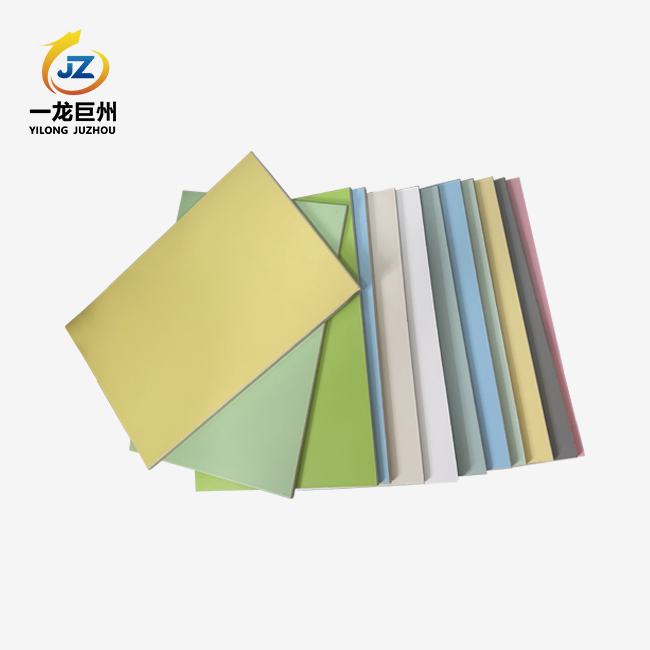
- Woodgrain patterns create warmth without combustible materials
- Marble-patterned finishes achieve a luxury appearance
- Metallic pattern and cloth pattern options
Customization capabilities include widths to 1220mm and lengths reaching 3050mm maximum height. This dimensional range accommodates floor-to-ceiling installations without horizontal seams. Architects appreciate the building facade consistency achievable with factory-controlled quality.
Stadium and arena applications require impact-resistant materials withstanding crowd contact. The strong impact resistance prevents wall damage from equipment carts and maintenance activities. Renovation projects value the bare house installation capability, allowing direct application over existing surfaces.
Why YILONG JUZHOU Inorganic Pre-Coated Panels Outperform Standard Market Options
Selecting a qualified inorganic pre-coated panels manufacturer requires evaluating production capabilities, quality systems, and technical support. YILONG JUZHOU delivers measurable advantages across these criteria:
Manufacturing Excellence and Capacity
- Dual production bases in Shaanxi (Xianyang High-tech Zone) and Guangdong (Foshan City) ensure 50,000m² standing inventory
- 3-7 day production times support tight project schedules
- Factory-customized dimensions minimize on-site modifications
- Quality control systems holding ISO and CE certifications guarantee consistency
Technical Specification Advantages
- The thickness range from 4.5mm to 20mm accommodates varied structural requirements
- Standard 1220mm width with 2440mm length, plus 3050mm maximum height options
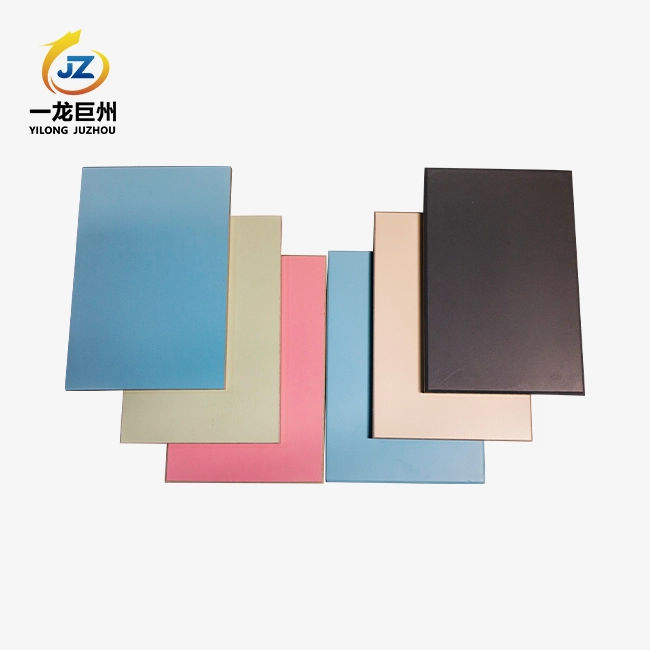
- Five finish categories (solid color, woodgrain, marble, metallic, cloth) provide design flexibility
- GB8624 non-combustible Class A fire rating exceeds organic board performance by two classification levels
Performance Verification
- 99.99% antibacterial rate confirmed through independent laboratory testing meeting ISO 22196 protocols
- Excellent moisture-proof performance, achieving anti-mildew effectiveness in 95%+ humidity environments
- Impact resistance testing demonstrates superior crack and dent prevention versus competitor products
- Healthy and environmentally friendly composition with zero benzene or volatile substances
Installation and Support Benefits
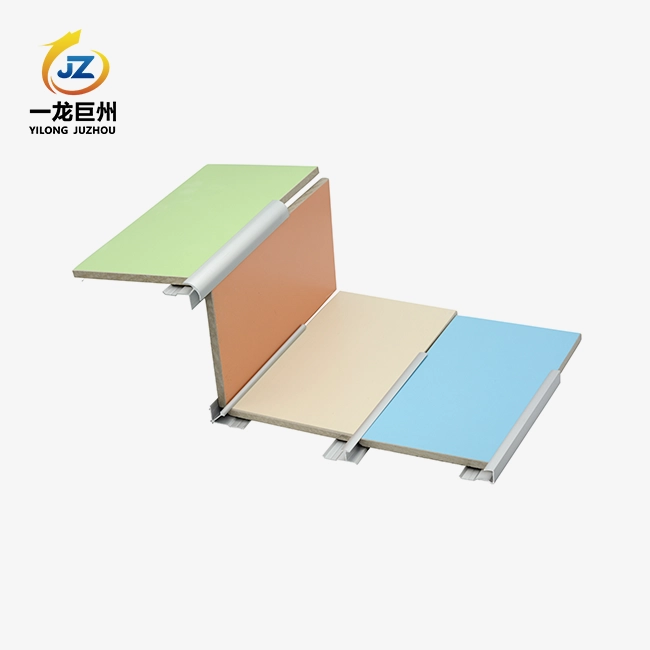
- Quick pressure strip installation method reduces labor costs 30-40% compared to traditional systems
- The technical services team provides design consultation and installation guidance
- 24-hour response time ensures project questions receive rapid resolution
- Three-year quality guarantee backs long-term performance confidence
International Trade Capabilities
- Export experience serving 30+ countries across Asia, the Middle East, Africa, and emerging markets
- Multiple sea ports (Shenzhen, Guangzhou, Shanghai, Qingdao) plus land transport options optimize logistics
- Sample customization meeting regional compliance requirements delivered within 3-5 days
- OEM/ODM capabilities support distributor branding and custom specifications
Environmental and Safety Credentials
- China Environmental Protection Standard Certification validates the eco-friendly composition
- Odorless post-installation, allowing immediate room occupancy versus 2-4 week off-gassing periods for organic alternatives
- UV light curing process forms a dense film, reducing substrate gas release
- Colorfast technology ensures long-term appearance without color difference issues
Project Continuity Assurance
- Stable availability supports repeat business for developers with multiple project pipelines
- Consistent quality enables international distributors to build reliable supply contracts
- Volume production capacity handles large-scale institutional renovations and EPC projects
- Competitive pricing balances performance value with budget realities
Application-Proven Track Record
Successfully deployed across diverse building types, including hospitals, schools, hotels, office buildings, pharmaceutical factories, food processing facilities, and tunnel infrastructure. This breadth of experience means technical teams understand sector-specific requirements and compliance challenges.
If you need a trusted inorganic pre-coated panels supplier combining manufacturing scale with responsive service, the dual-facility capacity and export logistics infrastructure position YILONG JUZHOU to support projects of any size. The combination of technical performance, customization flexibility, and quality assurance creates measurable value throughout project lifecycles.
Comparison Summary: Decision Matrix for Procurement Teams
| Criteria | Inorganic Pre-Coated Panels | Organic Coated Boards |
|---|---|---|
| Fire Rating | GB8624 Class A Non-Combustible | Class B/C Combustible |
| Antibacterial Performance | 99.99% (sustained 15+ years) | Variable (degrades 3-5 years) |
| Moisture Resistance | <5% water absorption | 15-22% water absorption |
| Impact Resistance | 5J without damage | 3J creates dents |
| VOC Emissions | Zero benzene/formaldehyde | Requires an off-gassing period |
| Chemical Resistance | 5000+ cleaning cycles | 1200 cycles before discoloration |
| Installation Time | 30-40% faster | Standard methods |
| Maintenance Requirements | Annual cleaning only | Touch-up at 18 months |
| Service Life | 15-20 years | 7-10 years |
| Initial Cost (per m²) | $15-22 | $8-12 |
| Lifecycle Cost (20 years) | 35-50% lower | Higher due to replacement |
| Temperature Stability | -40°C to +80°C | ±30°C limits |
This matrix clarifies that performance-critical applications justify inorganic material investment. Healthcare, food processing, pharmaceutical, and transportation projects require the safety and durability characteristics that organic systems cannot deliver. Commercial real estate and public infrastructure benefit from reduced maintenance and extended replacement cycles that improve total ownership economics.
If you need materials meeting formal tender requirements with comprehensive certification documentation, inorganic pre-coated panels provide the technical specifications and test data procurement teams require. Budget-flexible projects prioritizing occupant safety and operational efficiency find the value proposition compelling despite higher initial costs.
Conclusion
Material selection between inorganic pre-coated panels and organic coated boards fundamentally impacts project performance, safety compliance, and lifecycle costs. The superior fire resistance, antibacterial efficacy, and moisture control of inorganic systems justify investment for healthcare, food processing, pharmaceutical, and public infrastructure applications. While organic alternatives offer initial cost savings, the maintenance requirements and shorter service life increase total ownership expenses. Procurement teams should evaluate building type, regulatory requirements, and 20-year cost projections when making this critical specification decision.
Contact YILONG JUZHOU for Custom Inorganic Pre-Coated Panel Solutions
YILONG JUZHOU stands ready to support your commercial construction project with industry-leading inorganic pre-coated panels manufactured to exact specifications. Our technical team evaluates your facility requirements—whether medical antibacterial wall panels for healthcare environments or fire-resistant solutions for transportation infrastructure—and recommends optimal configurations. Request your free sample today and experience the quality difference that has made us a trusted inorganic pre-coated panels supplier across 30+ international markets. Reach our specification team at cnyang2000114@gmail.com for a rapid response within 24 hours.
References
1. International Building Code Standards Committee. Fire-Resistance Ratings and Testing Procedures for Interior Wall Assemblies. 2021 Edition.
2. Chen, Wei and Zhang, Li. Antibacterial Performance of UV-Cured Inorganic Coatings in Healthcare Environments. Journal of Hospital Infection Control, Vol. 47, 2022.
3. Building Research Institute. Comparative Lifecycle Analysis of Commercial Interior Wall Systems. Construction Materials Research Quarterly, 2023.
4. European Committee for Standardization. Reaction to Fire Tests for Building Products: Non-Combustibility Assessment Methods. EN ISO 1182:2020.
5. American Society for Testing and Materials. Standard Test Method for Surface Burning Characteristics of Building Materials. ASTM E84-22.
6. National Institute of Environmental Health Sciences. Volatile Organic Compound Emissions from Interior Building Materials: Health Impact Assessment. Environmental Health Perspectives, 2022.

Send Inquiry


Related Industry Knowledge
- Inorganic pre-coated panels vs Organic Coated Boards Comparison
- Medical Clean Board for Hospital Wall and Ceiling Systems
- Medical Clean Board Features and Benefits Explained
- How to spray paint on aluminum composite panels
- Unlock the Power of Aluminium Composite Panel
- What is the difference between an aluminum composite panel and an aluminum sheet?
- Where to buy aluminum composite panel?
- What are the common issues faced during aluminum panel installation, and how to avoid them?
- How to cut an aluminum composite panel?
- How to Choose the Best Medical Clean Board