
Is PE aluminum composite board Fire Resistant?
October 8, 2026
PE aluminum composite board offers Class B1 fire resistance when manufactured with a mineral-filled, fire-retardant core compound. The standard LDPE core is inherently combustible and classified as Class B2 under GB 8624 and similar international benchmarks. When aluminum hydroxide or magnesium hydroxide fillers replace a portion of the pure polyethylene, the ignition threshold rises substantially, earning the panel a Class B1 rating. For procurement teams in commercial construction, healthcare, and industrial facilities, understanding this distinction before specifying any aluminum composite panel is essential to project compliance and occupant safety.
Understanding PE Aluminum Composite Board and Its Fire Resistance
What Is PE Aluminum Composite Board?
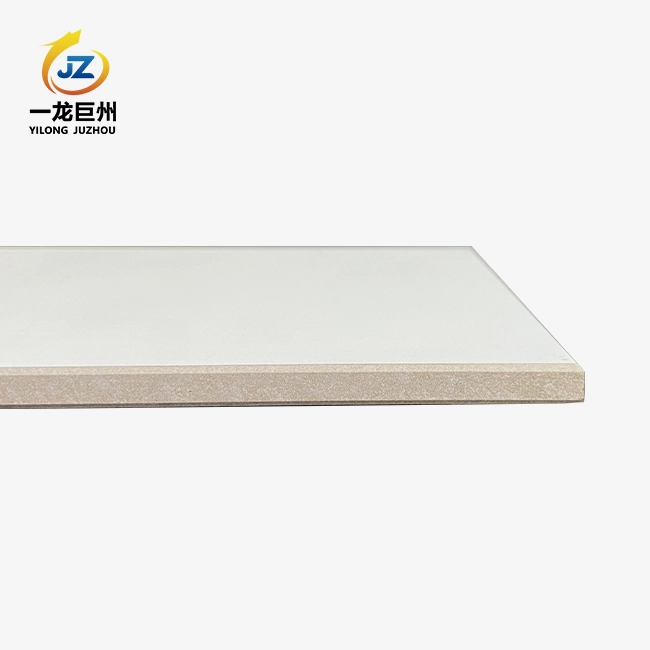
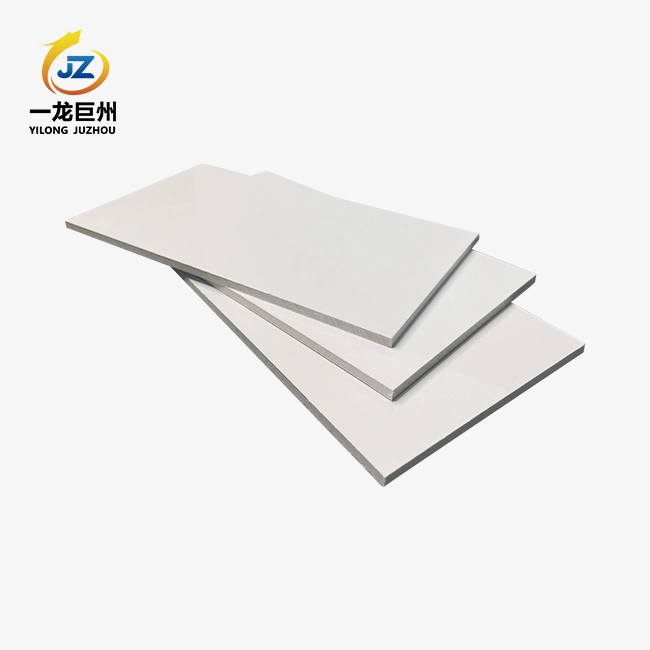
A sandwich plate that is sealed with heat and pressure is what a PE aluminum composite board is. A polyethylene core is covered by two aluminum skins that are between 0.1 mm and 0.5 mm thick. The outside has a polyester paint, PET film, PVC film, or PP film coating. The total thickness of the panels ranges from 2 mm to 6 mm, and their widths are 1220 mm, 1500 mm, and 2000 mm. The length can be changed to any length over 3 meters if the project needs it.

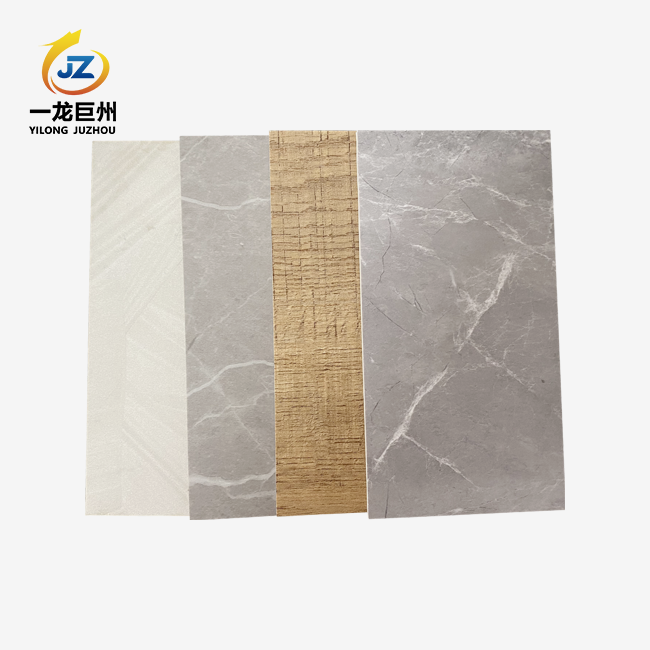
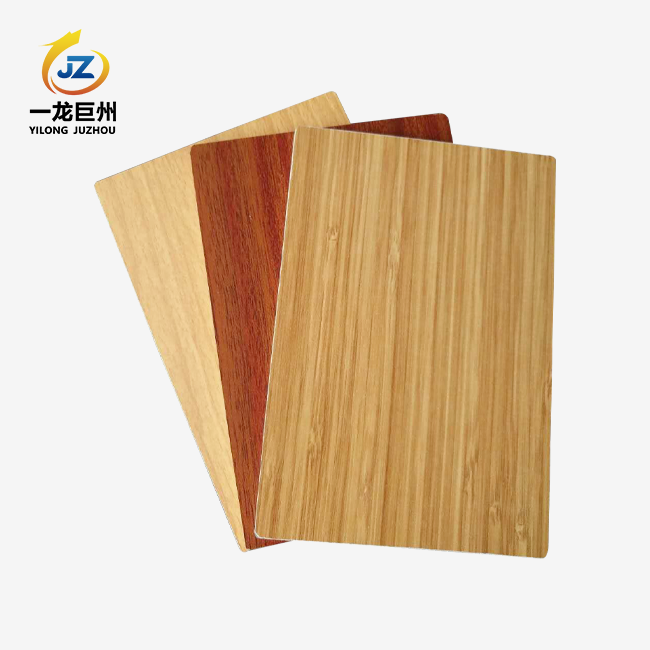
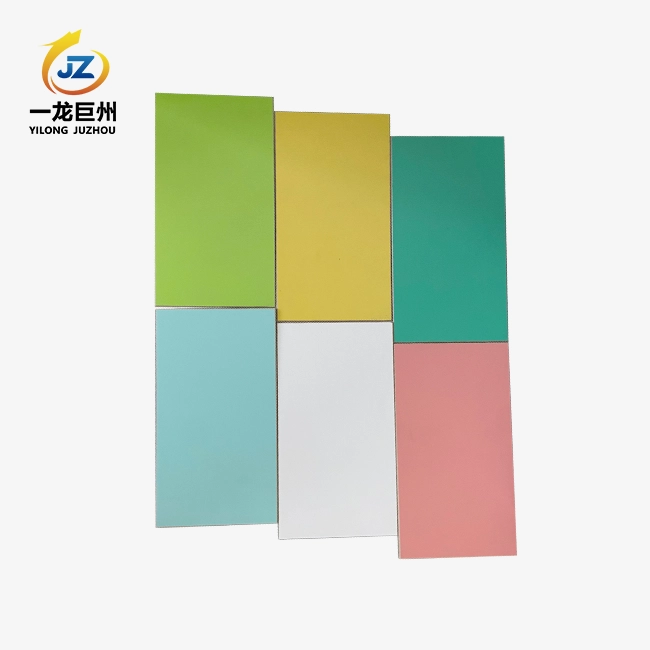
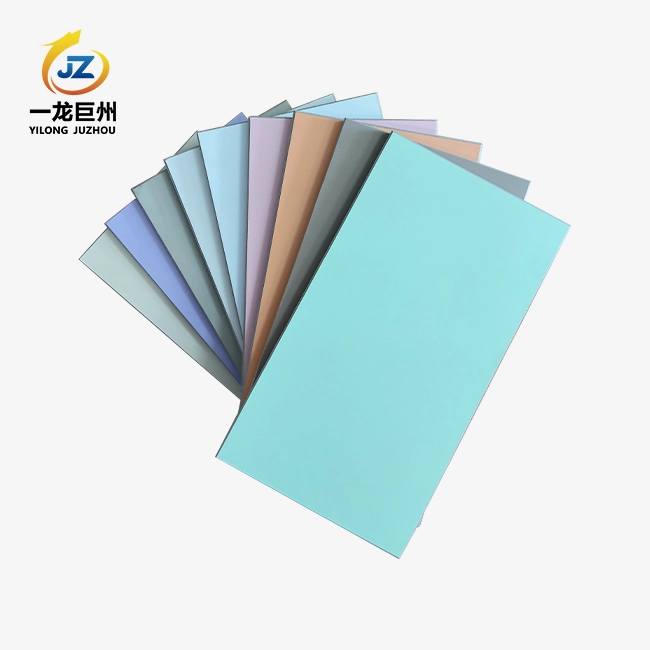
The polyester layer keeps the color the same on solid, wooden, marble, metallic, and fabric-patterned surfaces. The material weighs about 3.5–5.5 kg/m², so it doesn't have the dead-load penalty of solid metal sheet while still being structurally rigid. This is a big plus for engineers who are in charge of figuring out load estimates for curtain walls or internal partitions.
Fire Classification Frameworks That Matter to Procurement
The flame spread index and smoke-developed index of a material tell you what class it is according to ASTM E84, which is the North American standard test for surface burning characteristics. Reaction-to-fire ability is split into classes A1 through F by European EN 13501-1. Similar ideas are used in China's GB 8624: Class A is not flammable, Class B1 is not flammable, and Class B2 is normally flammable.

Mineral filler is mixed into the core compound of YILONG JUZHOU's PE aluminum composite board to make it fire-resistant to Class B1. According to this classification, the panel meets the flame-retardant level needed for most indoor uses. This includes hospitals, schools, shopping malls, airports, subway stations, train stations, stadiums, art galleries, gyms, conference centers, hotels, and medical aesthetic centers.
Comparative Analysis: PE Aluminum Composite Board vs Other Panels in Fire Resistance
People who work in procurement often compare PE ACP to PVDF ACP, fire-resistant (FR) ACP, and standard metal covering. There are real differences that matter.
The sandwich structure of PVDF aluminum composite sheets is the same, but they have a fluorocarbon finish. Their ability to resist fire depends on the composition of the core, not the coating resin. A PVDF panel with a standard PE core has the same rating for fire safety as a standard PE panel. FR ACP swaps out the pure LDPE core for a mineral-compound mix. When aluminum hydroxide burns, it releases water vapor, which stops the flame from spreading. At the European level, this is how FR ACP gets its A2 or B1 grade.
Traditional metal covering, like solid aluminum sheet or steel panel, can't catch fire at the base level. However, it has a higher dead load and doesn't give you the design freedom that composite panels do. A Class B1 PE aluminum composite board is a good compromise for decorating internal walls where fire safety, weight management, and the look of the surface all matter the same amount.
This is a quick look at how the main factors compare:
- Standard PE core ACP (Class B2): Cost-effective, chromatic versatility, suitable for low-rise or non-regulated interior zones where flame-retardant classification is not mandated.
- FR core ACP (Class B1 / A2): Mineral-filled compound core raises ignition threshold; required for regulated interiors including healthcare facilities, transit hubs, and high-occupancy commercial buildings.
- Solid aluminum / steel cladding: Non-combustible substrate, higher dead load, limited design customization compared to composite panels.
"Solid aluminum/steel cladding" has a non-flammable base, a higher dead load, and fewer design options than composite panels.
Best Practices for Installation and Maintenance to Enhance Fire Safety
Any composite panel system works better as a fire barrier when it is installed correctly. Even if a panel has a Class B1 approval in the lab, it might act differently in the field if the methods for fixing it, closing the joints, or managing the cavities are not done carefully.
These steps are very important when putting up PE aluminum composite boards in inner wall systems. To stop chimney-effect flames from traveling through wall cavities, fire-rated sealant should be used to fill all gaps between panel edges and structural elements that are next to them. Instead of just sticking things together with glue, mechanical fastening with screws or hidden clips keeps the panel together when it's heated up. When building rules say that compartmentalization is needed, the fire barriers inside the hole system need to be continuous and the right size.
Maintenance times are just as important as the placement itself. Surface coatings, like polyester paint or PVC/PP film, should be checked once a year for micro-cracks, delamination, or UV-induced damage that could weaken the panel's surface. Panels in high-humidity places like food processing plants or pharmaceutical facilities should be cleaned with pH-neutral agents on a regular basis. The board's natural resistance to moisture and mildew will only work as long as the surface films stay intact.
Procurement Considerations for Fire Resistant PE Aluminum Composite Boards
Certifications and Supplier Evaluation
The first step in any legal procurement process is to certify the supplier. The panels made by YILONG JUZHOU are certified by the China Environmental Protection Standard, ISO, and CE. For the North American market, buyers should also ask for UL test reports and ASTM E84 flame-spread documents to meet the standards of the national building code.

The wait time for production at YILONG JUZHOU is 3–7 days, and they keep 50,000 m² in stock at all times. Responses to inquiries arrive within 24 hours. Shipments go through seaports in Shenzhen, Guangzhou, Shanghai, or Qingdao and land transport routes in Xi'an, Guangzhou, Shenzhen, or Foshan. This gives foreign distributors a safe way to move goods across many trade lanes.
Pricing, Customization, and OEM/ODM Options
Price depends on the gauge of the metal skin, the total thickness, the surface finish, and the number of items ordered. Buying in bulk at normal sizes (3 mm or 4 mm) of PE ACP board with 0.21 mm metal skins and polyester coating is usually the most cost-effective way to start. Custom sizes, including heights over 3 meters, are available, as well as OEM and ODM configurations that let developers and marketers name panels to meet the needs of a project. Free samples are sent within 3–5 days, so you can see how the material works before you decide to buy a lot of it.
Future Trends and Innovations in Fire-Resistant Aluminum Composite Boards
The future of fire-retardant composite panel technology points to two goals that are becoming more important: better flame resistance and a smaller impact on the environment. Newer mineral-filler mixtures are lowering the amount of halogens in core compounds, which helps them meet fire safety standards as well as stricter VOC and indoor air quality rules. The panels from YILONG JUZHOU already don't contain any formaldehyde, smell, or radiation. These are all qualities that are in line with green building approval programs like LEED and WELL.
Post-occupancy fire safety standards for high-rise residential and business buildings are getting stricter in North America and Europe because of pressure from regulators. This makes more people want panels that get an A2 or B1 rating without having to pay more for full non-combustible cladding systems. When changes to building codes happen over the next five to ten years, procurement teams that have already established ties with makers that can make certified fire-retardant composite panels will be in a better situation.
Conclusion
A PE aluminum composite board with a mineral-filled core has Class B1 fire resistance, which means it can be used in regulated interior spaces like hospital hallways and airport terminals and still meet building codes. Class B2 panels are standard for LDPE-core panels, and they can be used in areas that are not regulated. Before making a purchase choice, it's important to check the supplier's credentials, the panel specifications, and the installation instructions. This is because project rules require a certain fire classification. When all three are lined up, the material offers safety, sturdiness, and design freedom in a single, light system.
FAQ
Q1: Is standard PE ACP safe for commercial buildings?
Normal PE core panels have a Class B2 rating, which means they can catch fire. They're fine in low-rise or unregulated interior zones, but most business buildings, especially those in the US that have to follow IBC or NFPA rules, need internal wall cladding that is Class B1 or higher. Before specifying, you should always check your local building code to see what the fire classification requirements are.
Q2: How does FR ACP differ from standard PE ACP in real use?
Mineral compounds, mostly aluminum hydroxide, are mixed into the core of FR ACP. When these substances are heated, they give off water vapor, which slows the spread of flames and lowers the amount of smoke that is made. In real life, FR ACP panels keep their structural integrity longer than standard PE core panels during a fire.
Q3: Can I order custom-sized fire-resistant panels?
Yes, YILONG JUZHOU can make unique lengths and widths up to 2000 mm, including heights over 3 meters. Along with OEM and ODM configurations, custom surface patterns like woodgrain, marble, metal, and cloth are also available. You can get free samples within 3–5 days to try out before you buy.
Q4: What certifications should I request from a supplier?
Ask for basic certifications from CE, ISO, and China Environmental Protection. For projects in the US, you should ask for ASTM E84 test reports and, if necessary, UL listings. It is these papers that are used as proof for both bids and reports of code compliance.
Partner with YILONG JUZHOU — Trusted PE Aluminum Composite Board Manufacturer
YILONG JUZHOU has two factories, one in Foshan and one in Shaanxi. It keeps 50,000 m² of stock on hand and can turn around orders in 3–7 days. Our team of Class B1 fire-rated PE aluminum composite board suppliers offers panels that are CE- and ISO-certified, free samples within 3–5 days, full OEM/ODM customization, and a quality guarantee that lasts for three years. You can email our technical team at cnyang2000114@gmail.com to get details and a cheap bulk price right now.
References
1. ASTM International. ASTM E84: Standard Test Method for Surface Burning Characteristics of Building Materials. ASTM International, 2023.
2. European Committee for Standardization. EN 13501-1: Fire Classification of Construction Products and Building Elements. CEN, 2018.
3. National Fire Protection Association. NFPA 285: Standard Fire Test Method for Evaluation of Fire Propagation Characteristics of Exterior Non-Load-Bearing Wall Assemblies. NFPA, 2019.
4. Schartel, B., and Hull, T. R. "Development of Fire-Retarded Materials—Interpretation of Cone Calorimeter Data." Fire and Materials, vol. 31, no. 5, Wiley, 2007.
5. International Code Council. International Building Code (IBC) 2021 Edition. ICC, 2020.
6. Mouritz, A. P., and Gibson, A. G. Fire Properties of Polymer Composite Materials. Springer, 2006.

Send Inquiry
Related Industry Knowledge
- How Are Antibacterial Wall Panels Installed and Maintained?
- How to Choose a Coated Aluminum Composite Panel
- PP Healthy Panel Results: What Do They Mean?
- ice fireproof board Structural Composition and Material Science
- Calcium Silicate Fireproof Board - the reliable and safe choice for fire doors
- Modern Wall System Innovation: PP healthy panel for Durable, Aesthetic, and Healthy Interiors
- What Are Inorganic pre-coated panels and How Are They Made?
- Medical Clean Board Installation and Maintenance Guide
- Calcium Silicate Aluminum Composite Board vs Traditional ACP Panels: Key Differences
- Calcium Silicate Aluminum Composite Board Explained: Structure, Benefits, and Uses